
By Bosphorus News Energy Desk
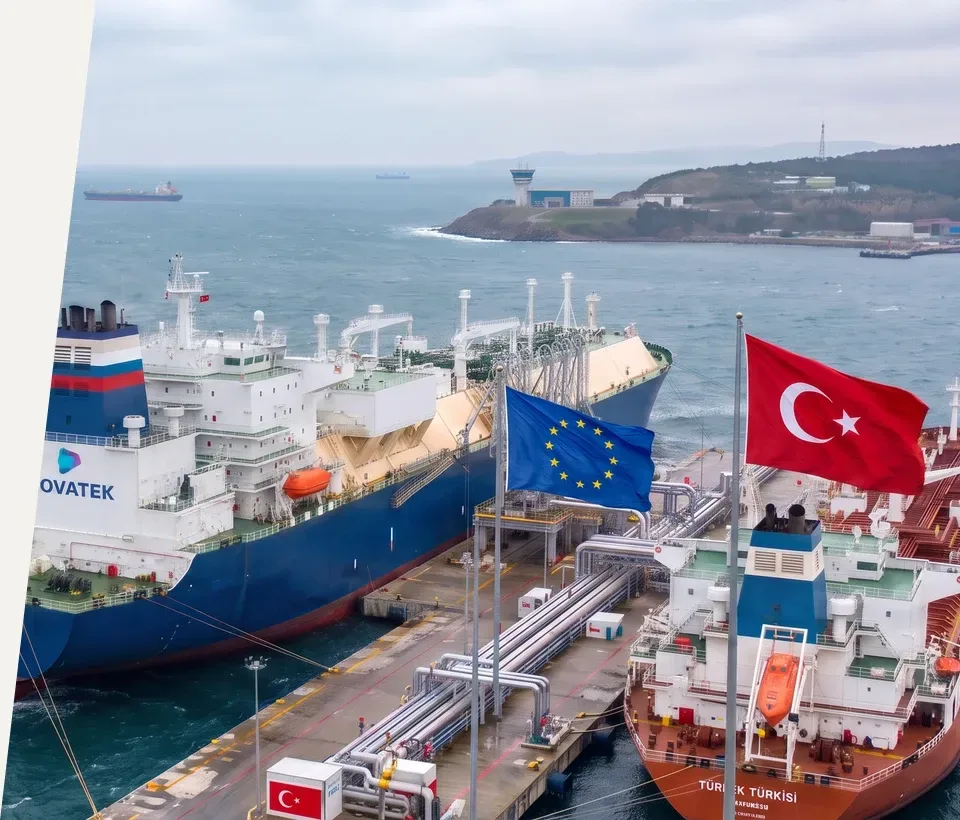
On November 18, 2026, Russian energy producer Novatek announced that it had signed a contract to supply liquefied natural gas (LNG) to Türkiye, nearly a month after confirming negotiations with potential Turkish buyers.
Novatek Chairman Leonid Mikhelson disclosed the agreement while speaking to journalists in Shenzhen, China. He said discussions were continuing over increased LNG deliveries and possible investments in Türkiye's natural gas sector.
Novatek did not identify the Turkish counterparty or disclose the contracted volumes, duration, price or delivery schedule.
The agreement follows Mikhelson's October 22 disclosure of LNG supply talks, when the company had yet to announce a signed contract.
EU Restrictions Drive Market Changes
Novatek's announcement comes weeks before the European Union's remaining exemptions for Russian LNG imports expire.
Under Regulation (EU) 2026/261, Russian LNG imports under qualifying long-term contracts concluded before June 17, 2025, will be prohibited from January 1, 2027. Other Russian LNG imports are already subject to restrictions. Russian pipeline gas follows a separate timetable extending into autumn 2027.
Mikhelson said Novatek had prepared plans to redirect LNG away from Europe, with China expected to absorb a substantial share of the affected volumes.
The company has also announced an agreement to supply approximately 500,000 tonnes of LNG to Vietnam from 2027 and is holding supply discussions with Thailand.
The Turkish contract adds to Novatek's international supply arrangements, although the company has not linked it to any cargoes being redirected from Europe.
The production source is also undisclosed. Novatek operates the Yamal LNG project, which continues supplying European customers under permitted contracts, while its Arctic LNG 2 project faces extensive Western sanctions. Neither has been identified as the source of the Turkish agreement.
Türkiye's LNG Import Capacity
Türkiye has five LNG import facilities, comprising two land-based terminals and three floating storage and regasification units (FSRUs).
According to the Ministry of Energy and Natural Resources, their combined daily regasification capacity has reached approximately 161 million cubic metres, up from 34 million cubic metres in 2016.
The infrastructure allows Türkiye to receive cargoes from multiple suppliers alongside pipeline imports and growing domestic gas production in the Black Sea.
Russian gas nevertheless remains an important part of the country's supply mix. Russia led Türkiye's pipeline gas imports over the first six months of 2026, although Azerbaijan ranked first in June.
Türkiye's pipeline relationship with Moscow also faces a contract deadline. Existing BOTAŞ-Gazprom supply arrangements expire at the end of 2026. Negotiations over volumes and contract duration beyond 2026 remained unresolved when Energy Minister Alparslan Bayraktar addressed them in June.
The Novatek agreement introduces another Russian supply arrangement into a market where Ankara has been seeking greater flexibility over suppliers, volumes and contract terms.
EU Origin Checks at the Bulgarian Border
The EU's Russian gas phase-out also covers imports entering through third countries.
Regulation (EU) 2026/261 establishes origin-verification requirements, including specific provisions for natural gas entering the EU from Türkiye through the Strandzha 1 connection with Bulgaria.
Gas entering through Strandzha 1 is presumed to have been exported directly or indirectly from Russia unless the importer provides unambiguous evidence of non-Russian production at least seven working days before entry into EU customs territory.
Those rules govern imports into the European market. They do not prohibit Türkiye from purchasing Russian LNG for domestic consumption.
Novatek has not identified any onward EU deliveries under the Turkish agreement, and no such arrangement has been independently confirmed.
The buyer's identity, contracted volumes and production source remain the essential missing details. Without them, the agreement's commercial weight within Türkiye's gas import portfolio cannot yet be measured.
Sources: TASS, November 18, 2026; Interfax, October 22 and November 18, 2026; Regulation (EU) 2026/261; Council of the European Union; Republic of Türkiye Ministry of Energy and Natural Resources; Bosphorus News review and reporting.