
By Murat Yıldız
John Breslow arrived in Cyprus on September 4 as US ambassador-designate to the Republic of Cyprus, adding a third political appointee to an Eastern Mediterranean line that already includes Kimberly Guilfoyle in Athens and Tom Barrack in Ankara. He will formally assume his duties after presenting his credentials to Republic of Cyprus President Nikos Christodoulides.
Breslow inherits a relationship increasingly tied to security cooperation, sanctions enforcement, financial transparency and homeland security. Guilfoyle's Athens brief combines US military access with Greek defense procurement and American energy exports. Barrack's authority reaches beyond Türkiye into Syria and Iraq under separate presidential mandates.
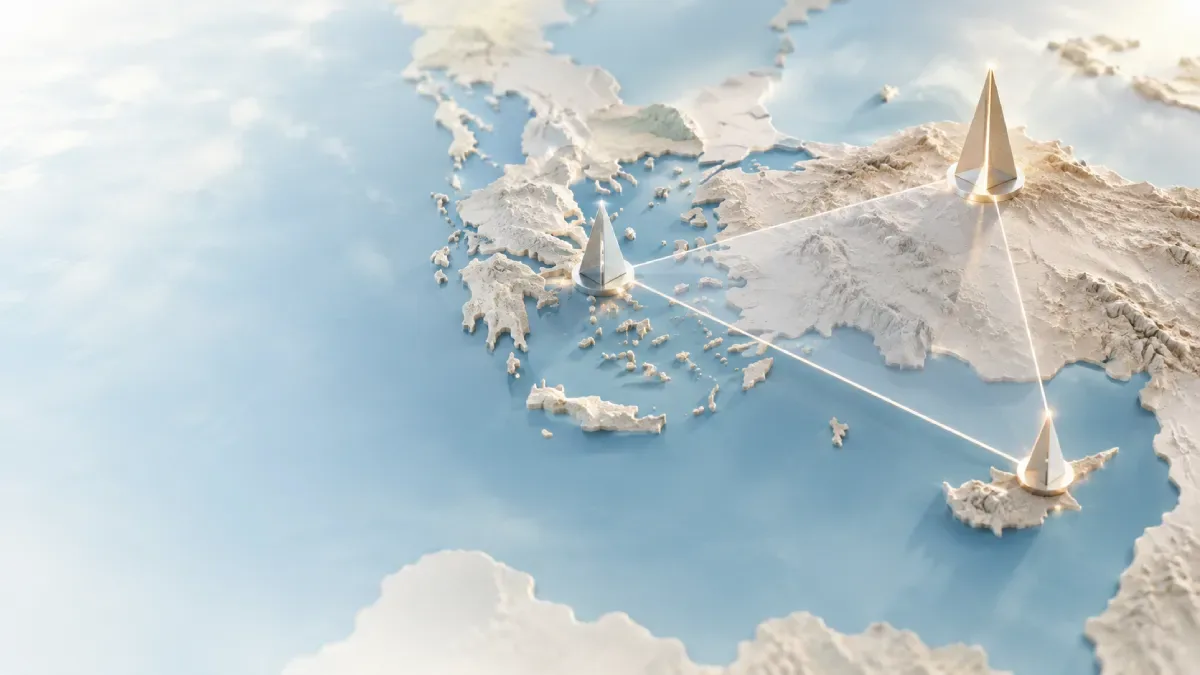
Together, the three postings can be read as a diplomatic pyramid, with Ankara at the apex because Barrack's mandate extends furthest beyond his host country. The term describes differences in geographic and functional reach; it does not imply a chain of command among the three embassies.
The 1988 record
Breslow's arrival revealed a factual error in some coverage of his appointment.
Cyprus Mail described him as the first non-career political appointee to serve as Washington's ambassador to the island. The description had an official source: Senate Foreign Relations Committee Chairman Jim Risch told Breslow at his April 16 confirmation hearing that he would be the "first political, non-career appointee" sent to Cyprus.
The same hearing records otherwise.
Senator Chris Van Hollen, who worked for the committee in the 1980s, told Breslow that a political appointee had previously held the post. Van Hollen said he had been on the committee staff during that confirmation and recalled that the appointment "did not go so well in Cyprus." He linked that experience to Washington's subsequent reliance on career diplomats familiar with the Cyprus file.
The State Department's Office of the Historian identifies that predecessor as Bill K. Perrin and lists him as a non-career appointee. Perrin was appointed on April 1, 1988, presented his credentials on May 3 and served until July 21, 1989.
Breslow is not Washington's first non-career appointee to the island. He is the first in roughly 38 years.
After Perrin, the Cyprus ambassadorship remained in career diplomatic hands for nearly four decades.
Breslow's arrival received quick coverage in Republic of Cyprus media, while Turkish-language pickup remained limited.
Cyprus: from bilateral security to sanctions and homeland security
Breslow's Senate testimony placed his assignment inside a relationship built over several administrations.
He traced the expansion of security ties to the 2018 Statement of Intent on bilateral security cooperation and the Eastern Mediterranean Security and Energy Partnership Act adopted the following year, saying US-Republic of Cyprus cooperation had deepened significantly since then. The Statement of Intent was signed on November 6, 2018.
The relationship includes military training and exercises through the State Partnership Program with New Jersey and Cyprus' role in evacuating US citizens during regional crises.
By July 2026, homeland security had become another channel in the relationship. A senior US Department of Homeland Security delegation reviewed the Republic of Cyprus Visa Waiver bid alongside border security, migration, law-enforcement cooperation and information sharing.
The talks opened a separate homeland-security channel, adding to existing cooperation on evacuations and crisis response.
Russia entered Breslow's confirmation hearing through Senator Jeanne Shaheen. The Senate Foreign Relations Committee's ranking Democrat pointed to Cyprus' role in enforcing European Union and US sanctions on Russia and strengthening financial transparency, and urged continued work on sanctions enforcement.
Those concerns predate Breslow. The 2019 Eastern Mediterranean Security and Energy Partnership Act included countering Russian influence and tightening safeguards against the use of the Cypriot financial system for international money laundering among US policy objectives.
China appeared from the Republican side. Senator Pete Ricketts described Beijing as increasing its presence in Cyprus through trade, infrastructure and telecommunications and cast Breslow's task partly in terms of advancing American security and economic interests.
That was Ricketts' assessment rather than a declared administration doctrine, but it put China directly into the confirmation record.
Breslow also emphasized trade and investment, saying closer relations had encouraged American companies to establish or expand operations on the island. He arrives with a private-sector background at an embassy whose portfolio now runs across defense cooperation, sanctions, finance, homeland security and crisis logistics.
Athens: military access, procurement and energy
In written responses to the Senate Foreign Relations Committee, Guilfoyle described the US-Greece Mutual Defense Cooperation Agreement (MDCA) as providing American forces with vital access to the Eastern Mediterranean and the surrounding region.
She also said she would work to position US defense companies to benefit from Greece's military modernization program, which she put at at least $29 billion over the following 12 years.
Guilfoyle identified the Revithoussa liquefied natural gas terminal and the Alexandroupoli floating storage and regasification unit as infrastructure capable of carrying more American gas into Europe.
She backed the Vertical Corridor through Greece, Bulgaria, Romania and Moldova toward Ukraine and Central Europe and cited prospective electricity interconnectors linking Greece with Cyprus, Israel and Egypt.
Defense, energy, shipping, infrastructure and technology were among the sectors where she said she intended to expand opportunities for American companies.
An August analysis by Bosphorus News partner IBNAEU, carried by Bosphorus News examined Guilfoyle's posting through the same mix of political access, energy and commercial diplomacy. Her Senate record provides the primary-document basis for those priorities.
Ankara: the regional mandate
Ankara carries more authority than either of the other two posts.
When the Senate considered Barrack's nomination in April 2025, Risch called Türkiye "the most challenging" of the three ambassadorships before the committee that day. NATO, Ukraine, Syria, Türkiye's Russian S-400 system and Ankara's relations with Russia and Hamas all featured in his opening assessment.
Barrack described Türkiye as sitting at the crossroads of Europe, Asia and the Middle East. He cited its NATO military role, support for Ukraine and its role regulating passage through the Turkish Straits under the Montreux Convention, and backed the bilateral goal of raising US-Türkiye trade to $100 billion.
He also discussed Türkiye as a potential reshipping hub for US liquefied natural gas moving into Europe and identified defense and aerospace as areas for greater American commercial involvement. Competition with China's Belt and Road Initiative appeared in the same discussion.
Barrack's role had already moved beyond the bilateral relationship in May 2025, when he assumed duties as US special envoy for Syria while remaining ambassador to Türkiye.
On May 31, 2026, Trump announced Barrack's appointment as Special Presidential Envoy to both Syria and Iraq, adding Iraq to an already regional portfolio.
By August, Reuters was reporting his involvement in US efforts to establish a deconfliction mechanism among Türkiye, Israel and Syria after Israeli strikes on Syria's Abu al-Duhur airbase raised the risk of a Turkish military response.
Barrack is the only one of the three political appointees whose formal authority crosses from his embassy into two neighboring states. Ankara links the US-Türkiye relationship directly to Syria and Iraq while retaining NATO, Black Sea, energy and Türkiye-Israel files.
A pyramid, not a Washington doctrine
No White House or State Department document reviewed for this analysis describes Ankara, Athens and Cyprus as a single diplomatic pyramid. The appointments were made separately.
The hierarchy appears in the mandates themselves.
Cyprus brings together a security relationship built since 2018 with homeland security, Russian sanctions enforcement, financial transparency and crisis operations. Athens combines American military access, Greek procurement and energy routes running north into Europe. Ankara adds presidential authority in Syria and Iraq.
Breslow's arrival brings a non-career appointee back to the Cyprus mission for the first time since Perrin's 1988 appointment.
The mistaken claim that Breslow is Washington's first non-career ambassador to the island misses the more useful chronology. He arrives nearly four decades after the previous exception, with political appointees already serving in Athens and Ankara and with Washington's ambassador in Ankara now holding formal presidential mandates in Syria and Iraq.
Sources: U.S. Senate Committee on Foreign Relations, U.S. Department of State Office of the Historian, Compilation of Presidential Documents, Reuters, KNEWS, Cyprus Mail, IBNAEU via Bosphorus News, Bosphorus News review and reporting