
By Bosphorus News Geopolitics Desk
Greek Foreign Minister George Gerapetritis has warned of a "tremendous crisis" in Black Sea grain trade as Türkiye presses Moscow and Kyiv to accept a new mechanism protecting civilian shipping.
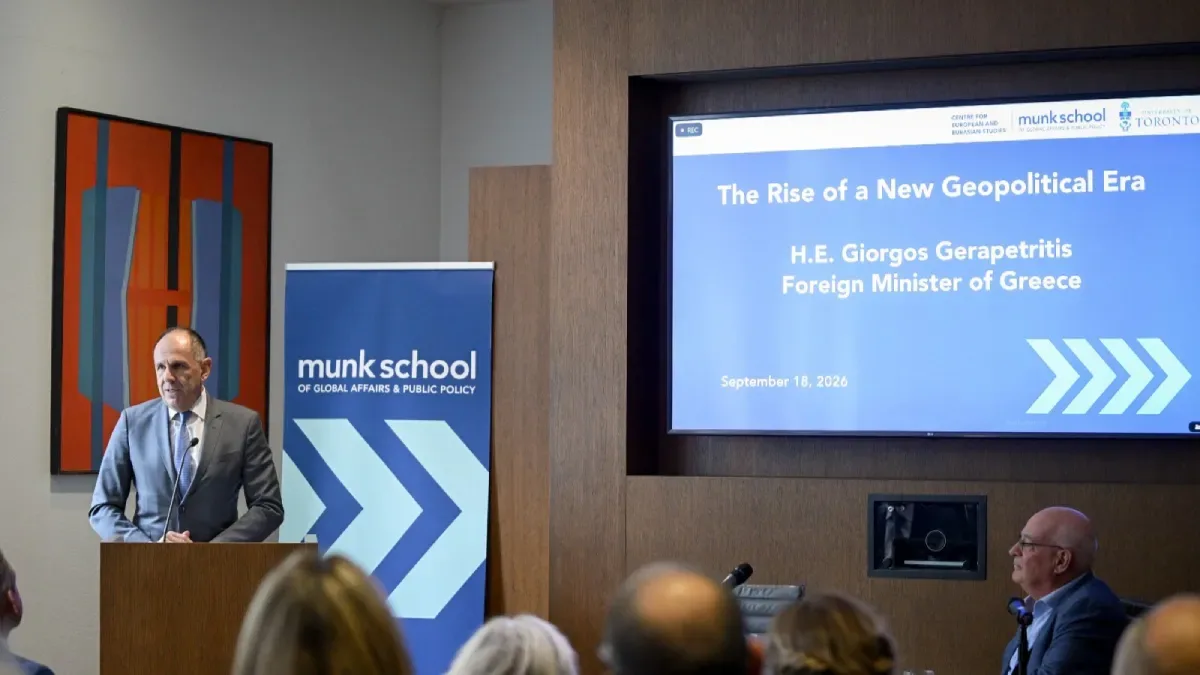
Speaking at the University of Toronto's Munk School of Global Affairs and Public Policy on Sept. 18, Gerapetritis linked disruption around Ukraine to rising food-security risks.
"If one sees what is happening now in Ukraine, there is a tremendous crisis when it comes to grain," he said, adding that the grain corridor "has essentially collapsed."
He did not specify which maritime arrangement he was referring to. The Türkiye- and United Nations-brokered Black Sea Grain Initiative ended after Russia withdrew in July 2023. Ukraine later established its own export route along the western Black Sea coast, which remains in use despite repeated attacks on vessels and port infrastructure.
Gerapetritis also warned that grain disruption could bring "a surge in prices of all basic foods."
The remarks came a day after Türkiye's latest Black Sea initiative surfaced publicly. Ankara has circulated a draft memorandum to Russia and Ukraine seeking an end to attacks on civilian vessels after months of talks with both sides.
Türkiye's Black Sea shipping proposal is not a simple revival of the 2022 grain agreement. A Turkish diplomat said the mechanism draws on elements of that initiative, but the memorandum has not been released publicly. Verification, inspection and the status of ships suspected of carrying military or dual-use cargo remain unresolved.
Ankara had already opened the shipping track
Foreign Minister Hakan Fidan had raised navigation security with Moscow and Kyiv before the written proposal emerged.
After talks with Ukrainian Foreign Minister Andrii Sybiha in July, Fidan said Türkiye had discussed Black Sea navigation with both governments and argued that maritime and energy targets could be kept outside the fighting even without a comprehensive ceasefire. He cited the earlier grain agreement as an example of a limited arrangement that kept trade moving during the war.
In August, Fidan said Türkiye had proposed a moratorium on attacks at sea. By Sept. 15, he said Ankara had received responses from the parties and was working on their positions.
The written memorandum disclosed on Sept. 17 formalized that track at a time of mounting attacks on commercial shipping.
Türkiye's Foreign Ministry had already identified civilian navigation as a priority after a Turkish-owned dry cargo vessel was hit off Ukraine's Chornomorsk port in June.
Insurance costs are climbing
The risk is already showing up in shipping costs.
London's Joint War Committee this week expanded its Black Sea high-risk area beyond Russian and Ukrainian coastal waters following attacks on commercial vessels, ports and energy infrastructure.
The revised area covers the wider basin but excludes the territorial waters of Türkiye, Romania, Bulgaria and Georgia.
War-risk premiums have risen sharply, adding substantial costs to voyages through a sea that remains a major route for grain, crude oil and refined products.
Ukraine's export network has also faced repeated disruption. Attacks on port infrastructure and bottlenecks around alternative routes have delayed vessel movements and complicated grain shipments during the summer.
Gerapetritis did not mention Türkiye's memorandum in Toronto, and Athens has not publicly backed the proposal. His warning, however, came as Ankara was trying to turn months of talks with Russia and Ukraine into a written framework for civilian shipping.
The unresolved issue is verification. Any deal would still need a credible way to distinguish civilian shipping from vessels suspected of carrying military cargo, while addressing Ukraine's demand for freedom of navigation.
Without such a mechanism, shipping risk, insurance costs and uncertainty over grain exports will remain tied to the course of the war.
Sources: Hellenic Republic Ministry of Foreign Affairs, Republic of Türkiye Ministry of Foreign Affairs, Joint War Committee, Bosphorus News reporting and review.