
By Bosphorus News Energy Desk
Greece is moving closer to its first deepwater offshore gas drilling campaign in decades, as the ExxonMobil-led consortium in Block 2 advances toward a test well off the country's western coast. With Stena DrillMAX expected to support the campaign and a 2027 timetable now in view, the project is giving Greece's long-delayed offshore gas push its clearest operational shape in years.
Industry reporting indicates that ExxonMobil, Energean and HELLENiQ ENERGY are progressing toward a drilling phase. The campaign is expected to involve the Stena DrillMAX drillship, marking a shift from exploration planning to operational readiness in the Ionian basin.
Block 2, located offshore western Greece, has emerged as the most advanced test case in the country's renewed offshore energy push. The consortium structure and licensing framework had already been formalized in earlier company disclosures, and the current step points to the first exploratory well moving into a defined execution window rather than remaining at a conceptual stage.
The move places Greece's offshore ambitions into a more concrete phase after years of limited activity. No discovery has been confirmed, and the project remains at the test drilling stage, but the presence of a designated drillship, a specific block and a visible timetable marks a clear transition toward field operations.
The development also fits within a broader acceleration of upstream activity across the Eastern Mediterranean, where multiple states have moved in parallel to expand exploration and production. As detailed in Bosphorus News reporting on accelerating regional upstream activity</a>, recent agreements involving Türkiye, Israel, Cyprus and Greece have unfolded in close succession, pointing to a more competitive and operationally active basin.
In Athens, offshore exploration is increasingly framed beyond its commercial dimension. Political messaging has linked energy projects to sovereignty and regional positioning, particularly in relation to major international partners. As outlined in earlier Bosphorus News analysis of Greece's geopolitical energy pitch, the involvement of companies such as ExxonMobil and Chevron has been presented as part of a broader strategy that combines investment, alliance structures and maritime claims.
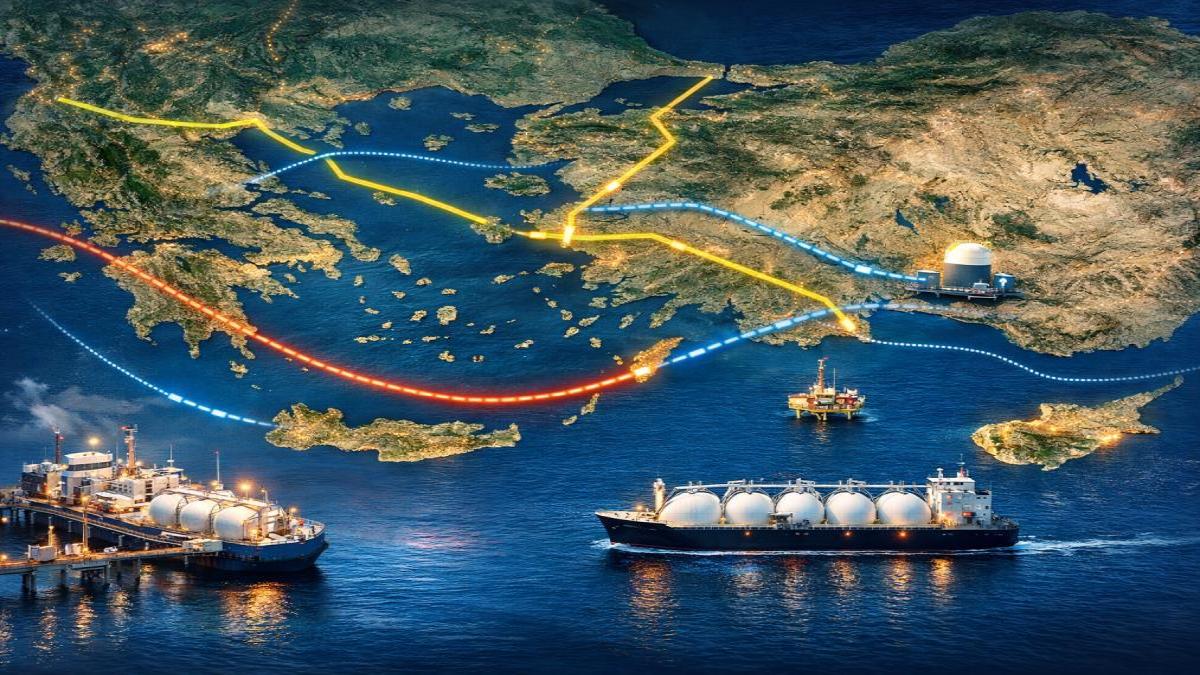
That positioning intersects with a wider reconfiguration of energy flows and infrastructure across the region. LNG terminals, interconnectors and new transit corridors are gradually reshaping how supply is distributed and where leverage accumulates. As Bosphorus News previously explored in its analysis of the Eastern Mediterranean energy map, the expansion of alternative routes is not eliminating existing transit systems but reducing their exclusivity over time.
Regional actors are also adjusting their own upstream strategies in response. Türkiye has pursued parallel engagement with major energy companies, focusing on technical cooperation and exploration partnerships. As reported by Bosphorus News in its coverage of TPAO's talks with Chevron, Ankara's approach reflects an effort to remain embedded in evolving regional energy dynamics.
No discovery has yet been confirmed, and the commercial value of the campaign will depend on what the first well ultimately shows. Even so, the Block 2 move matters because it gives Greece's offshore agenda something it has long lacked: operational form. What had remained for years at the level of licensing, political signaling and energy ambition is now edging toward a real drilling sequence with a named drillship, a defined block and a visible schedule.