
Bosphorus News Energy Desk
Energy agreements are multiplying at speed across the Eastern Mediterranean. But this basin remains defined by unresolved sovereignty claims, most notably between Türkiye and the Greek Cypriot administration. If technical memoranda translate into operational drilling, the region may test whether commercial expansion can coexist with frozen disputes.
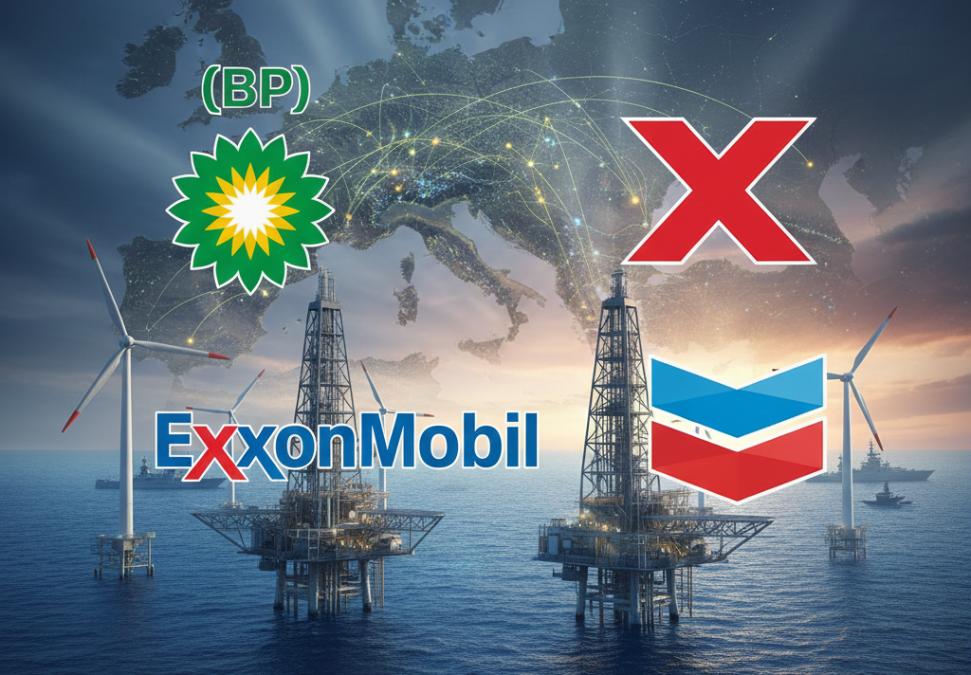
Türkiye's state owned Türkiye Petrolleri A.O. (TPAO) and UK energy major bp signed a memorandum of understanding on strategic cooperation in oil and natural gas in Istanbul on 12 February 2026, according to Türkiye's Ministry of Energy and Natural Resources.
The MoU was signed by TPAO General Manager Cem Erdem and bp Head of Global Oil and Gas Business Development Andrew McAuslan, with Energy and Natural Resources Minister Alparslan Bayraktar attending the ceremony, the ministry said.
The ministry described the MoU as a framework covering the development of oil and gas fields, the assessment of exploration prospects, and cooperation at regional and international levels on oil export capacity and natural gas transportation infrastructure.
Bayraktar said the immediate focus is Iraq. "Our most basic and priority project here is cooperation in Iraq. We are looking at cooperation in Iraq, especially Iraq fields," he said, according to the ministry's statement. He added that TPAO and bp are also considering potential cooperation in Libya, and evaluating opportunities in Central Asia, including Kazakhstan and Azerbaijan.
The bp agreement follows a sequence of upstream cooperation steps Bosphorus News previously reported.
On 9 January 2026, TPAO signed a technical memorandum of understanding with ExxonMobil covering offshore oil and gas cooperation in the Black Sea and the Eastern Mediterranean.
That agreement focused on technical evaluation and data sharing rather than immediate drilling commitments.
It was followed by additional early year MoUs with Esso Exploration International Limited and Chevron, aimed at expanding exploration and production opportunities.
Parallel developments unfolded across the region. On 16 January 2026, Chevron and its partners approved the expansion of the Leviathan gas field, committing capital to increase production capacity in the coming years.
On 23 January 2026, ExxonMobil met with Cyprus President Nikos Christodoulides in Nicosia to discuss offshore drilling plans in Block 10 within Cyprus's Exclusive Economic Zone.
Within just six weeks, TPAO signed framework agreements with ExxonMobil, Chevron and bp, while Chevron approved the Leviathan expansion and ExxonMobil advanced talks in Cyprus. The simultaneity of these moves points to a coordinated repositioning across the Eastern Mediterranean and adjacent basins. It is unrealistic to assume these steps will remain purely technical or commercial.
The Eastern Mediterranean remains the center of unresolved and suspended disputes, foremost the maritime disagreements between Türkiye and the Greek Cypriot administration. If these agreements move quickly from memoranda to active drilling and infrastructure deployment, existing tensions could reheat. Increased activity in contested areas may lead to more frequent low and medium intensity diplomatic, naval and military friction. The signatures placed in the first quarter of 2026 have the potential to reshape not only regional energy balances, but also the security architecture surrounding them.