
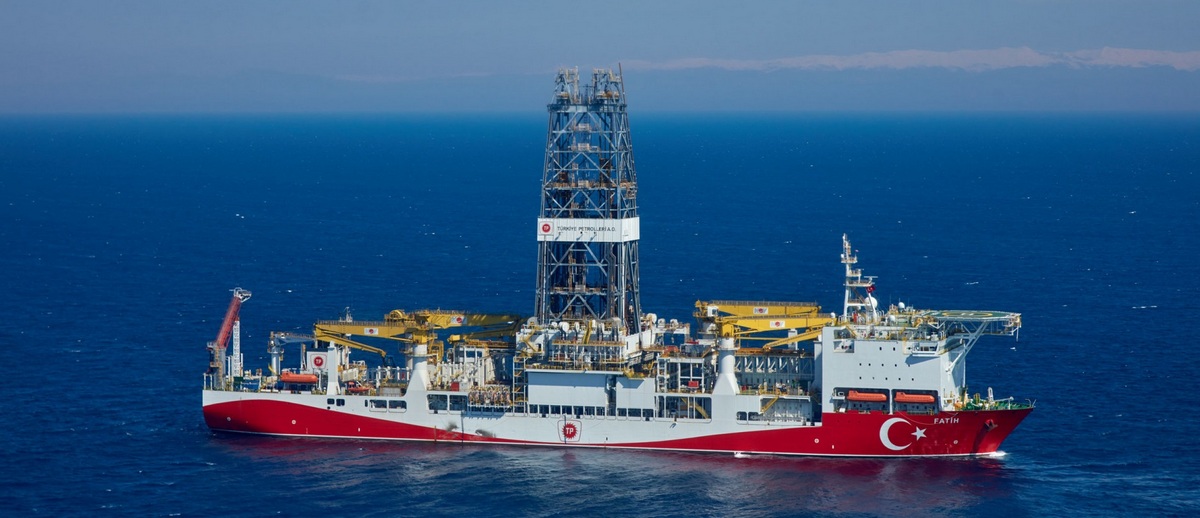
Türkiye's national oil company Türkiye Petrolleri Anonim Ortaklığı (TPAO) has signed a memorandum of understanding (MoU) with Exxon Mobil Corporation, establishing a framework for offshore oil and gas cooperation in the Black Sea and the Eastern Mediterranean.
The agreement is deliberately limited in scope. It focuses on technical evaluation, data sharing, and geological assessment, without constituting a drilling program, production license, or investment commitment.
A framework designed for assessment, not headlines
Officials familiar with the MoU describe it as a preparatory instrument rather than a commercial deal. It allows technical teams to work jointly on seismic and subsurface data, align methodologies, and test assumptions before any operational decisions are considered.
This sequencing reflects Türkiye's recent offshore approach, which prioritizes knowledge accumulation and risk management before moving into capital-intensive phases.
Corporate structure matters
For accuracy, the cooperation sits within ExxonMobil's upstream business and is expected to be carried out through its regional operating entities, most notably Esso Exploration and Production, which commonly serves as the group's legal and technical vehicle for exploration activities in Europe and adjacent offshore areas.
In practical terms, Exxon Mobil Corporation represents the group, while Esso Exploration and Production is the operational arm where applicable. The MoU follows this standard structure.
Ankara's framing: capability over pace
Energy and Natural Resources Minister Alparslan Bayraktar confirmed the agreement in posts on X, presenting it as part of Türkiye's longer-term effort to strengthen energy security through selective international cooperation.
Bayraktar stressed that the understanding is technical rather than transactional, aimed at improving exploration capability and institutional know-how. He also underlined that partnerships of this kind are meant to complement, not substitute, Türkiye's domestic capacity.
Why this pairing resonates now
The Black Sea's recent gas discoveries have reshaped Türkiye's offshore calculus, increasing interest in deeper and more complex prospects. For TPAO, cooperation with a global major brings access to advanced subsurface modeling, deep-water experience, and international operational standards. For ExxonMobil's upstream entities, the MoU provides a structured opportunity to evaluate geology in a basin that has drawn renewed attention.
Notably, both sides have kept the agreement technical and low-profile, signaling a preference for continuity and caution rather than political messaging.
Two regions, one method
Türkiye's offshore agenda gained momentum with the Sakarya discovery, altering medium-term supply expectations. At the same time, Ankara maintains that its activities in the Eastern Mediterranean are conducted within its defined continental shelf and maritime rights.
By limiting the MoU to evaluation and data work across both regions, the parties signal consistency in method rather than escalation in posture.
Where the significance lies
The immediate impact of the agreement is procedural rather than physical. Joint technical work is expected to proceed quietly, with any future operational steps subject to separate decisions, approvals, and agreements.
For now, the importance of the MoU lies in direction. It reinforces Türkiye's preference for phased, evidence-led offshore engagement, pairing national ownership with established global expertise while keeping expectations anchored in process rather than outcome.