
By Bosphorus News Geopolitics Desk
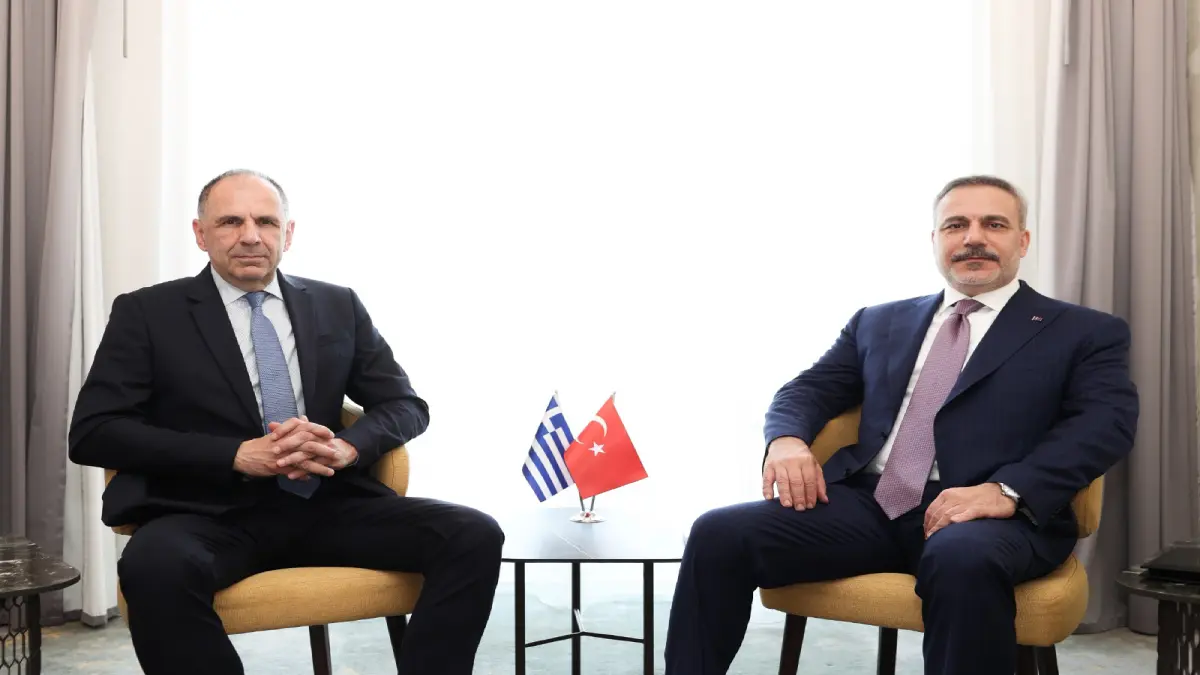
Turkish Foreign Minister Hakan Fidan and Greek Foreign Minister George Gerapetritis met in Sofia on June 10 on the sidelines of the South-East European Cooperation Process summit, bringing the Blue Homeland dispute back into direct ministerial contact after weeks of public messaging from Ankara and Athens.
Türkiye's Foreign Ministry confirmed the meeting through its official channels, while Turkish reporting kept the content narrow and noted that no further details were immediately released. Greek reporting gave the meeting a sharper frame, saying Gerapetritis raised concerns over Ankara's plan to advance legislation linked to the Blue Homeland maritime doctrine.
The difference in emphasis matters. Ankara presented the Sofia contact as part of a wider regional diplomacy day in the Balkans, while Athens read it through the Aegean, Cyprus and Eastern Mediterranean files. That made the meeting more than a courtesy exchange during a regional summit.
Blue Homeland returns to the table
The dispute has been building since Ankara's Blue Homeland draft placed maritime authority, special-status sea areas and Aegean-Eastern Mediterranean jurisdiction questions inside a single legislative frame, a file Bosphorus News earlier examined in detail.
The bill later moved through a slower domestic track after its expected parliamentary calendar was delayed, as Bosphorus News reported in its coverage of the maritime bill. Gerapetritis then placed the Greek objection in public view, saying the proposed legislation could not create legal facts in the Aegean or the Eastern Mediterranean, a position Bosphorus News covered in detail.
The Sofia meeting now moves that two-sided public debate into a direct exchange between the two foreign ministers.
Athens links Sofia to Cyprus and East Med
Greek media said Gerapetritis told Fidan that unilateral steps would not produce legal consequences and would not help preserve a calm climate between the two countries. The Greek side also placed Cyprus, the Eastern Mediterranean, the Middle East and transatlantic relations on the agenda.
That framing shows how Athens is trying to keep the Blue Homeland file tied to a broader diplomatic map rather than a purely domestic Turkish legislative process. The timing is important because the Ankara NATO summit is approaching, while Cyprus, energy routes and maritime jurisdiction questions are all moving through the same regional debate.
Fidan's side did not publicly expand on the meeting's substance. That contrast left two readings in the open: Ankara kept the channel low-profile and regional, while Athens used the meeting to signal that the maritime bill remains a live issue in Greek-Turkish diplomacy.
SEECP gives the meeting a Balkan frame
The Sofia meeting took place as Bulgaria hosted the South-East European Cooperation Process, marking the forum's 30th anniversary and gathering regional leaders and ministers around security, connectivity and political cooperation.
Fidan represented President Recep Tayyip Erdoğan at the summit, while his wider Bulgaria program also pointed to energy, transportation, defense cooperation, Black Sea security and Türkiye's overland links with Europe.
That setting gave the Fidan-Gerapetritis contact a second layer. The meeting was about the Aegean and Eastern Mediterranean, but it took place inside a Balkan platform where Türkiye, Greece and Bulgaria also share transport, energy and security interests.
A controlled channel, not a settled dispute
The Sofia contact shows that the Ankara-Athens channel remains open despite the return of hard maritime language. It does not mean the Blue Homeland dispute has softened, and it does not remove the deeper disagreements over maritime jurisdiction, islands, airspace, Cyprus and energy access.
The meeting instead shows how quickly a draft law in Ankara can enter Greek-Turkish diplomacy when Athens sees it as part of the Aegean and Eastern Mediterranean balance. For now, the two sides are still keeping the conversation at ministerial level, but the substance remains difficult.
The immediate signal is not escalation. It is that Blue Homeland has moved from public statements back into the room.
***Sources: Turkish Foreign Ministry, Greek Foreign Ministry, HDN, Kathimerini, BTA and Bosphorus News reporting.