
By Bosphorus News Geopolitics Desk
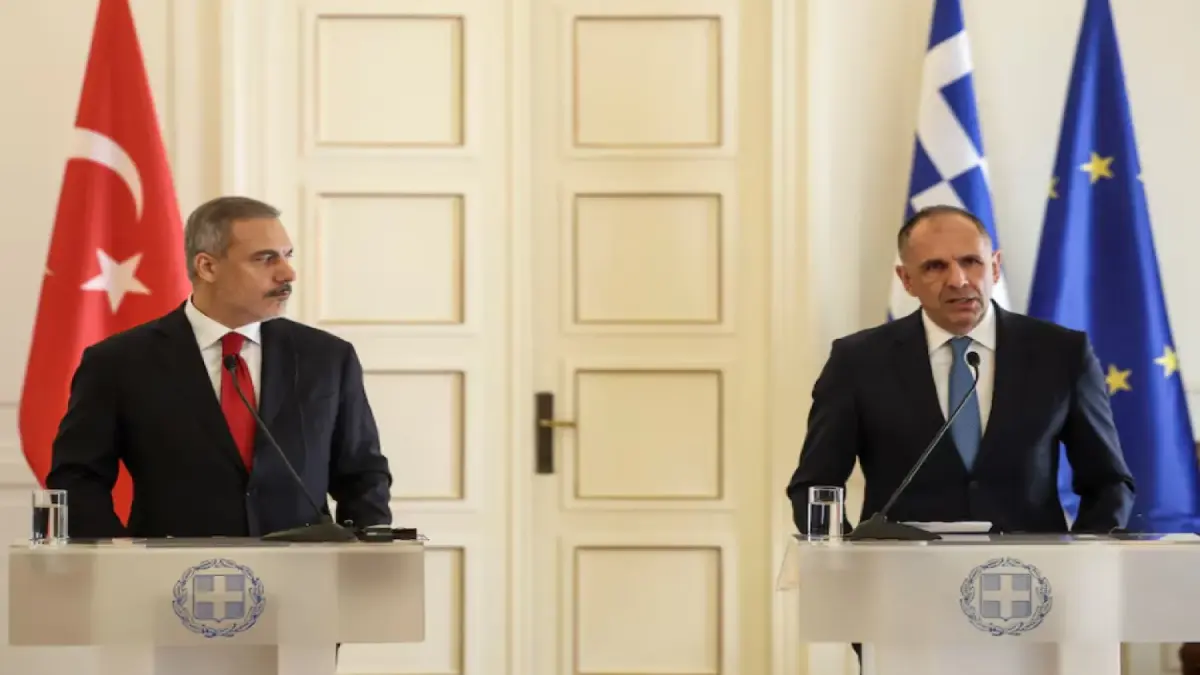
Greek Foreign Minister Giorgos Gerapetritis said on 5 June that any unilateral move in the field of the law of the sea would not create legal rights or faits accomplis, as Athens continues to monitor Türkiye's pending Blue Homeland maritime jurisdiction bill.
Speaking in the Greek Parliament in response to a question from Alexandros Kazamias, a State MP from the Course of Freedom parliamentary group, Gerapetritis said Greece would not engage with Turkish press reports, especially when information about the bill remained inconsistent and unofficial.
"It is self-evident, and I want to say it in every tone, that unilateral actions in the field of the Law of the Sea do not produce law, nor do they create a fait accompli," Gerapetritis said.
His remarks came as Türkiye's proposed maritime jurisdiction bill remains outside parliament. Bosphorus News previously reported that Türkiye's Blue Homeland maritime jurisdiction bill has not yet reached parliament, despite earlier expectations that the draft could move after the Eid holiday.
Gerapetritis also said that since the parliamentary question had been submitted, there appeared to be "a great delay" in the submission or even adoption of the reported bill. He urged caution while the content of the draft remains unknown, saying the issue should be handled with seriousness, judgment and knowledge rather than through impressions created "out of nothing."
The Greek foreign minister said Greece's partners, allies and international organizations had been fully informed about matters affecting peace and security in the Eastern Mediterranean. He did not detail the steps Athens had taken, saying such actions would not be discussed openly in parliament.
Gerapetritis framed Greece's approach as preventive and active, not reactive. He said Greece had not made concessions on national rights and interests over the past three years and would not do so in the future. He also argued that Greece now holds significant geopolitical capital through its position in international organizations, its alliances and its diplomatic reach.
In a broader defense of Greek foreign policy, Gerapetritis cited maritime spatial planning, marine parks, hydrocarbons exploration, Greece's non-permanent seat on the United Nations Security Council, its position inside the core of the European Union and the strengthening of the Armed Forces. He also pointed to Greece's diplomatic activity from the United States and North Africa to Libya, Egypt, the Western Balkans, the Gulf, Israel and India.
The answer showed how Athens is trying to treat Türkiye's Blue Homeland bill on two levels at once. Legally, Gerapetritis sought to strip the draft of any possible effect before it is even submitted. Politically, he used the debate to present Greece as a state with enough diplomatic reach to answer Ankara through alliances, institutions and regional partnerships rather than through direct polemics with Turkish media reports.
The bill's delay gives Athens more time to mobilize that diplomatic line, but it does not remove the dispute. Türkiye's maritime jurisdiction debate remains tied to the Aegean, the Eastern Mediterranean, Cyprus and Ankara's wider effort to place the Blue Homeland doctrine on a clearer domestic legal footing.
***Sources: Greek Foreign Ministry parliamentary remarks, Bosphorus News.