
By Bosphorus News Geopolitics Desk
The United States and Israel are preparing what could become one of the heaviest bombing campaigns of the war, with Iranian energy infrastructure emerging as the target set and strikes possible through the weekend. The prospect of attacks on the productive base of the Iranian state comes as warnings spread across regional capitals, shipping incidents continue around the Strait of Hormuz and alleged Iranian intelligence activity adds pressure around Britain's RAF Akrotiri base in Cyprus.
On the island, Turkish Cypriot ministers used Social Resistance Day, which brings together the anniversaries of the Ottoman conquest, the Turkish Resistance Organisation and the Security Forces Command, to restate the policy of two sovereign equal states. Turkish Cypriot leader Tufan Erhürman again emphasized methodology, equality between the interlocutors and the conditions required before formal negotiations can begin.
The wider regional picture includes a severe drone strike on the Turkish-owned ATA 2 after it left Ukraine's Port of Chornomorsk, Türkiye's preparations to send Eurofighter personnel to the United Kingdom, possible changes in the Armenia-Türkiye normalization mechanism and Ankara's first institutional defense industry meeting with Moldova.
US and Israel Prepare Strikes on Iranian Energy Infrastructure
Sources told CBS News that Washington and Israel were planning one of the harshest bombing campaigns of the war to date, directed at energy infrastructure inside Iran, with strikes possible throughout the weekend. Two American officials separately told CNN that attacks were being prepared as soon as this weekend, although the scope and target list remained unclear and the operation could still be called off.
United States embassies in several regional capitals, including Amman, Jerusalem and Baghdad, warned American citizens on Saturday to prepare for unforeseen escalation and remain ready to leave.
The Royal Navy said a tanker had been struck in the Strait of Hormuz off the coast of Oman, while a separate explosion occurred close to another vessel. The incidents added to concern that any expansion of the air campaign could disrupt the Gulf's principal energy and commercial shipping route.
Iranian state media said the bodies of five Islamic Revolutionary Guard Corps members killed in joint United States and Saudi strikes in Iraq earlier in the week had been returned. A funeral was held on July 30 at the Imam Ali Shrine in Najaf for members of the Popular Mobilisation Forces and the Revolutionary Guard killed in those attacks.
President Donald Trump opened a Cabinet meeting on Friday by saying the United States had done an "amazing job" in the war and that Iran was performing very poorly.
The commercial effects continue to spread through regional aviation. The European Union Aviation Safety Agency continues to advise operators not to enter the Beirut flight information region at any altitude. Some regional carriers have begun using Syrian airspace again as an alternative to more restricted Iranian and Iraqi routes, although the Damascus flight information region remains classified as high risk.
Alleged Iranian Surveillance Adds Pressure Around RAF Akrotiri
Britain is seeking the extradition of a dual British-Azerbaijani national detained in Cyprus over allegations that he conducted hostile surveillance of RAF Akrotiri and passed information to Iran's Islamic Revolutionary Guard Corps.
Rashad Sultanov, 44, was arrested by Cypriot authorities on July 17 under a British extradition request. British prosecutors allege that the surveillance took place between May 11 and June 22, 2025, and have authorized charges under the National Security Act. Sultanov has not been convicted, and the allegations remain subject to judicial proceedings.
The case represents the first known use of the National Security Act in relation to alleged offenses connected to a British overseas territory. Authorities have not disclosed what Sultanov allegedly monitored, whether specific aircraft or military operations were involved, or what information was said to have been transferred.
RAF Akrotiri remains under British jurisdiction as part of the Sovereign Base Areas retained after Cyprus gained independence in 1960. The base supports surveillance, logistics and military missions across the Middle East. It was struck by an Iranian-made Shahed drone on March 2, causing limited damage but no casualties, while two other drones were intercepted.
The RAF Akrotiri espionage investigation adds an intelligence dimension to a security file already shaped by Iranian warnings, drone attacks and debate over the use of British-controlled facilities during the war. Cyprus is no longer exposed only through geography or diplomacy. Military infrastructure on the island has become part of the operational and intelligence environment surrounding the conflict.
Cyprus is also gaining strategic weight through energy. Eni and TotalEnergies recently approved the Cronos gas development, with LNG exports targeted for 2028, reinforcing the island's parallel roles as an energy platform and military logistics hub.
Turkish Cypriot Government Restates Two States as Erhürman Holds to Methodology
August 1 marks three anniversaries for the Turkish Cypriot side: the 455th anniversary of the Ottoman conquest of Cyprus, the 68th anniversary of the founding of the Turkish Resistance Organisation and the 50th anniversary of the Security Forces Command. The date is observed as Social Resistance Day.
A ceremony was held at the Cyprus TMT Veterans Association, attended by Assembly Speaker Ziya Öztürkler, Prime Minister Ünal Üstel, Security Forces Commander Major General İlker Görgülü, the head of the Civil Defense Organisation and the chief of police.
Öztürkler said the Turkish Cypriot side would participate in no process in which its sovereign equality and equal international status were not formally recognized. He said Türkiye's guarantorship and the presence of Turkish troops on the island were not open to discussion, described the parliamentary decision on the matter as state policy and said the Turkish Republic of Northern Cyprus had no territory to surrender.
Üstel said the political line had not changed.
"We will never step back from a policy based on two sovereign equal states and equal international status," he said, adding that the Turkish Cypriot side would continue working with Türkiye towards international recognition.
Foreign Minister Tahsin Ertuğruloğlu issued a message along the same lines, saying the only route to an agreement was confirmation of the Turkish Cypriot people's sovereign equality and equal international status. He said there would be no retreat from the position that two sovereign equal states should live side by side.
Erhürman emphasized a different part of the process. Speaking within what he has described as the requirement that this time be different, he said it would not be right to proceed to negotiations before agreement had been reached on methodology. He also said Nikos Christodoulides' interlocutor was the Turkish Cypriot leader and that attempts to create a different impression would not be accepted under the principle of equality.
He received Görgülü and his delegation at the presidency for the anniversary of the Security Forces Command.
The formulation of two sovereign equal states did not appear in his remarks.
The pattern followed one seen two days earlier, when Ertuğruloğlu rejected European Union special representative Raffaele Fitto as carrying no legitimacy, while Erhürman met him and called for confidence-building measures between the Turkish Cypriot community and the European Union. The Economic Organisations Platform later thanked Erhürman and expressed support for his approach.
The divergence does not yet amount to an institutional rupture. It does, however, show that the Turkish Cypriot presidency and government are presenting different entry points into the same diplomatic process. The government begins with the substantive outcome it requires. Erhürman begins with the method that must govern any future negotiation.
Turkish-Owned ATA 2 Hit After Leaving Chornomorsk
The Turkish-owned, Panama-flagged ATA 2 was severely damaged after three drones struck the vessel shortly after it left Ukraine's Port of Chornomorsk on July 30.
The corn carrier had 13 crew members aboard, including 12 Azerbaijani nationals and one Turkish citizen. The drones hit the bridge and accommodation block, where officers and crew normally work and live. No injuries were reported, although the vessel sustained extensive damage and continued towards Romanian waters under a backup manual steering system.
Available reporting identified ATA 2 as a civilian corn carrier. No evidence has emerged that it was transporting military supplies, despite broader Russian claims that vessels struck around Ukrainian ports had been carrying military cargo.
The attack on ATA 2 adds to a sequence of incidents involving Turkish-owned, Turkish-managed or Turkish-crewed merchant vessels in the Black Sea. On July 19, the Turkish-managed Golden Leo was hit while carrying corn through a Ukrainian-monitored corridor. Nine crew members were killed, and the vessel later sank off Odesa.
ATA 2 survived without loss of life, but the damage to the bridge and accommodation areas showed how little separation now exists between civilian grain shipping and the battlefield.
Repeated attacks are increasing war-risk premiums, narrowing insurance availability and making it more difficult to recruit crews for Ukrainian port routes. The immediate question is no longer only whether ships can enter and leave these ports. It is whether owners, insurers and seafarers can continue to treat the routes as commercially manageable.
Türkiye Moves Eurofighter File Into Training Phase
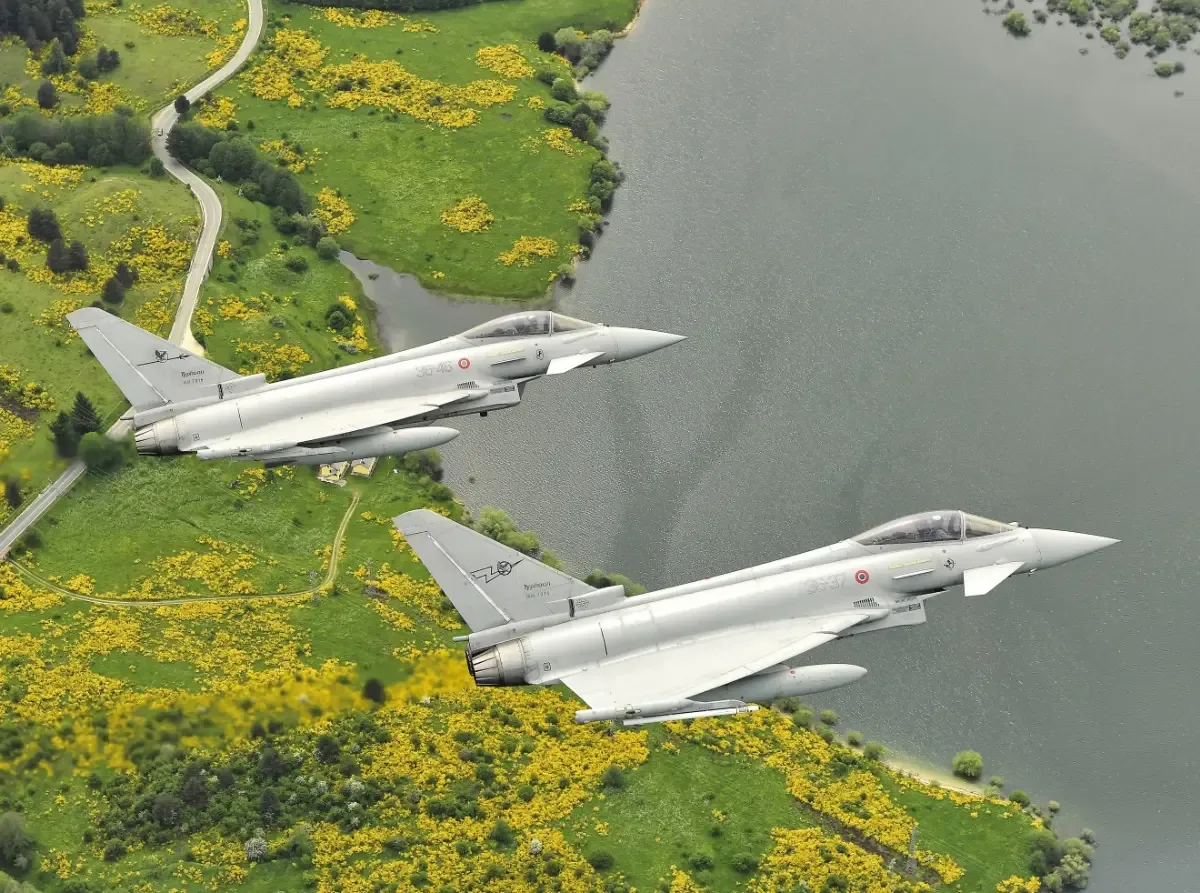
Türkiye plans to send flying personnel to the United Kingdom in August to begin Eurofighter Typhoon flight training, moving the procurement file from negotiation towards operational preparation.
The training timetable is significant because it indicates that Ankara is preparing personnel before the aircraft enter service. The Eurofighter process has so far been dominated by procurement diplomacy, financing, delivery schedules and negotiations with consortium members. Sending crews to Britain would mark the beginning of the human and operational transition required to absorb the aircraft.
The planned August flight training in the United Kingdom also deepens the defense relationship with Britain, which has been the principal European supporter of Türkiye's Eurofighter acquisition. Training, conversion and support arrangements will be as important as the aircraft contract itself in determining how quickly the jets can contribute to the Turkish Air Force.
The Eurofighter program is intended to strengthen Türkiye's combat aviation capacity during the period before the KAAN fighter enters full operational service. It also provides an additional platform alongside the F-16 fleet at a time when Greece is advancing its Rafale, F-16 Viper and F-35 programs.
Armenia Reviews Envoy and Format for Türkiye Normalization
Armenia is considering who could replace Ruben Rubinyan as special representative in the normalization process with Türkiye and whether future contacts should continue under the existing mechanism.
Prime Minister Nikol Pashinyan said no decision had been made on either the appointment or the future format of the talks. The discussion follows Rubinyan's nomination for speaker of Armenia's National Assembly in the next legislature. Rubinyan has said he would leave the normalization role if elected.
The possible change in Armenia's special representative comes as the dialogue expands beyond political contact into direct trade procedures, border arrangements and transport infrastructure. Bureaucratic preparations for direct trade have been completed, while technical work continues on the closed land border and the Kars-Gyumri railway.
The immediate issue is continuity rather than a confirmed policy shift. Rubinyan's successor would inherit a wider and more practical agenda than the one created when the special representatives mechanism began in 2022.
Ankara has given no indication that it sees the potential change as a bilateral dispute. Türkiye's representative, Serdar Kılıç, congratulated Rubinyan after his nomination for the parliamentary speakership.
Türkiye and Moldova Open Institutional Defense Industry Track
Türkiye and Moldova held their first defense industry cooperation meeting, creating a formal channel for evaluating possible collaboration between their institutions and companies.
The meeting matters less for any immediate procurement announcement than for its place within a changing regional security environment. Moldova faces pressure generated by the war in neighboring Ukraine, Russian influence operations and the wider militarization of the Black Sea region.
The first Türkiye-Moldova defense industry meeting extends Ankara's institutional network towards another state on the western edge of the Black Sea security space.
Without a contract, platform selection or delivery timetable, the meeting remains preliminary. It nevertheless creates a formal framework through which Moldova's requirements and possible Turkish industrial responses can be assessed.
Strategic Take
The target set is the central change in the Iranian campaign. Command centers, missile facilities and air-defense systems are military objectives with military consequences. Energy infrastructure is the productive base of the state. Striking it would move the campaign from degrading Iran's capacity to fight towards degrading its capacity to function.
The warnings issued by United States embassies across several capitals suggest Washington expects any response to extend beyond Iranian territory. The alleged surveillance of RAF Akrotiri, Iranian warnings over foreign military facilities and the earlier drone strike on the base show that Cyprus is already part of the conflict's wider intelligence and retaliation map.
On the Turkish Cypriot side, the difference in language can no longer be dismissed as a matter of presentation. The Assembly Speaker, Prime Minister and Foreign Minister each restated sovereign equality and two states on the community's most symbolic day, in the presence of the Security Forces Commander. The president who would represent the Turkish Cypriot side in a future five-plus-one meeting spoke instead about methodology and the equality of interlocutors.
United Nations Secretary-General Antonio Guterres has secured consent to convene another informal meeting once preparations are sufficient. Those preparations cover confidence-building measures, methodology and substance. The first two are closest to Erhürman's language. The third contains the core demand restated by the government, and it is the point on which previous efforts failed.
Beyond Cyprus and Iran, the ATA 2 attack shows how Türkiye's exposure to surrounding wars increasingly runs through private ownership, merchant crews and commercial routes rather than formal military involvement. The Eurofighter training timetable reflects a different form of adjustment, as Ankara accelerates preparations for a regional air environment in which neighboring states are expanding both capability and readiness.
The Armenia and Moldova files are less dramatic, but they point in the same direction. Türkiye is simultaneously strengthening military preparedness, extending defense industry relationships and trying to preserve diplomatic and transport openings across its wider neighborhood.
Sources: CBS News, CNN, Reuters, Metropolitan Police, Kıbrıs Postası, Kıbrıs Genç TV, Turkish Cypriot Foreign Ministry, Turkish Cypriot Presidency, Anadolu Agency, European Union Aviation Safety Agency, International Maritime Organization and Bosphorus News reporting and review.
Read Yesterday's brief: Eastern Mediterranean Brief August 1, 2026.