
By Bosphorus News Geopolitics Desk
What April 22 Produced
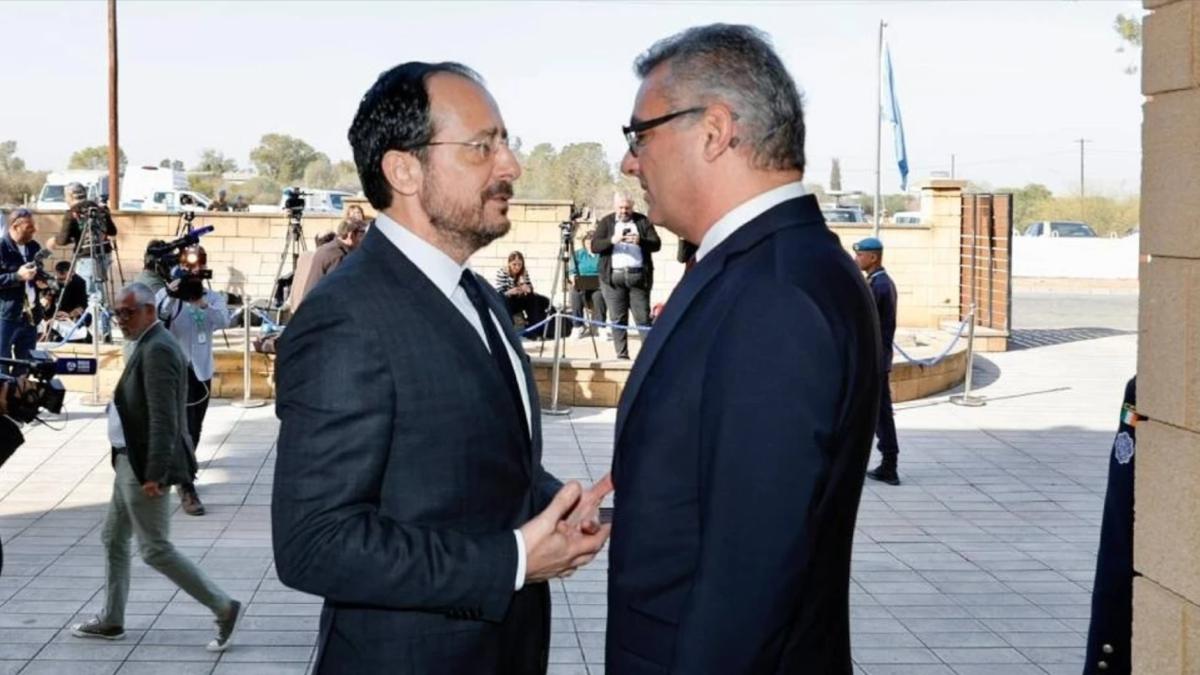
On April 22, Menelaos Menelaou, the Greek Cypriot chief negotiator, and Mehmet Dana, the representative of Turkish Cypriot leader Tufan Erhürman, met to prepare the ground for a new leaders' meeting. According to the Cyprus News Agency, the two held "an exchange of views in the context of preparations for the next leaders' meeting." A date will be announced "in the near future."
The meeting came after Christodoulides and Erhürman's April 6 session, which the United Nations described as a "fruitful discussion." Christodoulides said after that meeting that "there is progress on some issues" and that a follow-up was expected by the end of April. Erhürman made no statement. He was managing a domestic political dispute at the time, mediating between the ruling coalition and public sector trade unions over cost-of-living payments.
April has ended without a confirmed date. The negotiators' April 22 contact keeps the process alive but has not closed the gap between Christodoulides' end-of-month target and the calendar.
The Process in Full
The current round of contact between the two leaders began in November 2025, when Christodoulides and Erhürman met for the first time since Erhürman's election. That session was framed as a mapping exercise, not a negotiation. The two agreed to maintain contact and tasked their teams with preparatory work.
What followed was a series of meetings at varying levels, punctuated by public friction. In March, Erhürman publicly criticised Christodoulides' statements on Greece's independence day as "inconsistent, unfounded and unserious." The Greek Cypriot side declined to respond publicly. In late March, the Greek Cypriot side proposed a date for a new leaders' meeting and waited for a response from the Turkish Cypriot side, as reported by Bosphorus News.
The April 6 meeting was their fifth. Both sides described it as constructive. Neither disclosed what specific progress had been made on confidence-building measures, saying they would present a fuller picture at the next meeting, as documented by Bosphorus News. The deliberate withholding of detail is itself a signal: the progress is real enough to protect, fragile enough not to announce prematurely.
Erhürman's Conditions and What They Mean
Erhürman has been consistent since taking office. He will participate in dialogue, but not in what he describes as process for its own sake. "We do not want negotiations merely for the sake of negotiating," he has said. "We want negotiations aimed at reaching a solution." He has drawn a direct line between unproductive formats and the erosion of trust. "Before a match begins, you know what counts as a foul and what leads to a penalty," he told ANKA News Agency. "If the rules are unclear, the match turns into chaos. This is what we have experienced in Cyprus for years," as reported by Bosphorus News.
In his meeting with UN Secretary-General António Guterres in February, Erhürman carried the same message to New York. He told Guterres he would not enter a process that "lifts us from a large table with nothing to show," as covered by Bosphorus News. He also placed a structural condition on any solution: "Without Türkiye's approval, a solution is technically not possible."
That statement is not a diplomatic formulation. It is a description of how the process works. Erhürman is coordinating every step with Ankara. He confirmed this publicly at the Antalya Diplomacy Forum on April 18, saying that "all steps regarding the Cyprus issue and the TRNC's foreign policy have been taken in consultation with Türkiye" and that this coordination "will continue to increase" during his term.
Guterres and the Background Framework
In parallel with the bilateral contact, Guterres has been exploring a new diplomatic framework, according to diplomatic sources cited in Greek Cypriot media. The approach centres on preserving points of convergence reached before the collapse of the 2017 Crans-Montana talks, rather than reopening every chapter from scratch, as reported by Bosphorus News. No formal proposal has been announced. What is visible is probing, not a defined process.
The Greek Cypriot government spokesman said on April 23 that a new UN initiative is "already underway." That language is stronger than anything the UN itself has confirmed. The gap between what Nicosia is signalling and what New York has formalised is part of the pattern.
The Structural Ceiling
Cyprus cannot join NATO because Türkiye holds a veto. Cyprus cannot access the EU's SAFE defence funding mechanism in full because Türkiye is excluded from it, and that exclusion is linked to unresolved disputes in the Aegean and Cyprus. Türkiye is one of three guarantor powers under the 1960 Treaty of Guarantee, a status that gives Ankara a legal basis for its military presence and a formal role in any settlement architecture.
As analysed by Bosphorus News, this produces a system of mutual blockage operating in opposite directions across two institutions. Inside NATO, Türkiye blocks Cyprus. Inside the EU, Cyprus and Greece block Türkiye's access to defence mechanisms. Neither veto resolves anything. Both entrench the status quo.
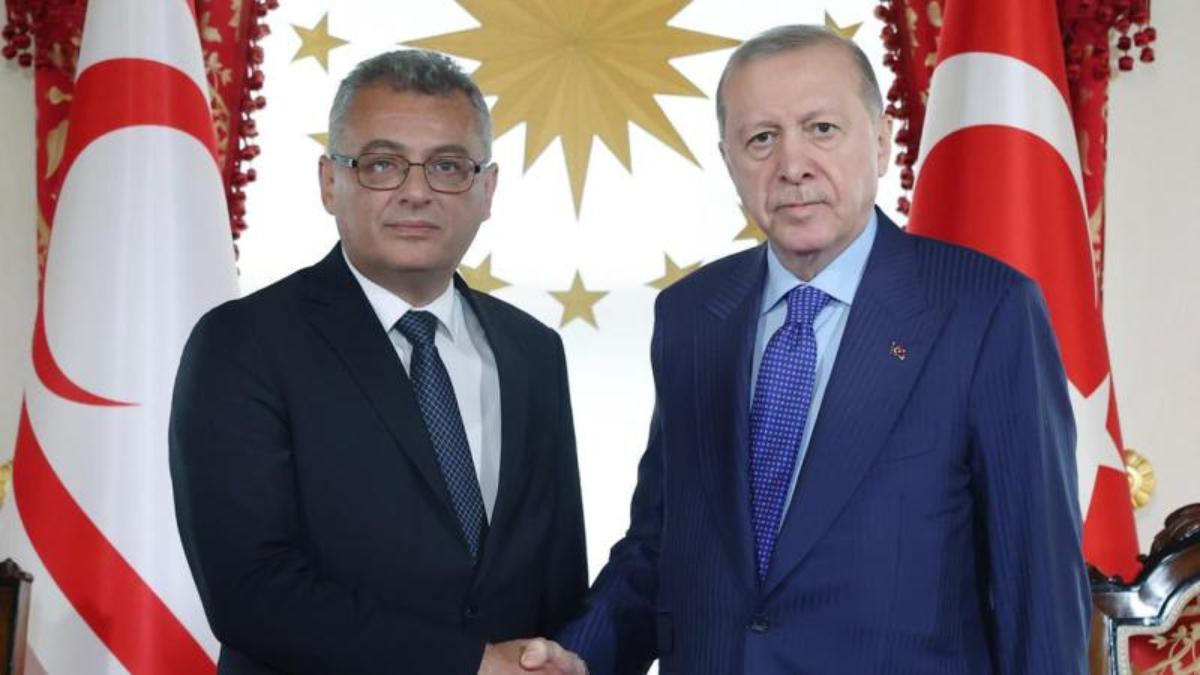
Erdoğan made the parameters explicit on April 16, when he told Erhürman in Ankara that Türkiye is ready to take "every step" to defend the TRNC and warned that foreign military deployments to Cyprus must not become permanent. The meeting was attended by intelligence chief İbrahim Kalın and senior presidential advisers. It was not a routine bilateral. It was a coordination session ahead of the EU summit in Nicosia.
Where the Process Sits
The negotiators met on April 22. A date will be announced. Christodoulides is hosting the EU summit and pressing for Article 42.7 to be operationalised. Erhürman is coordinating with Ankara and insisting on a rules-based process with a defined end point. Guterres is working quietly on a framework that has not yet been announced.
The contact is real and the movement is cautious, as Erhürman has said it plainly: without Türkiye's approval, a solution is technically not possible. On April 16, Erdoğan and Erhürman sat down in Ankara to make sure of it.
***Sources: Cyprus Mail, Cyprus News Agency, ANKA News Agency, Kıbrıs Postası TV, IBNA, Parikiaki, Bosphorus News reporting. Guterres framework details are based on diplomatic sources cited in Greek Cypriot media and have not been formally confirmed by the United Nations.