
By Bosphorus News Staff
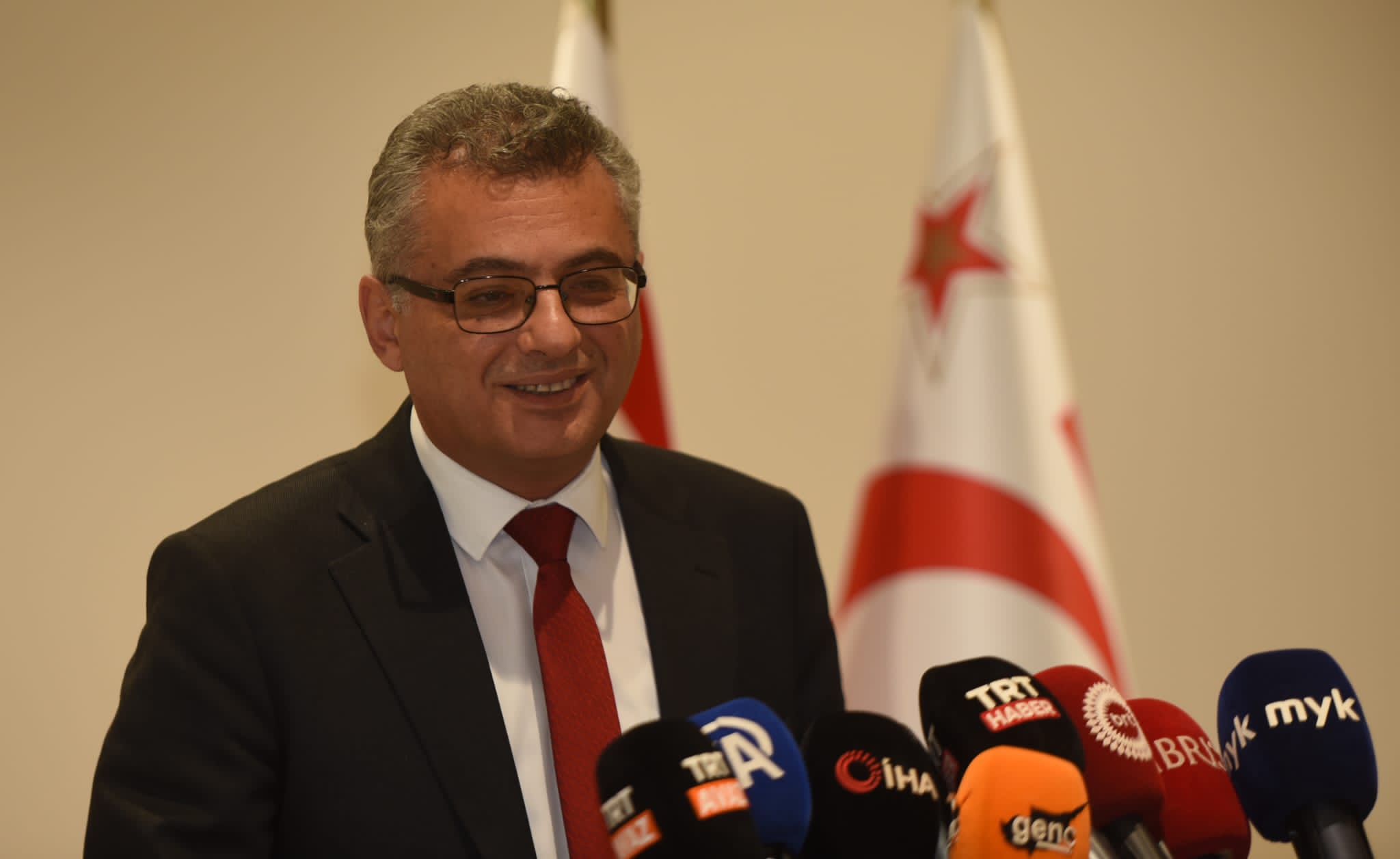
Turkish Cypriot President Tufan Erhürman is set to travel to New York on Wednesday, February 11, to meet United Nations Secretary-General António Guterres. The visit comes as discussions on the Cyprus issue enter a period of cautious engagement, marked by Erhürman's sustained criticism of past "ritualistic" diplomacy and his firm insistence on a result-oriented, negotiated settlement.
"My ultimate goal is a solution to the Cyprus problem," Erhürman stated during a recent interview on Kıbrıs Postası TV on 5 February. Since taking office following his landslide victory in 2025, Erhürman has articulated a position of unusual clarity: dialogue has value only insofar as it leads to a binding outcome.
Beyond Ritualistic Diplomacy: The Demand for a Binding Process
While the President remains committed to the search for a settlement, he has been openly critical of negotiation formats that "recycle meetings without results." His objections are aimed at fixing the structural flaws of the process rather than abandoning it. "We do not want negotiations merely for the sake of negotiating; we want negotiations aimed at reaching a solution," he has maintained.
These positions reflect a consistent methodology reported by Bosphorus News across multiple occasions. Erhürman argues that the core failure of past talks lies in the "normalization of deadlock"—where negotiations persist without producing tangible results, ultimately entrenching the status quo rather than challenging it. "Dialogue has value only if it is structured to conclude," he has said.
Political Equality as a Non-Negotiable Starting Condition
Building on this critique, Erhürman has warned that talks conducted without an agreed, rules-based framework risk further eroding trust. He has rejected what he describes as ritualistic meetings that raise expectations only to collapse. "I will not enter a process without rules," he has noted, adding that he represents "a people who want a solution."
At the center of his platform is political equality, which he frames as a starting condition rather than a distant aspiration. He argues that past processes failed because equality was treated symbolically, leaving questions of shared authority unresolved. "These shared authority areas were taken from us. They must be exercised jointly, on the basis of political equality," Erhürman has said, emphasizing that "Turkish Cypriot children have the same rights as Greek Cypriot children."
The Structural Necessity of Türkiye's Involvement
Erhürman has also addressed the role of Türkiye as a structural pillar in the Cyprus equation. He cautions against diplomatic approaches that treat Ankara as a peripheral or tactical variable, arguing that ignoring this dimension produces processes that are performative but technically unworkable. "Without Türkiye's approval, a solution is technically not possible," he stated in his framing of regional security.
Despite his critiques, Erhürman has repeatedly sought to draw a clear line between rejecting unproductive formats and disengaging from the table. He insists that maintaining communication remains essential, provided it is not mistaken for progress. "We will not walk away from the table," he has confirmed.
This posture will face its next major test following the New York visit. Erhürman is scheduled to hold a direct tête-à-tête with Greek Cypriot leader Nikos Christodoulides on February 24 at 11:00 a.m. This meeting, agreed upon as a way to sustain contact even in the absence of UN envoys, marks a critical moment for Erhürman's result-oriented diplomacy.