
By Bosphorus News Energy Desk
QatarEnergy, ExxonMobil and Egypt have signed a memorandum of understanding to study the development and commercialization of Cyprus gas discoveries through Egypt's existing gas and LNG infrastructure, moving the Eastern Mediterranean closer to a practical export route at a time of rising Gulf shipping risk.
The agreement was signed in Cairo by Egypt's Minister of Petroleum and Mineral Resources, Karim Badawi, with Prime Minister Mostafa Madbouly attending the ceremony. QatarEnergy said the MoU with the Egyptian government and ExxonMobil would examine how gas discoveries in Cyprus could be developed through Egypt's existing export infrastructure.
QatarEnergy President and CEO Saad Sherida Al-Kaabi described the MoU as an important step for regional energy cooperation. The official wording matters. The agreement is not a final investment decision, and it does not confirm that Cyprus gas will be exported through Egypt. It creates a framework to study a route that is becoming more commercially plausible as the region looks for faster use of existing infrastructure.
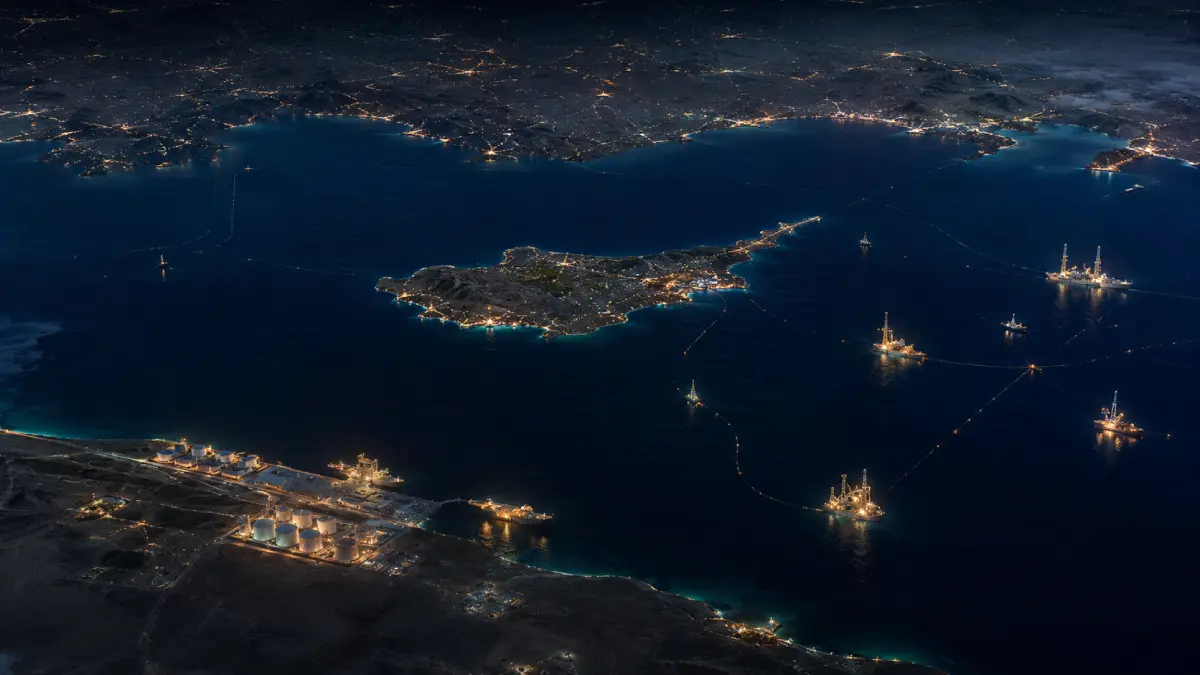
The MoU adds a new layer to a wider shift in Eastern Mediterranean gas. Egypt already has liquefaction infrastructure at Damietta and Idku, while Cyprus has undeveloped offshore discoveries that need a route to market. The commercial logic is increasingly built around processing, liquefaction and re-export through facilities that already exist, rather than waiting for large new pipeline projects that remain politically and financially difficult.
That shift has been building for months. Egypt and Cyprus signed a gas cooperation framework earlier in 2026, while Eni's Cronos plan has already pointed toward a model in which Cyprus gas is processed through existing Egyptian-linked infrastructure and liquefied at Damietta for export. The QatarEnergy-ExxonMobil-Egypt MoU now brings another major company cluster into the same Egypt LNG route logic.
The timing gives the agreement additional weight. Gulf shipping disruption has raised the value of flexible export infrastructure and alternative energy routes. Bosphorus News has reported on a tighter Eastern Mediterranean gas map, with regional production, infrastructure limits and export options becoming more politically important as energy security concerns intensify.
ExxonMobil's role also matters beyond this single MoU. The company is already deepening its Eastern Mediterranean position through offshore exploration activity around Greece and Cyprus. Bosphorus News has tracked ExxonMobil's Eastern Mediterranean offshore push, while the Egypt agreement adds an LNG infrastructure layer to the company's Cyprus gas strategy.
The Türkiye dimension is unavoidable. The MoU does not include Türkiye or Turkish Cypriot authorities, but it advances a gas route built around Egypt's LNG infrastructure and the internationally recognised Republic of Cyprus. Bosphorus News has previously examined Türkiye's exclusion problem in the Eastern Mediterranean gas map, a question that becomes sharper as Cyprus gas is linked to export infrastructure without a political settlement on the island.
Ankara has long objected to unilateral offshore energy activity around Cyprus and argues that Turkish Cypriot rights must be included in any development of the island's hydrocarbon resources. The new MoU does not resolve that dispute. It shows that commercial actors and regional governments are moving ahead through existing political alignments, with Egypt positioned as the infrastructure hub.
That is what makes the agreement strategically important for Türkiye. The Egypt route does not replace Türkiye's own pipeline and corridor diplomacy, and it is not a direct alternative to Turkish infrastructure. It does create a parallel Eastern Mediterranean energy architecture in which Cyprus gas, Egyptian LNG and European demand can be connected without Ankara's participation.
Türkiye is also moving on its own energy diplomacy. Ankara has been widening its partnerships beyond the Eastern Mediterranean, including Türkiye's own energy cooperation push through TPAO, BP, Iraq and Libya. That broader strategy will now run alongside a Cyprus-Egypt LNG route that is gaining commercial structure.
Hormuz risk gives the Egypt model more force. A prolonged disruption in Gulf shipping does not make Eastern Mediterranean gas an immediate substitute for Qatari LNG or Gulf energy flows. It does, however, increase the value of infrastructure that can offer export flexibility, shorter development routes and access to European markets through already built facilities.
The MoU leaves major questions unresolved. Field development, pipeline connections, financing, commercial terms and political risk will still determine whether Cyprus gas moves through Egypt at scale. But the direction is clearer than before. Eastern Mediterranean gas planning is moving toward Egypt's LNG infrastructure, and Türkiye is watching a regional energy route take shape outside the framework it has long demanded for Cyprus.
***Sources: QatarEnergy, Egyptian Ministry of Petroleum and Mineral Resources, Egypt State Information Service, Reuters, Eni and Bosphorus News reporting.