
By Bosphorus News Geopolitics Desk
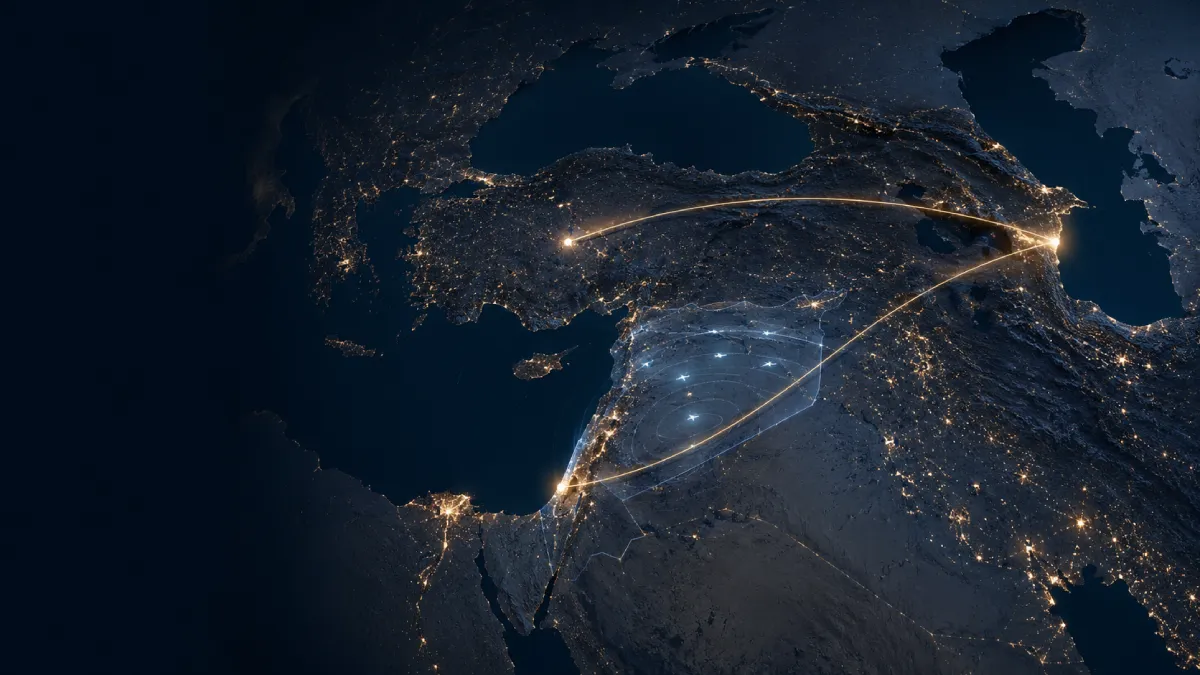
Azerbaijan is trying to ease Israel-Türkiye tensions and restore direct communication after the Israeli strike on Syria's Abu al-Duhur airbase, Israeli media reported on August 25, reviving a diplomatic role Baku had already used to establish military coordination between the two countries.
Ynet reported that Azerbaijani officials were working behind the scenes after the August 18 strike and were concerned that two of Baku's closest partners could slide into a military confrontation. The Jerusalem Post, in a report produced by The Media Line, also said Azerbaijan was mediating to reduce tensions over Syria and prevent military friction.
None of the three governments has publicly announced a new mediation initiative.
Ynet quoted an Azerbaijani official questioning how Baku could respond if Israel and Türkiye, both described as friends, ended up fighting each other. The report said efforts were under way to revive the Syria coordination mechanism and renew direct dialogue, particularly to prevent miscalculation involving military aircraft.
The mechanism itself is not new.
Türkiye and Israel opened technical contacts in Azerbaijan in April 2025 as their military activity in Syria began to overlap. Foreign Minister Hakan Fidan said those discussions were intended to prevent combat elements from misunderstanding one another, while Israel's Prime Minister's Office confirmed talks in Baku aimed at preventing unwanted incidents in Syria.
The contacts later produced a direct military communication route. Bosphorus News reported in July that the Türkiye-Israel Syria hotline remained active despite the breakdown in political relations and increasingly hostile rhetoric between the two governments.
Abu al-Duhur exposed how little a technical mechanism can do once the disagreement itself becomes political.
Israeli aircraft carried out eight strikes on the airbase on August 18, damaging the runway and storage areas. Israel said Syria was preparing to allow a larger Turkish military presence at the facility. Damascus rejected that account, saying Abu al-Duhur was being rehabilitated for the Syrian Air Force. Türkiye said no Turkish personnel were stationed there.
Prime Minister Benjamin Netanyahu later described the attack as a warning against an expanded Turkish military presence in Syria.
U.S. envoy Tom Barrack said Türkiye had received no advance warning and could have responded militarily. Washington has since begun working on a broader deconfliction mechanism involving Türkiye, Israel and Syria to reduce the possibility that another incident turns into direct confrontation.
Baku's reported intervention is aimed at repairing the bilateral route alongside that American effort rather than creating an entirely new format.
The limits of military deconfliction were already visible before the airbase strike. A Bosphorus News analysis in July examined the missing political channel between President Recep Tayyip Erdoğan and Netanyahu, arguing that military officers could manage proximity in Syria but could not settle disputes over Turkish deployments, Israeli air operations or the security structure Damascus was building after the fall of Bashar al-Assad.
U.S. President Donald Trump had previously offered to help manage the dispute between Erdoğan and Netanyahu and maintained direct relations with both leaders. The Abu al-Duhur episode has now pushed that political problem into the same space as the military hotline.
Syria and Israel have also resumed high-level contact.
Syrian Foreign Minister Asaad al-Shaibani and an Israeli delegation held U.S.-mediated talks in Jordan on August 23. Syria's state news agency said the discussions included preventing Israel-Türkiye tensions from spilling further into Syrian territory and reviving negotiations over a security arrangement.
Shaibani had said contacts with Israel were suspended after the Abu al-Duhur strike, although he expected negotiations to resume. He also maintained that Syria would continue relying on Turkish military training and cooperation.
Azerbaijan enters this dispute with access that few regional governments possess.
Türkiye and Azerbaijan are treaty allies under the Shusha Declaration. Baku also has longstanding political, energy and security ties with Israel and has previously acted between Israel and other regional actors.
President Ilham Aliyev described that role publicly in an Al Arabiya interview broadcast in August 2025. He said Azerbaijan's contribution to an earlier period of Türkiye-Israel normalization had been appreciated by both countries. With relations subsequently deteriorating, Aliyev said Azerbaijan would step in if asked and would otherwise use "less public diplomatic efforts" to help them find common ground.
Aliyev also confirmed that Azerbaijan had mediated contacts between Israel and Syria.
Recent events have offered another glimpse of Baku's access inside Israel. In July, Bosphorus News reported that the Armenian Patriarchate of Jerusalem accused Azerbaijan of influencing the removal of an Armenian genocide recognition proposal from the Knesset agenda.
The Patriarchate alleged that Azerbaijani pressure had affected Israeli political calculations. Neither Baku nor the Israeli government publicly confirmed the claim, so the episode does not establish how much influence Azerbaijan exercised. It did show that Azerbaijani access to Israeli decision-makers had become part of a live political dispute inside Israel.
The Syria crisis poses a more immediate test.
The Baku mechanism was created to stop unintended contact between Turkish and Israeli forces. Abu al-Duhur involved a deliberate Israeli strike on a Syrian facility because of what Israel believed Türkiye might do there.
Azerbaijan is now trying to reopen communication after that line was crossed, while Washington is building a wider mechanism that brings Damascus into the same conversation.
Whether either route can prevent another strike will depend less on the existence of a hotline than on whether Türkiye and Israel can agree on where their military activity in Syria is allowed to meet.
Sources: Ynet, The Jerusalem Post, The Media Line, Office of the President of Azerbaijan, Reuters, Republic of Türkiye Ministry of Foreign Affairs, Israel Prime Minister's Office, Bosphorus News review and reporting.