
By Bosphorus News Geopolitics Desk
On October 29, 2026, Armenia moved ahead with the US-backed Trump Route for International Peace and Prosperity (TRIPP) after parliament ratified the framework agreement with Washington by 63 votes to 32 the previous day. The vote came despite opposition warnings that Azerbaijan could secure its long-sought connection to Nakhchivan without granting Armenia equivalent transit rights.
The parliamentary debate took place on October 27, the same day Azerbaijani lawmaker Gaya Mammadov called on the European Union to support TRIPP and provide assistance for reconstruction and demining in areas regained by Azerbaijan.
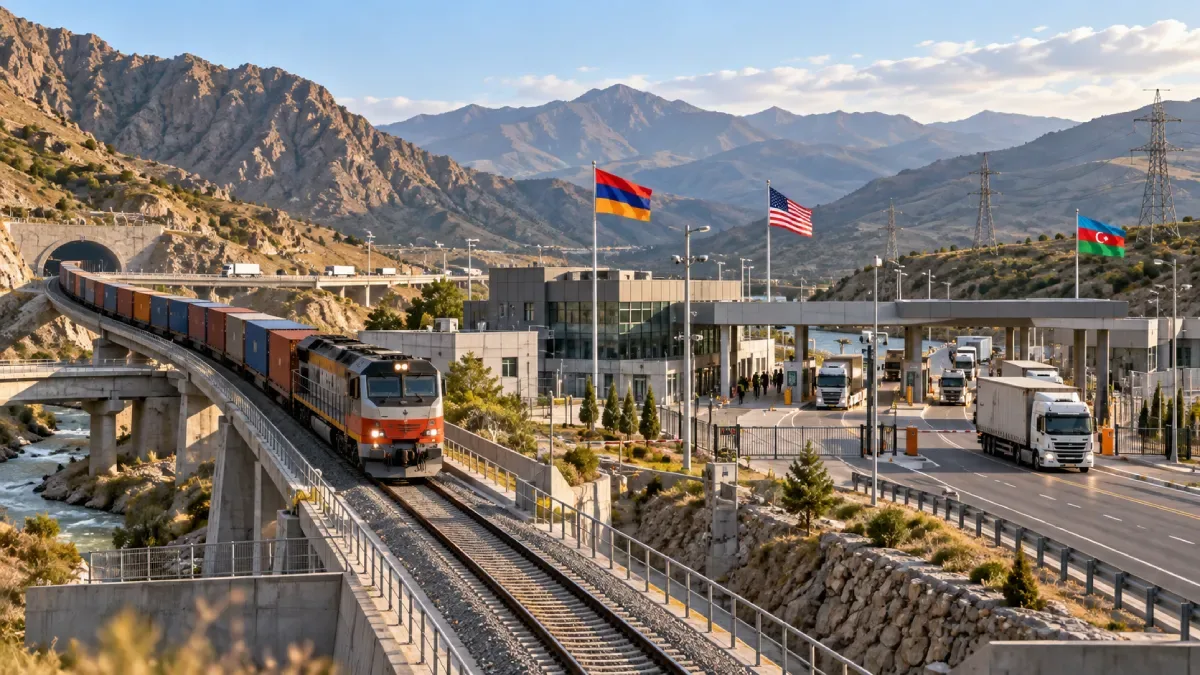
The route across Armenia's southern Syunik region would connect mainland Azerbaijan to its Nakhchivan exclave and provide another transport link towards Türkiye. Yerevan sees an opportunity to reopen regional trade, while opposition lawmakers want firmer guarantees over reciprocal access and Washington's role in developing the route.
Opposition Questions Armenia's Transit Guarantees
Armenia's National Assembly approved the agreement on October 28, with Prime Minister Nikol Pashinyan's Civil Contract faction voting in favour. Lawmakers from the opposition Hayastan (Armenia) and Strong Armenia groups voted against it.
Foreign Minister Ararat Mirzoyan defended the agreement during the October 27 debate, telling parliament that infrastructure developed under TRIPP would remain subject to Armenian sovereignty and jurisdiction. Azerbaijan would gain access to Nakhchivan through Armenian territory, while Armenia could use Azerbaijani transport infrastructure to reach third-country markets, he said.
Opposition lawmakers questioned how that reciprocal access would work in practice.
Anna Grigoryan, leader of the Hayastan parliamentary faction, argued that Azerbaijan's interests were more clearly reflected in the agreement than Armenia's. She pointed to Azerbaijan's proposed connection to Nakhchivan and the US economic presence near Iran's border, questioning what comparable benefits Armenia would receive.
Narek Karapetyan, head of Strong Armenia's parliamentary faction, warned that Azerbaijan could obtain the Nakhchivan link before a final peace treaty was signed. He argued that the transport project and the peace agreement should advance together.
Mirzoyan said TRIPP could be launched before a peace treaty was formally signed. He maintained that transport connections would need to serve the economic interests of both Armenia and Azerbaijan, but acknowledged in an earlier parliamentary committee exchange that procedures for Armenians crossing Azerbaijan still needed clarification.
The two countries have not publicly agreed detailed arrangements for Armenian passenger and freight movements through Azerbaijani territory.
Azerbaijan Seeks European Support
Mammadov raised the European dimension at the Azerbaijan and the European Union: New Perspectives forum in Brussels on October 27, organised by Azerbaijan's Center of Analysis of International Relations and the Egmont Royal Institute for International Relations.
The Azerbaijani parliamentarian urged the EU to help advance TRIPP, support the Armenian-Azerbaijani peace process and provide substantial assistance for rebuilding conflict-affected areas.
"Peace cannot be sustained by political statements alone," he said, calling for concrete steps to maintain progress.
Mammadov argued that new transport infrastructure could create economic opportunities for both countries and help sustain peace. He also requested European assistance with mine clearance, reconstruction and the return of displaced Azerbaijanis.
Citing Azerbaijani figures, he said approximately 4,000 people remained missing and more than 400 had been affected by landmine explosions since the end of the 2020 war.
His remarks were a call from an Azerbaijani lawmaker, not an announcement of EU funding or a new formal funding request from Baku. No dedicated EU financing commitment for TRIPP was identified in the announcements reviewed.
The EU already has transport and infrastructure interests in Armenia. At their May 5 summit, Brussels and Yerevan signed a connectivity partnership covering transport, energy and digital links under the EU's wider Global Gateway agenda. That partnership is separate from the US-Armenian TRIPP agreement.
US-Majority Company to Hold Development Rights
The framework envisages a TRIPP Development Company (TDC), incorporated in Armenia, with a US-controlled entity holding 74% and Armenia owning 26%. The US shareholder is to be a subsidiary of the US International Development Finance Corporation.
Once the company is established and the relevant project areas are agreed, Armenia is to grant it exclusive land-use and development rights in those areas for an initial 49 years. An additional 50-year term would require mutual consent. If extended, Armenia's ownership share would rise to 49% and the US share would fall to 51%, without an additional Armenian investment.
These are development and land-use rights, not a transfer of Armenian sovereignty. The agreement preserves Armenia's authority over borders, customs, immigration, law enforcement and security. It provides for private operators to handle certain customer-facing border services under arrangements requiring Armenian approval.
The framework covers railways, roads, electricity transmission, fibre-optic connections and possible oil and gas pipelines.
Bosphorus News reported in August that engineering work had begun on the Armenian railway section, alongside Washington's announcement of a separate $201 million Trans-Caspian Enterprise Fund. The fund supports investment opportunities across the wider Middle Corridor and is not a dedicated financing package for TRIPP.
Parliamentary ratification does not by itself complete the legal process. Under Article 11, the bilateral agreement enters into force following the exchange of diplomatic notes confirming that both countries have completed their required domestic procedures. Mirzoyan also confirmed that the TDC's company charter and shareholders' agreement still needed to be negotiated and adopted.
Those documents will govern the company's management and major decisions. Individual infrastructure projects will require further arrangements, including defined project areas and relevant concessions or permits.
Türkiye's Rail Link and Iran's Concerns
TRIPP could give Türkiye an additional overland connection to Azerbaijan and Central Asian transport networks.
Ankara is developing the Kars-Iğdır-Aralık-Dilucu railway towards Nakhchivan and separately discussing the possible restoration of the Kars-Gyumri railway with Armenia. The latter would reopen a different cross-border connection, with no confirmed date for services to resume.
Iran has approached TRIPP cautiously, particularly the proposed US commercial presence near its northern border. Tehran has sought assurances that the project will not create a foreign military or security role there. Armenian officials maintain that the agreement provides for no deployment of US military forces.
In September, Iran's ambassador to Armenia called on Azerbaijan to allow reciprocal railway access through Nakhchivan, arguing that Armenia should also be able to reach Iran by rail through Azerbaijani territory.
The demand overlaps with the Armenian opposition's concern about reciprocal access, although Tehran also has its own transport and border security interests.
The October 28 vote gives Pashinyan's government parliamentary approval for the framework. Azerbaijan's appeal for European participation, meanwhile, comes before the route's company structure and operating arrangements have been finalised.
The TDC's governing documents remain unfinished, while Yerevan and Baku have yet to publish agreed rules for Armenian transit through Azerbaijan. Those decisions will shape how and when the proposed connection begins operating.
Sources: Armenian National Assembly; Ministry of Foreign Affairs and International Trade of Armenia; Armenpress; RFE/RL Armenian Service (Azatutyun); Report.az; European Commission; Bosphorus News review and reporting.