
By Bosphorus News Research Desk
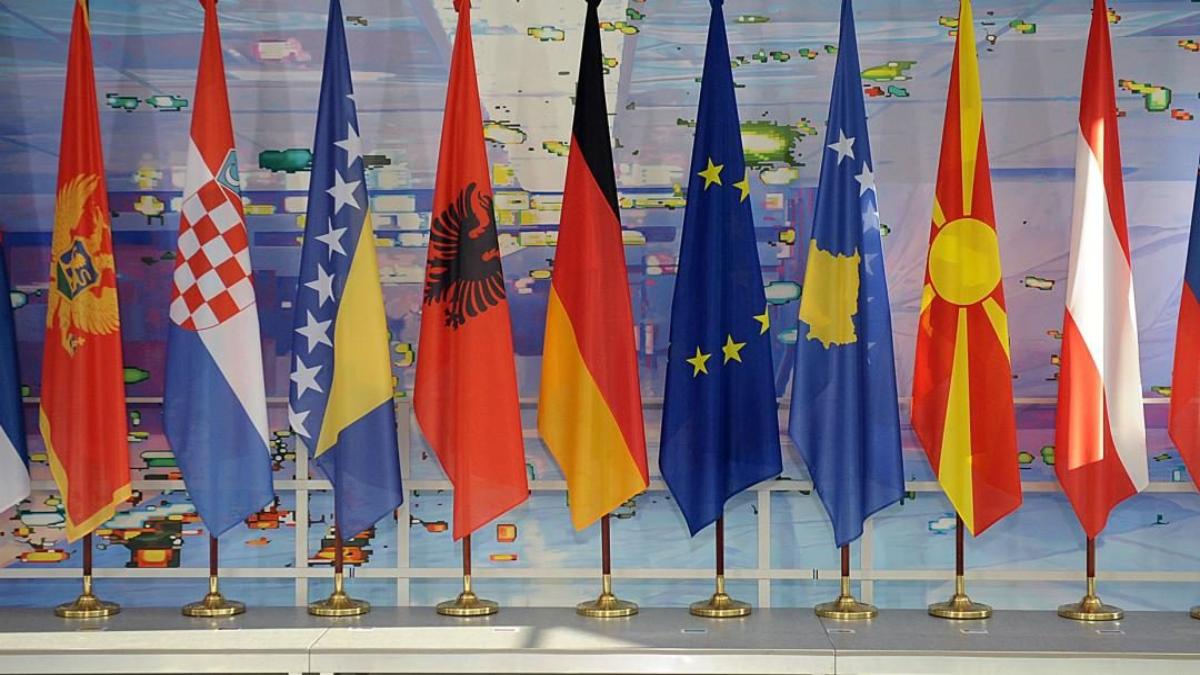
A new policy brief by the Jacques Delors Institute argues that the European Union can no longer treat Western Balkans enlargement mainly as a legal and institutional process, saying the region has become a direct test of Europe's security and defense planning.
The February 2026 brief, written by Tefta Kelmendi, says Russia's war in Ukraine, hybrid pressure, uncertainty in transatlantic politics and instability inside the Western Balkans have made the region more exposed. It argues that the EU's current enlargement policy is not enough to answer those risks unless it is tied more directly to defense cooperation, strategic partnerships, defense industry modernization and infrastructure.
The argument gained sharper relevance after the June 5 EU-Western Balkans Summit in Tivat, where European Council President António Costa described Western Balkans accession as a "crucial geopolitical investment" and placed security and defense cooperation among the central files discussed by regional and EU leaders.
Enlargement becomes security policy
Kelmendi's brief says the prospect of EU membership remains important, but is no longer enough by itself to stabilize the region. It calls for the EU to combine enlargement with practical security and defense tools before candidate countries become full members.
That means stronger cooperation with Western Balkan armed forces, deeper partnerships with candidate states, support for defense industries and investment in infrastructure that can serve strategic as well as civilian needs.
The Tivat summit moved in the same direction. EU leaders discussed the European Peace Facility, security and defense partnerships, cyber threats, foreign information manipulation and cooperation against hybrid pressure. The summit also repeated that full convergence with the EU's foreign and security policy remains an essential expression of unity.
That language marks a shift. The Western Balkans are no longer being discussed only as a future enlargement space, but as part of Europe's current security perimeter.
Türkiye remains part of the Balkan equation
Türkiye has long kept active channels with Bosnia and Herzegovina, Kosovo, Albania, North Macedonia and Serbia, while also working through NATO and regional formats. That presence now sits inside a wider European debate.
As Bosphorus News previously reported, NATO and EU military chiefs have already started treating the Western Balkans less as a set of disconnected national files and more as a single security front shaped by military mobility, deterrence, hybrid pressure and instability around Bosnia and Kosovo.
That earlier reading now fits the Jacques Delors Institute's argument that enlargement, defense planning and strategic infrastructure are moving into the same policy space. The Western Balkans are no longer only a question of accession timing; they are becoming a live test of whether Europe can secure its southeastern flank before the region fully enters the EU.
The policy brief also notes that Western Balkan defense cooperation involves partners beyond the EU, including Türkiye, China, Russia, Israel, the United Kingdom and the United States. That makes the region more competitive and raises the cost of slow European engagement.
Infrastructure is no longer just development
One of the brief's most important points is its focus on strategic infrastructure. Roads, railways, ports, bridges, energy systems and digital networks are not only development tools. They also shape military mobility, supply chains, crisis response and regional security planning.
This is where the Western Balkans connect directly to the wider map of corridors around Türkiye. The region sits between the Adriatic, Central Europe, the Aegean, the Black Sea and the Eastern Mediterranean. It is also tied to energy transport, rail modernization and supply routes that affect NATO planning and European crisis management.
That gives the Western Balkans a role far beyond accession chapters. The region can either remain a weak seam in Europe's security architecture or become a functional corridor between the EU, NATO's southeastern flank and the wider Mediterranean-Black Sea space.
Tivat adds political timing
The Tivat summit gave the policy brief a current political setting. German Chancellor Friedrich Merz said the EU had to show that it was willing and able to enlarge, while leaders discussed ways to give candidate countries more access to EU programs and the single market before full membership.
Montenegro remains the most advanced candidate and has set 2028 as a target, but the larger question is no longer only which country joins first. The strategic question is whether the EU can build a security relationship with the region before accession is complete.
That question also touches Türkiye's regional diplomacy. The recent Fidan-Gerapetritis meeting in Sofia, held on the sidelines of the South-East European Cooperation Process summit, showed that Balkan platforms remain useful for Turkish, Greek and European diplomacy at a time when Aegean, Cyprus and Eastern Mediterranean disputes are also active.
Bosphorus News reading
The Jacques Delors Institute brief is not a Türkiye-focused paper, but it strengthens a point already visible in regional diplomacy: the Western Balkans are returning as a defense and infrastructure file.
Türkiye can remain a military and diplomatic actor in the Balkans, but the region is being pulled more deeply into EU defense planning, foreign policy coordination and infrastructure strategy. That means Ankara will face a Balkan map shaped not only by bilateral ties, but also by Europe's effort to turn enlargement into a security instrument.
The Western Balkans may still be outside the EU, but the security debate has already crossed the border. Brussels is beginning to treat roads, ports, railways, military mobility, defense industry and political convergence as parts of the same regional file. That leaves Türkiye, NATO and the EU working around a region that is no longer only preparing for membership, but already shaping Europe's next defense map.
***Sources: Jacques Delors Institute, European Council, Bosphorus News reporting.
Read the study: https://institutdelors.eu/en/publications/enlargement-to-the-balkans-crucial-for-europes-security/