
By Bosphorus News Geopolitics Desk
Speaking in Hamburg on April 20, European Commission President Ursula von der Leyen drew criticism after remarks that placed Türkiye alongside Russia and China, prompting a rapid clarification effort from Brussels the following day.
The reaction came quickly. European Parliament's Türkiye rapporteur Nacho Sánchez Amor described the comparison as geopolitically flawed, warning that grouping a NATO ally with strategic competitors undermines the European Union's own security logic. On April 21, the European Commission moved to soften the message, with spokesperson Paula Pinho saying the EU does not "oversee" Türkiye's regional influence.
The episode goes beyond a single line. It exposes a deeper inconsistency between Brussels' political framing of Türkiye and the operational realities shaping European security.
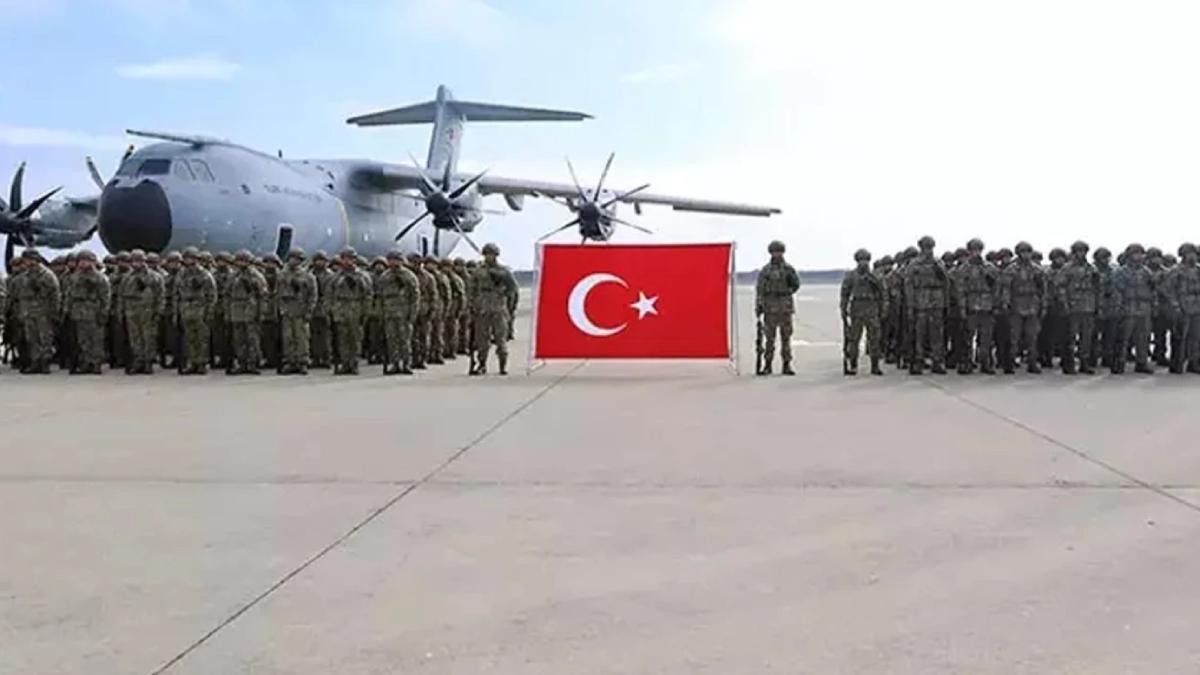
As detailed in NATO's Early F-16 Request Puts Türkiye at the Center of Baltic Air Policing, the alliance recently moved to bring forward Türkiye's F-16 contribution to Baltic Air Policing, underscoring how directly European security continues to depend on Turkish military readiness when timelines tighten.
That operational reliance sits uneasily with rhetoric that places Türkiye in the same frame as strategic competitors.
The contradiction is also visible at the institutional level. As outlined in Vetoing Deterrence: Türkiye's SAFE Exclusion and Europe's Strategic Gap, Türkiye remains outside key European defence mechanisms even as the bloc intensifies its focus on deterrence and military capability. The result is a system where Türkiye's capacity is implicitly relied upon but structurally excluded from emerging European defence frameworks.
This gap has strategic consequences. As explored in Is Türkiye Prioritising NATO at the Expense of Its Own Security?, Türkiye's expanding operational role within NATO does not automatically translate into leverage in its immediate security environment, particularly in the Aegean and the Eastern Mediterranean.
These dynamics point to a broader structural split. As examined in Europe Defense NATO EU Split Turkey, the continent is moving toward a dual system. NATO continues to function as the operational backbone, where Türkiye remains a central actor, while EU-led initiatives advance in parallel with a more selective political logic that often leaves Ankara outside the room.
Von der Leyen's remarks brought that divide into sharper focus. The issue is not only how Türkiye is described, but how Europe defines the boundaries of its own security community at a moment when dependence and exclusion are unfolding at the same time.
The tension is unlikely to fade quickly. As European defence debates accelerate, the gap between rhetoric and operational necessity is becoming harder to manage, particularly in regions where Türkiye's role is not theoretical but immediate and measurable.