
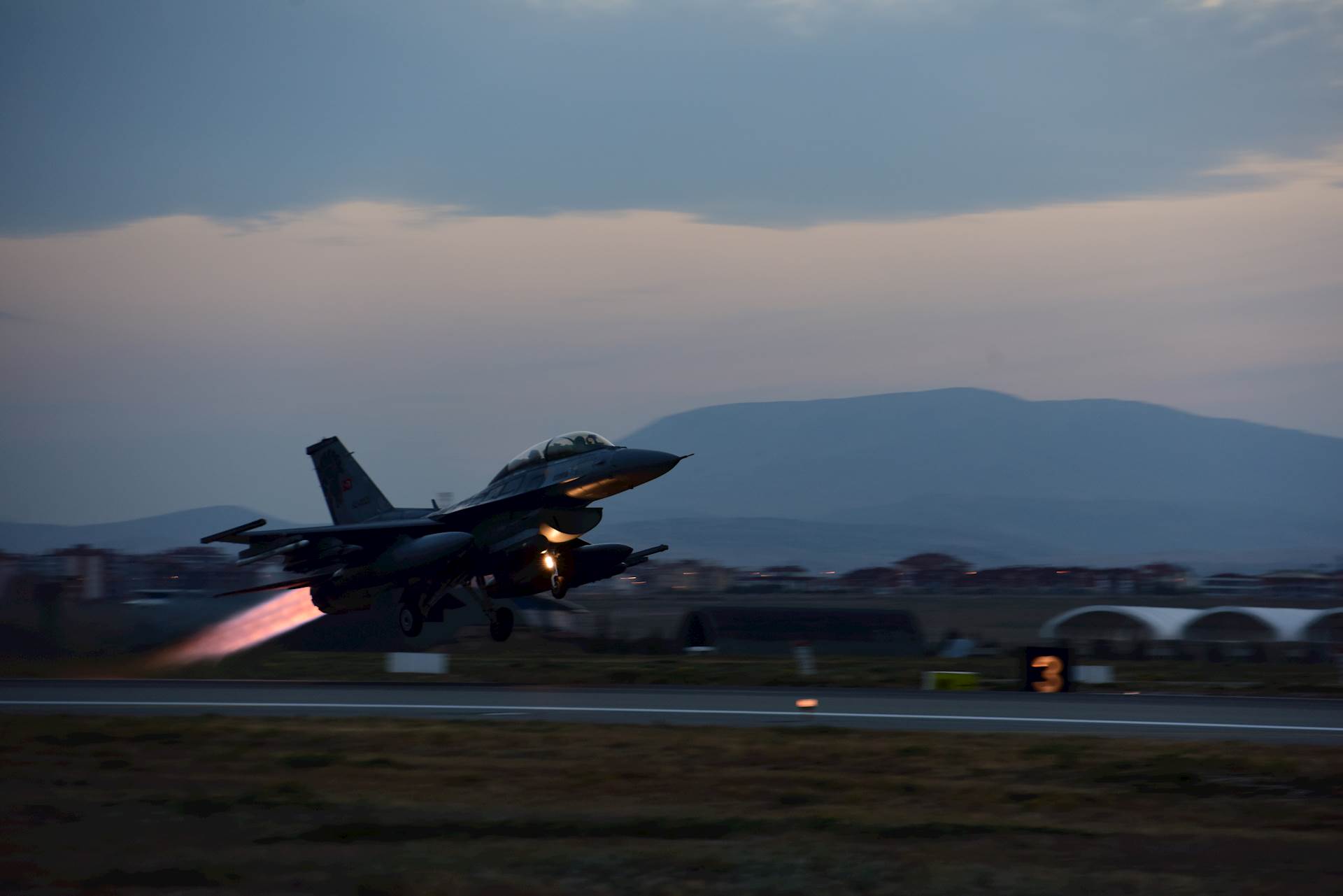
NATO's reported request for Türkiye to bring its F-16 contribution to Baltic Air Policing forward ahead of schedule can be described as a technical adjustment. In reality, the direction and timing of the request say more about how the alliance is managing exposure on its northeastern flank than about any single rotation. When timelines tighten, readiness becomes the deciding currency.
What "early" really signals
Baltic Air Policing itself is not new. It was designed to be routine, rotational, and deliberately low-profile. That is precisely why the pull-forward matters. Asking a contributor to arrive earlier than planned points to gaps elsewhere that can no longer be absorbed through administrative reshuffling. NATO is choosing certainty over process.
In an environment where airspace monitoring and intercept activity have become a constant rather than an exception, the alliance is prioritizing continuity. The aim is not escalation, but the removal of ambiguity. Early deployment is a way of locking the calendar before uncertainty does it for you.
European defence debates meet operational reality
This episode also cuts through the abstraction of Europe's defence autonomy debate. While institutional discussions about integration and capacity-building continue, immediate security requirements are still met through NATO tasking, NATO basing, and NATO force generation. The system that produces effects on short notice remains the alliance, not parallel structures.
Türkiye's position in this context is not incidental. Ankara has long argued that European security cannot be detached from NATO's command framework without creating operational blind spots. The current request reflects that logic in practice. When timelines compress, decisions are made where authority and execution still align.
Why Türkiye fits the requirement
Türkiye's relevance here is not symbolic. It is functional. Baltic Air Policing rewards countries that can sustain tempo rather than surge briefly. Aircraft availability, maintenance discipline, trained crews, and the ability to operate away from home without friction matter more than headline numbers.
The "early" request suggests NATO is leaning toward reliability over balance. Türkiye is being treated less as a geographically defined contributor and more as a system that can absorb short-notice demands without degrading performance elsewhere. That is a compliment, but it is also a test.
The cost beneath the headline
For Ankara, the trade-off is real. Early deployments compress planning margins, accelerate airframe fatigue, and place additional strain on personnel cycles. None of this appears in public messaging, but it accumulates over time. What begins as flexibility can turn into structural expectation.
The risk is not participation itself. The risk is normalization. If readiness becomes an assumed buffer for others' delays, the burden quietly shifts from collective responsibility to selective endurance. That line is easy to cross and hard to redraw.
Bottom line
NATO's early call is both affirmation and warning. It confirms that Europe's security architecture still relies on a narrow group of members that can move first. Türkiye is one of them. But filling gaps should not become a substitute for fixing them. The strategic value of this role will depend not on how often Türkiye is asked, but on how deliberately it chooses when to say yes.