
By Murat YILDIZ
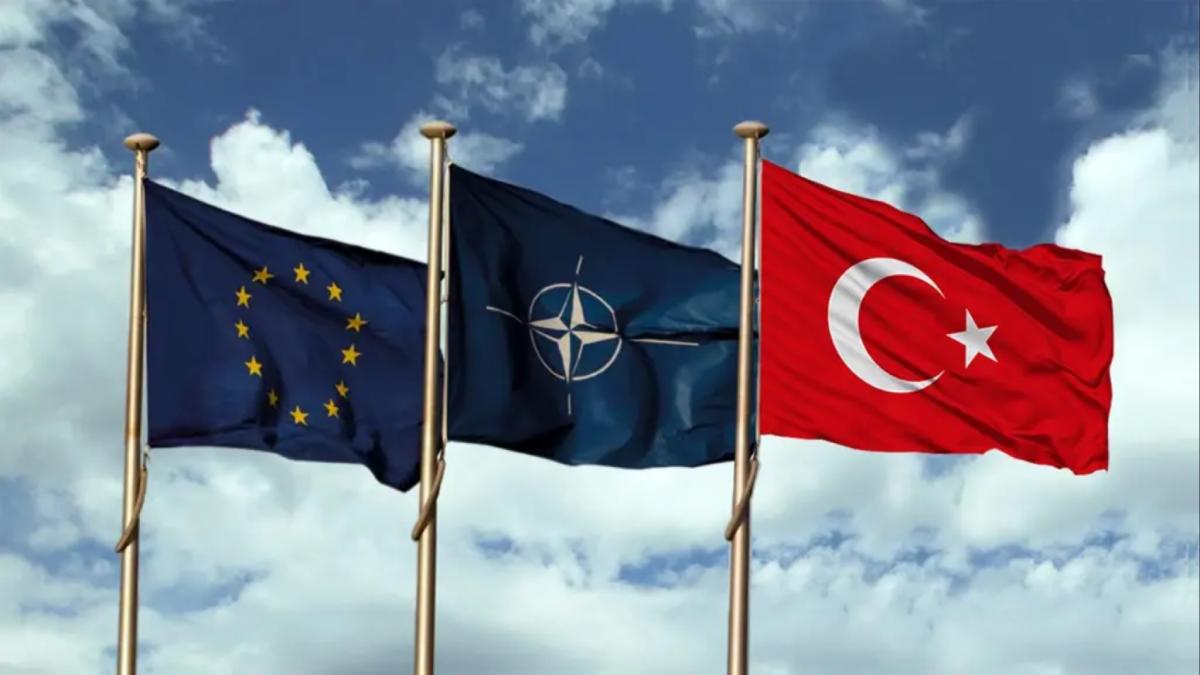
Europe is moving quickly to consolidate its defence capacity as ammunition output increases and procurement mechanisms are coordinated under mounting strategic pressure. NATO adjusts posture across theatres while the European Union channels defence financing through its own legal structures, creating an appearance of alignment that conceals a deeper divergence in institutional logic.
Operational integration within NATO advances through expanding interoperability, joint deployments and coordinated deterrence planning that reflect the realities of alliance practice. Financial participation within the European Union, however, is structured along political and legal boundaries that do not fully correspond to those realities. The result is a structural misalignment between operational reliance and industrial inclusion.
The war between Russia and Ukraine demonstrated how institutional decisions translate directly into security outcomes. Türkiye's implementation of the Montreux Convention restricted additional warship access to the Black Sea during a period of heightened volatility, transforming a legal provision into a stabilising instrument with strategic consequences. As maritime risks intensified and drifting naval mines threatened commercial routes, Türkiye coordinated with Romania and Bulgaria to establish a regional mine countermeasures initiative that safeguarded navigation and reinforced collective maritime security.
The grain corridor launched in Istanbul moved through diplomatic channels yet carried operational weight by sustaining shipping lanes and protecting supply chains central to European food security, embedding Türkiye more deeply within the practical management of European stability.
Türkiye's role also extends into the Baltic region, where Turkish F-16 squadrons deployed to Poland and participated in Baltic Air Policing and Enhanced Air Policing rotations as part of NATO's forward deterrence posture. Surveillance missions and early warning deployments along the alliance's northeastern flank link the Black Sea and the Baltic in a single strategic arc, confirming that Turkish forces are embedded in Europe's operational architecture.
This operational presence rests upon a defence industrial base that has expanded steadily and operates at scale within alliance supply chains. Official figures indicating approximately six billion dollars in defence and aerospace exports between January and September 2025 reflect production depth that sustains deployed capability and contributes to shared deterrence infrastructure. The point is not export value alone, but the production depth it signals.
SAFE emerges in this context as more than a financing mechanism. By centralising eligibility criteria and anchoring industrial expansion within EU legal jurisdiction, the Union strengthens its influence over the structure of defence production across the continent. Funding rules determine participation in the emerging defence ecosystem and influence supply chains and investment decisions.
The political dimension of this process is openly articulated. Greek officials have framed Türkiye's potential participation in terms of national interest and security concerns, while government representatives have argued that a state perceived as posing a threat to an EU member should not gain structured access to SAFE. Ankara rejects this framing, arguing that bilateral disputes should not set the limits of European security cooperation and that participation in SAFE is a matter of systemic coherence rather than commercial advantage.
When a continent wide defence financing mechanism can be shaped by the veto power of a single member state acting within a bilateral dispute, the scale of decision making shifts in ways that affect the architecture of European defence itself. SAFE becomes a channel through which bilateral tensions shape collective industrial policy, determining which actors are structurally integrated into Europe's long-term defence ecosystem and which remain positioned at its margins.
European leaders have publicly acknowledged the battlefield impact of Turkish produced systems during the early stages of the war in Ukraine, recognising operational effectiveness in several EU capitals. At the same time, the industrial base sustaining those systems remains outside the Union's consolidated financing structure, reflecting a boundary drawn not along performance criteria but along institutional lines. The growing distance between operational reliance and financial inclusion becomes most visible in areas where deterrence depends upon continuity of supply, maintenance capacity and production depth.
The bottom line is simple. Europe can no longer afford the luxury of letting the Transatlantic alliance be held hostage by the narrow interests of Athens and Nicosia. These same actors have consistently lobbied to block Türkiye's F 16 modernization and F 35 participation, targeting the very air power that secures NATO's southern flank and beyond. If Brussels and NATO fail to stop bilateral vetos from bending collective defence funds and military procurement to national disputes, any talk of strategic autonomy is empty rhetoric. For Europe's defence to be credible, these local disputes must be decoupled from continental security needs. Anything less ensures that this divided defence becomes a permanent and self inflicted vulnerability.