
By Bosphorus News Geopolitics Desk
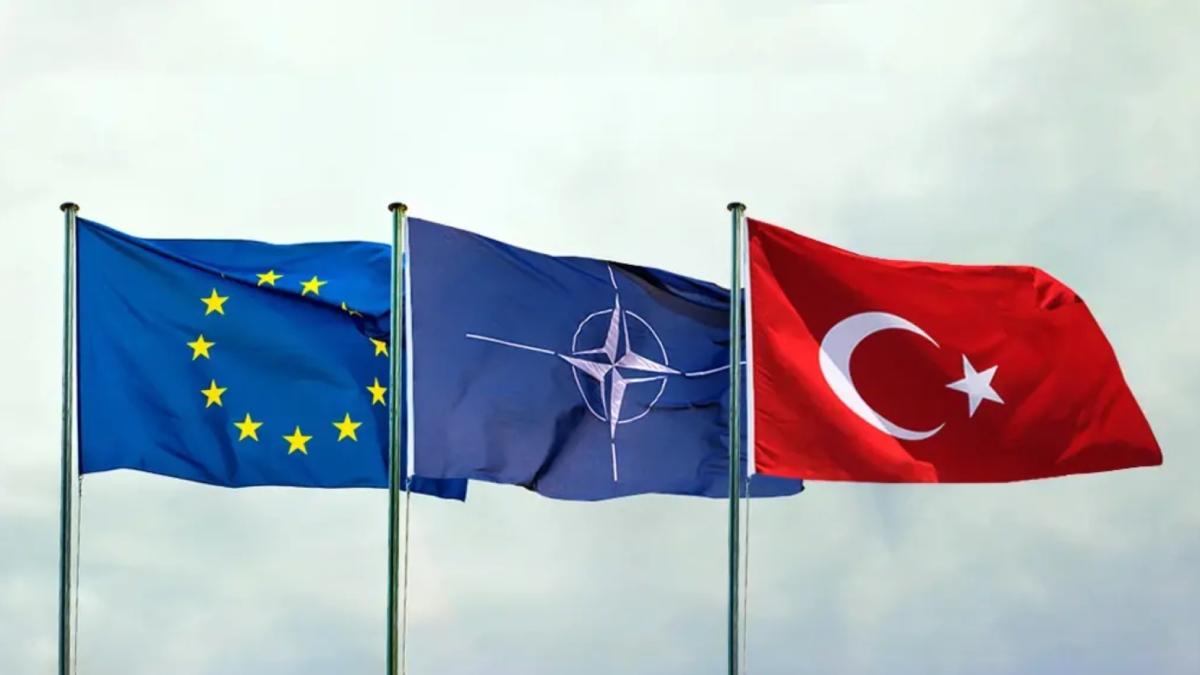
Europe's defence debate is no longer centered only on capability gaps. It is increasingly about structure. Two systems are taking shape at the same time, and they are moving in different directions.
One still runs through NATO, where operational requirements continue to shape decisions. The other is forming inside the European Union, where financing tools and industrial policy are beginning to define a separate defence ecosystem. The divide is no longer abstract. It can now be seen in who carries the burden when pressure rises and who gets access when money, procurement and industrial integration are being organized.
The operational system remains anchored in NATO. Air policing missions, eastern flank deployments and command structures still depend on a limited group of allies able to sustain readiness when timelines tighten. Türkiye sits firmly within that group. As Bosphorus News detailed earlier in its report on NATO's early F-16 request for Baltic Air Policing, the alliance's move to bring Türkiye's contribution forward showed how quickly it turns to operationally ready contributors when planning margins narrow.
That pattern has become more visible as NATO maintains a reinforced posture across its eastern flank while also managing growing pressure around the Black Sea and the Eastern Mediterranean. In practice, this still leaves Türkiye in a familiar position. When allied military effect is needed quickly, Ankara remains part of the answer.
The second system is forming through European Union instruments such as SAFE. What began as a response to defence readiness concerns is turning into a financing and procurement architecture that defines participation through access to capital, joint acquisition and industrial integration. As Bosphorus News previously reported in its analysis of SAFE and Türkiye's exclusion from the framework, that system is expanding while still leaving Türkiye outside its core structure.
This is not simply a question of formal eligibility. It goes to the logic of the system itself. SAFE is moving from framework to implementation, with funding allocations and partnership structures beginning to shape who will be included in Europe's future defence industrial base. Countries inside the system gain access to coordinated procurement and financial backing. Countries outside remain tied to operational cooperation without comparable industrial integration.
Ukraine sharpens that contrast further. Under SAFE, Ukraine can participate with EU member states on equal terms in common procurement, and its industry is treated within the instrument's wider eligibility logic in ways that place it closer to the core system than Türkiye, despite Türkiye's deeper operational role inside NATO.
That leaves a split running across the same security space. NATO continues to rely on Turkish air power, deployments and command contributions. The European Union is building a parallel structure that does not absorb that same capacity into its financing and procurement system.
The imbalance is becoming harder to dismiss as a temporary political problem. Operational effectiveness and industrial integration are no longer moving together. One track produces immediate military effect. The other shapes long-term capability development, market access and industrial scale. Once those tracks separate, the debate stops being procedural and starts becoming strategic.
The implications may not appear all at once. Procurement rules, financing access and partnership formats tend to look technical in the early phase. Over time, they influence who gets integrated, who gets scaled and who remains useful only when pressure rises. That is where the current divergence becomes more serious than a bureaucratic dispute. It begins to define the shape of Europe's security order.
That contradiction is getting harder to ignore. Europe still turns to Turkish military capacity when pressure rises and timelines tighten, yet the defence financing structure now taking shape inside the European Union is being built on a different political logic. Türkiye remains useful where immediate effect is needed, but absent where access, funding and long-term industrial integration are being decided. That is no longer a technical detail buried in the fine print. It is becoming part of the structure itself. The question now is not whether Türkiye matters to European security. It already does. The real issue is whether Ankara will continue to accept a system in which Turkish military relevance is recognized in practice while Turkish access is narrowed where the next generation of European defence capability is being financed and built.