
By Bosphorus News Geopolitics Desk
The contradiction is no longer easy to disguise
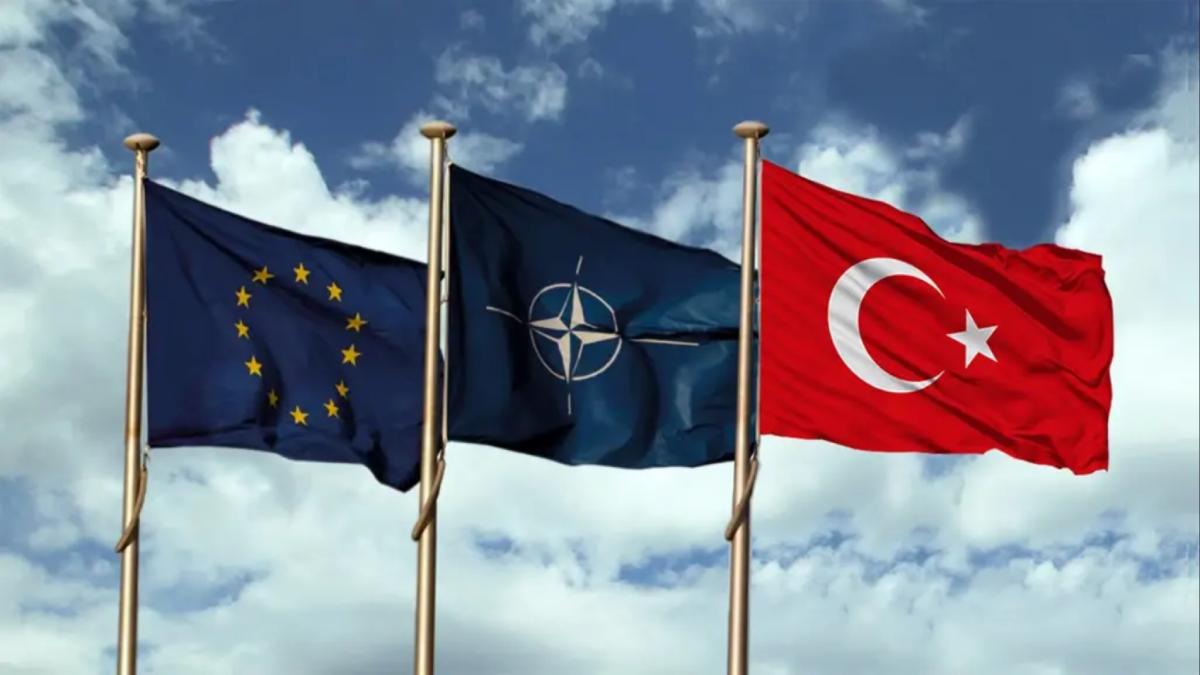
The European Union is opening defence partnership channels to countries such as Ghana while still keeping Türkiye outside the €150 billion SAFE framework, even as NATO continues to rely on Turkish military capacity across theatres that matter directly to European security. That is no longer just a bureaucratic inconsistency. It is a political choice with strategic consequences.
As Bosphorus News argued in an earlier analysis, Europe has been drifting into a divided defence model. NATO relies on Turkish capacity in operational terms, while the EU keeps Türkiye outside the financial and industrial side of the emerging order.
The latest expansion of the EU's Security and Defence Partnership register makes that divide even harder to ignore. Canada is on the list. Ghana is on the list. India, Australia and Iceland are on the list. Türkiye is not. Under SAFE, that matters because the programme is not simply a loan mechanism. It is beginning to shape who gets treated as part of Europe's future defence industrial ecosystem and who stays outside it.
SAFE was adopted on 27 May 2025 as part of the EU's defence readiness push. It offers long-maturity loans for joint procurement and has quickly become the biggest coordinated defence financing instrument the Union has built so far. Interest has already run ahead of the ceiling. Nineteen member states applied. Poland alone asked for €43.7 billion. Germany asked for nothing.
What matters even more than the size of the fund is the way it is structured. The procurement rules cap non-European content at 35 percent. In practice, that favours suppliers inside the EU, the European Economic Area and a narrow circle of politically aligned partners. Countries with Security and Defence Partnerships can move toward deeper participation and, with extra arrangements, industrial access. Countries without that status stay outside the core system.
Türkiye can still point to its formal status as an EU candidate country, and on paper that creates a narrow opening. Candidate countries may join common procurements and contribute to aggregated demand. But that legal wording does not change the real balance of access. Turkish defence products do not count toward the preferred European component threshold in the same way. Turkish firms cannot move into meaningful industrial participation without a Security and Defence Partnership. Even countries that already have such partnerships still need additional agreements before EU funding reaches their industries.
That is why the formal argument about eligibility only goes so far. Türkiye is not being left out by accident. It is being kept near enough to preserve appearances and far enough to prevent meaningful entry.
That becomes much harder to defend when Türkiye's actual security role is brought back into view.
The issue is not whether Türkiye contributes to European security. It clearly does. During the war in Ukraine, the implementation of the Montreux Convention helped limit further naval escalation in the Black Sea. Türkiye also worked with Romania and Bulgaria on mine countermeasure coordination as maritime risks grew, while the grain corridor negotiated in Istanbul helped sustain supply routes with direct implications for European stability. These were not symbolic gestures. They had practical effects at a moment of real strain.
The same is true inside NATO structures. Türkiye has continued to contribute to missions, deployments and command responsibilities tied directly to Europe's defence posture. Its role has included air policing activity on the eastern flank, including Romanian deployments, participation in major allied exercises such as Steadfast Dart, and command responsibility in Kosovo. It also remains the largest non-EU contributor to the European Union Force Althea mission in Bosnia and Herzegovina. Europe is willing to rely on Turkish capacity when the issue is deterrence, forward presence or regional stability. The line appears when the conversation shifts to money, procurement and industrial integration.
That is where the political mechanism comes into full view.
Greek Prime Minister Kyriakos Mitsotakis has already framed participation in security terms. Cypriot President Nikos Christodoulides has taken the same line. In October 2025, Cyprus formally blocked Türkiye's access to SAFE, turning a long-held political position into a concrete barrier inside the EU process. As Bosphorus News previously reported, that barrier was not informal or rhetorical. It was built directly into the process itself.
That matters because the usual Brussels language about procedures and frameworks can blur what is actually happening. The decisive factor here is political leverage. Greece and Cyprus still have the ability to carry bilateral disputes into areas presented as common European policy. SAFE now sits inside that pattern. It is not even the first case. Türkiye has already been kept outside PESCO, the European Defence Fund and the European Defence Agency. SAFE is simply larger, more visible and more consequential.
The Canada and Ghana cases make the point more clearly than any institutional statement could. Canada is not a candidate country and not part of Europe, yet it secured a Security and Defence Partnership and moved into the SAFE framework. Ghana is now on the register too. Türkiye, despite its defence industrial depth, NATO role and strategic geography, remains outside. That strips away the comforting claim that this is mainly about formal status or geography. The line is political. Some countries are admitted because agreement exists. Türkiye is excluded because that agreement is being blocked.
That leaves the EU defending an increasingly awkward position. Brussels presents SAFE as a tool for strategic readiness, industrial coordination and reduced vulnerability in a harsher security environment. At the same time, one of the most capable defence actors in its wider security space remains outside the financing architecture built to support that goal. Europe is effectively using one logic for operations and another for industrial inclusion. That gap is no longer easy to explain away.
The deeper issue is not only that Türkiye is being excluded. It is that Europe is starting to lock in a split between the forces it depends on in practice and the industrial structure it wants to build for the future. NATO can rely on Turkish air power, Turkish deployments and Turkish command roles. The EU can still exclude Türkiye when procurement chains, financing rules and industrial access are at stake. That may suit the veto preferences of Athens and Nicosia. It does not help the coherence of European defence.
As SAFE begins to shape procurement and investment decisions more seriously in 2026, the message will become harder to ignore. Europe is prepared to use Turkish capacity when it needs it, but not prepared to build that same capacity into its long term defence financing system. The contradiction is no longer buried in the fine print as Bosphorus News reported months ago. It is now out in the open.