By Bosphorus News Geopolitics Desk
On October 22, 2026, the US State Department urged Türkiye and Greece to resolve their maritime disputes through talks after Libya's eastern parliament endorsed the 2019 Türkiye–Libya agreement. In a response to Kathimerini's Washington correspondent Lena Argiri, a department spokesperson linked the settlement of maritime disputes to commercial investment and exploration in the Eastern Mediterranean.
The spokesperson called for "good-faith negotiation" and direct dialogue between the two North Atlantic Treaty Organization (NATO) allies. The response offered no new judgment on the pact's legal validity.
US Legal Record Addresses Greek Maritime Claims
The State Department's 2019 Digest of United States Practice in International Law, compiled by its Office of the Legal Adviser, records Washington's position on the memorandum signed by Türkiye and Libya on November 27, 2019.
Chapter 12, page 436, says the United States had conveyed to Türkiye its view that islands generally generate an exclusive economic zone and continental shelf under international law, as reflected in the United Nations Convention on the Law of the Sea. It also notes Greece's maritime claims in the area and states that the memorandum cannot affect third states' rights or obligations without their consent.
Washington Has Declined to Draw the Boundary
At a September 25, 2020 State Department briefing ahead of Secretary of State Mike Pompeo's visit to Greece, a senior official said Washington did not take a position on how other countries should delimit their maritime boundaries. The official called for negotiations under international law and said the Seville Map had no legal significance.
On October 15, 2021, State Department spokesperson Ned Price again supported exploratory talks between Greece and Türkiye. He said the United States generally did not take a position on how other states should resolve their maritime boundary disputes.
Libya Vote Draws European Objections
Libya's House of Representatives in Benghazi reversed its opposition on October 20, repealing two resolutions from 2020. The United Nations Treaty Collection dates the agreement's entry into force to December 8, 2019. The vote established no new maritime boundary.
European Council President António Costa and European Commission President Ursula von der Leyen reaffirmed the EU's rejection, arguing that the pact infringes third states' rights. Greece and the Republic of Cyprus also objected. Greek Ambassador Aglaia Balta raised the agreement at the UN Security Council in closed consultations on October 21, acting on instructions from Foreign Minister Giorgos Gerapetritis.
Ankara maintains that the memorandum complies with international law and principles of equity.
Energy Exploration South of Crete
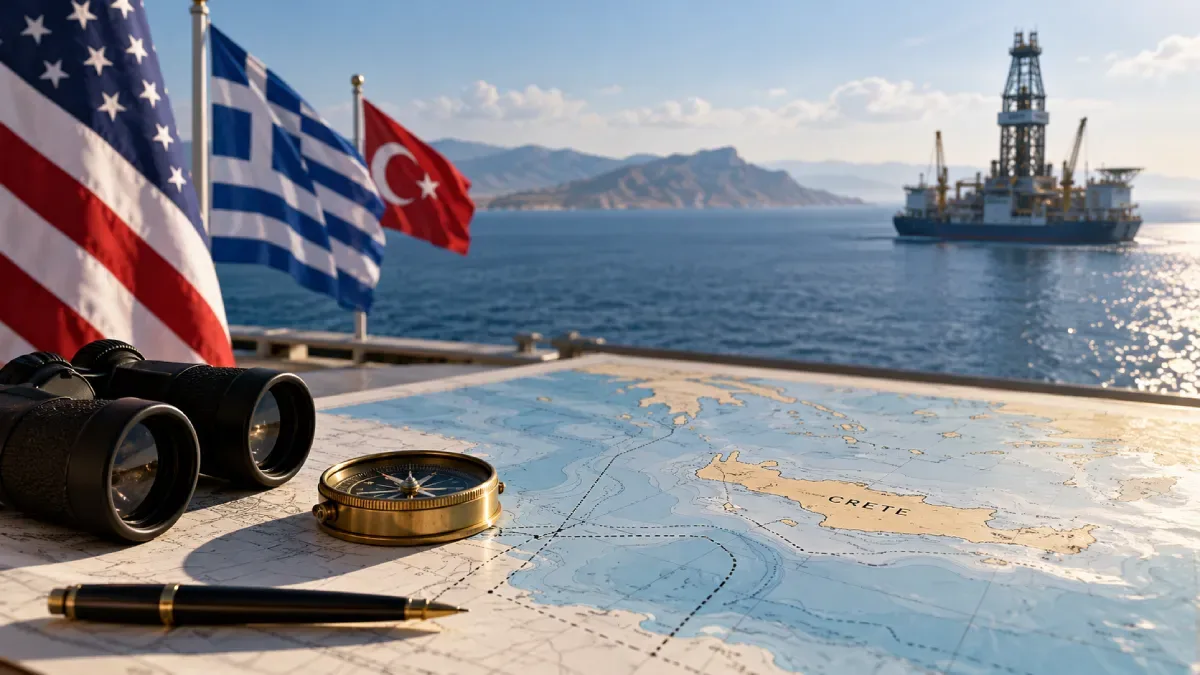
The commercial stakes include waters south of Crete, where US energy company Chevron and Greece's HELLENiQ ENERGY signed offshore exploration leases on February 16, 2026. The agreements cover South Crete 1 and South Crete 2, alongside two blocks off the Peloponnese. Türkiye has objected to the Greek exploration plans, citing its 2019 maritime agreement with Libya.
The October 22 State Department response named no specific energy project and announced no new US negotiating initiative. The competing maritime claims remain unresolved.
Sources: U.S. Department of State, Kathimerini, Libyan House of Representatives, United Nations Treaty Collection, Council of the European Union, Republic of Türkiye Ministry of Foreign Affairs, Chevron, HELLENiQ ENERGY, Bosphorus News review and reporting.