
By Bosphorus News Defense Desk
Türkiye's National Security Council (Milli Güvenlik Kurulu, MGK) has placed the next phase of the PKK disarmament process within a regional agenda extending from Syria and Iraq to the Black Sea, the Caspian and international trade routes.
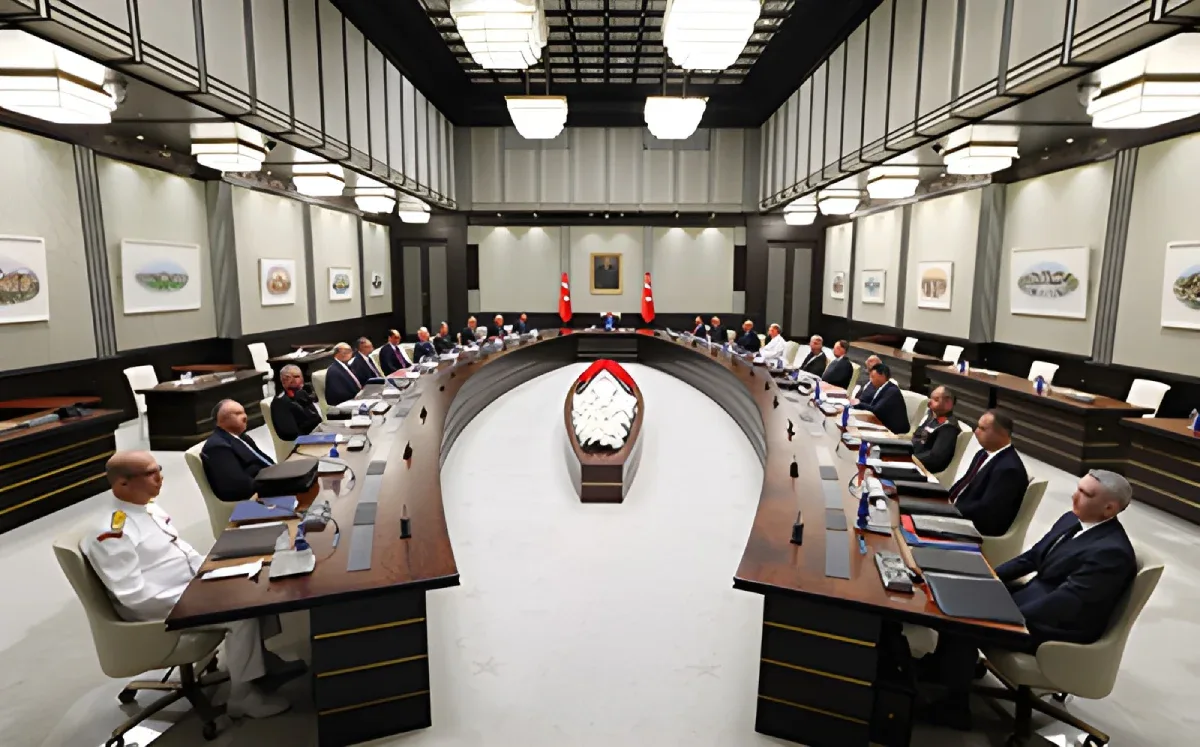
Meeting under President Recep Tayyip Erdoğan on August 6, the MGK reviewed progress toward the government's "Terror-Free Türkiye" and "Terror-Free Region" objectives and discussed the next stages of the process.
The meeting came as the PKK disarmament bill entered formal parliamentary scrutiny, moving the domestic legal track from cross-party endorsement to the Justice Committee.
No new timetable or operational measure was announced. The eight-point statement instead set out the security environment in which Ankara is pursuing the process, covering cross-border threats, relations with neighboring states, NATO, regional wars and maritime trade.
PKK process placed in a regional framework
The MGK received briefings on operations conducted inside and outside Türkiye against the PKK/KCK-PYD/YPG, FETO and Daesh, as well as other threats to national unity, security and the survival of the state.
It then reviewed progress toward a "Terror-Free Türkiye" and a "Terror-Free Region," describing the work as a historic stage in efforts to secure the stability and prosperity of Türkiye and its surrounding region.
The wording places PKK disarmament beyond a solely domestic legal discussion. The parliamentary bill will determine the judicial mechanism inside Türkiye, while the MGK statement situates the process among security challenges extending across the country's southern borders.
The communiqué does not merge those files into a single legal or operational structure. Their inclusion in the same meeting agenda nevertheless shows the geographic frame through which Ankara is assessing the process.
FETO fight reviewed on 15 July anniversary
The council separately examined the campaign against FETO on the tenth anniversary of the July 15 coup attempt.
The statement said measures aimed at eliminating the organization would continue with the highest degree of care. No new legal instrument or operational decision was disclosed.
Its inclusion as a separate agenda item maintained the government's distinction between the PKK process, which is entering a parliamentary disarmament framework, and the continuing campaign against FETO.
Syria and Iraq cooperation moves higher on the agenda
The MGK described Türkiye's expanding cooperation with Syria and Iraq as essential to regional security, peace and prosperity.
It said Ankara would continue to make the greatest possible contribution to initiatives intended to strengthen regional solidarity.
The statement followed a meeting in Ankara between Foreign Minister Hakan Fidan and Syrian Foreign Minister Asaad Hassan al-Shaibani on August 6. The two ministers also held a joint press conference after their talks.
Syria and Iraq appear in the communiqué as neighboring states with which Türkiye is developing multidimensional cooperation. The official text stops short of assigning them a specific role in implementing the PKK legislation or setting out a joint disarmament mechanism.
Their placement in the same MGK agenda is still significant. Türkiye's domestic legal process is advancing while Ankara increases state-to-state coordination along the two borders where the PKK and affiliated armed structures have operated.
Türkiye reaffirms NATO capability-sharing
The council described the NATO summit hosted by Türkiye as a critical point for the alliance's future.
It also reaffirmed Ankara's readiness to share advanced capabilities and resources developed by Türkiye with its allies. The statement did not name particular platforms, procurement programs or new military commitments.
The language positions Türkiye's expanding defense capacity as part of its contribution to NATO, while Ankara continues to seek greater participation in allied procurement, production and technology programs.
MGK warns over Iran-US clashes and trade routes
The MGK warned that renewed fighting between Iran and the United States could spread to other countries and threaten global trade routes.
It called on all sides to refrain from further use of force and return to negotiations aimed at establishing lasting peace.
The direct reference to trade routes brings the economic consequences of the conflict into Türkiye's security assessment. Disruption around the Strait of Hormuz would affect energy supplies, shipping costs and insurance markets far beyond the immediate theater.
Maritime access and the movement of energy cargoes therefore appear in the communiqué as security concerns with direct consequences for Türkiye and its trading partners.
Black Sea and Caspian should not become new conflict zones
The council said the strategic deadlock in the Russia-Ukraine war could not be resolved by turning neighboring areas, particularly the Black Sea and the Caspian, into additional theaters of conflict.
It urged the parties to reduce tensions and take concrete steps toward peace.
The Black Sea is directly connected to Türkiye's security through commercial shipping, grain exports, naval activity and access to the Turkish Straits. Further militarization would also increase pressure on freight rates and marine insurance.
The reference to the Caspian extends the warning beyond the immediate Russia-Ukraine theater. The sea forms part of the energy and transport network linking Central Asia, the South Caucasus and Türkiye.
Gaza and Al-Aqsa remain on the MGK agenda
The MGK called on the international community to adopt a clear and uncompromising position against Israeli ceasefire violations in Gaza.
It also condemned the escalation of settler violence in Palestinian territories and attacks on holy sites, particularly Al-Aqsa Mosque.
The council acknowledged recent progress under the Gaza peace plan but warned that continued Israeli actions were putting that process at risk.
The August 6 communiqué presents a security map rather than a single formal doctrine. The PKK process occupies its opening section, while the remaining items show the regional conditions Ankara believes will shape its implementation: relations with Syria and Iraq, NATO cooperation, Iran-US tensions, maritime access, the Russia-Ukraine war and the conflict in Gaza.
Sources: Türkiye's National Security Council General Secretariat, Directorate of Communications, Ministry of Foreign Affairs, Bosphorus News review and reporting.