
By Bosphorus News Economy Desk
Türkiye's new Medium-Term Program (OVP) now projects higher inflation than the Central Bank of the Republic of Türkiye (CBRT) through 2028, reversing last year's planning gap as the government gives the disinflation process more time.
The 2027-2029 OVP, published on September 6, puts year-end inflation at 28.4% for 2026, followed by 21% in 2027, 13.5% in 2028 and 9% in 2029. The previous program had projected 16% for 2026, 9% for 2027 and 8% for 2028, lifting the three overlapping figures by 12.4, 12 and 5.5 percentage points respectively.
The comparison with the CBRT is much closer for this year. The bank raised its 2026 forecast to 28% in August, only 0.4 percentage point below the new OVP figure, but kept 2027 at 15% and 2028 at 9%, leaving the government six points higher for 2027 and 4.5 points higher for 2028. Last year's OVP had been below the bank's forecasts for both years.
The inflation revision came with weaker assumptions elsewhere in the 2026 outlook. The government cut its growth projection from 3.8% to 3.3% and industrial growth from 4% to 2.3%. Second-quarter gross domestic product had increased 2.3% from a year earlier.
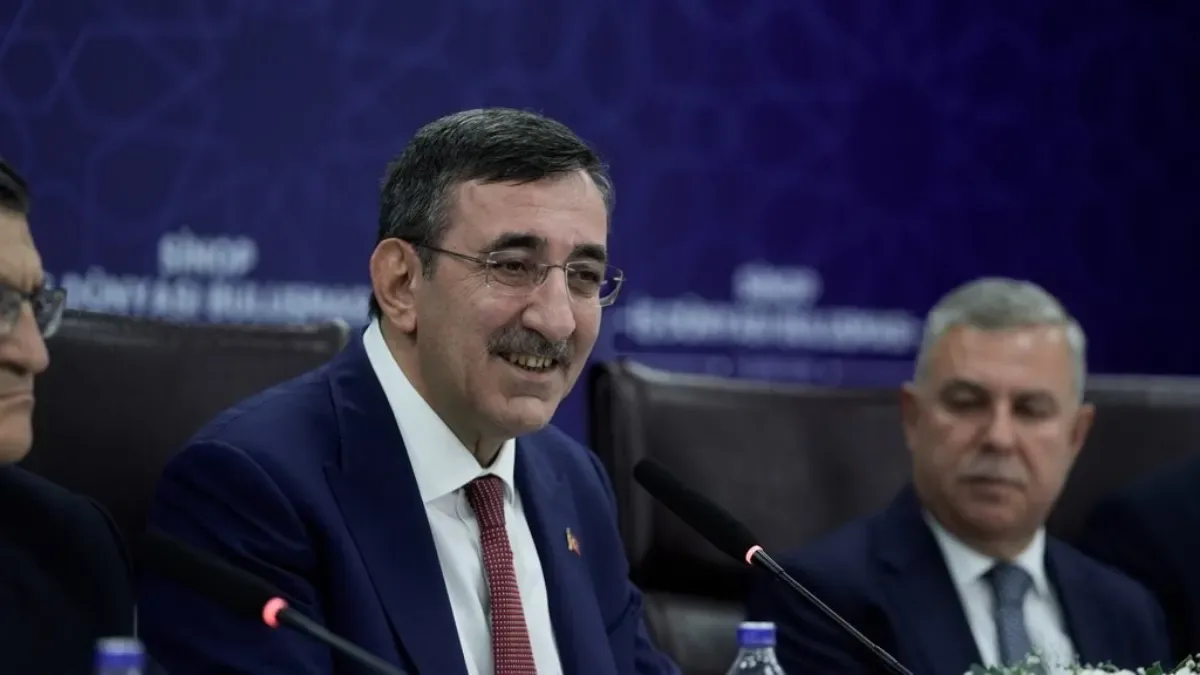
Vice President Cevdet Yılmaz attributed the changes largely to the war, higher energy and commodity costs and weaker growth among Türkiye's main trading partners. The OVP says supply pressures in food, energy and transport directly affected by the conflict temporarily flattened the decline in headline inflation, while the underlying trend continued to improve.
Yılmaz said the CBRT had calculated the direct and indirect inflation effect of the war at around seven percentage points. Without that effect, he said, Türkiye would be discussing inflation closer to 25% rather than the current level of about 31.5%.
Energy assumptions show the scale of the reset more clearly. The new program raises its average 2026 Brent crude assumption from $64.3 to $89.3 a barrel and increases the energy import estimate from $63 billion to $71 billion. The projected trade deficit rises from $96 billion to $105 billion, while the current account deficit moves from 1.3% to 2.6% of gross domestic product.
The shift in those energy-cost assumptions was examined previously by Bosphorus News.
Consumer prices rose 1.84% in August and 31.51% from a year earlier, according to the Turkish Statistical Institute, taking cumulative inflation since December to 22.07%. Housing, water, electricity, gas and other fuels rose 39.77% over twelve months, transport 35.08% and food and non-alcoholic beverages 33.79%.
The CBRT had already raised its own 2026 inflation forecast from 26% to 28% in August, citing diesel, natural gas, non-energy commodity and food prices as well as administered prices. Its projections for 2027 and 2028 remained at 15% and 9%.
Four days after the OVP was published, the bank kept its policy rate unchanged at 37%. The Monetary Policy Committee said the underlying trend of inflation was declining but warned that elevated energy prices linked to geopolitical developments continued to pose an upside risk.
The previous OVP had placed inflation at 9% in 2027 and 8% in 2028. The new plan still has the rate at 21% next year and does not return it to single digits until 2029.
Sources: Official Gazette, Presidency of Strategy and Budget, Vice President Cevdet Yılmaz's OVP presentation and remarks, Central Bank of the Republic of Türkiye, Turkish Statistical Institute, Bosphorus News review and reporting.