
By Bosphorus News Geopolitics Desk
A recent Bosphorus News analysis, which warned that Türkiye's NATO prioritisation may be generating strategic strain, raised a central question for Ankara. That question is no longer theoretical.
Türkiye is now carrying a visible share of NATO's operational burden across the Black Sea, the Eastern Mediterranean, the Baltics and the alliance's wider southern flank. The problem for Ankara is that this burden is growing faster than Europe's willingness to treat Türkiye as a fully integrated defence partner.
The Black Sea has become the clearest pressure point. Sea Shield 2026, air defence positioning in Bulgaria and AWACS patrols across the Romania-Bulgaria corridor point to a more sustained allied posture in a region Türkiye has repeatedly framed as a direct European security risk. Foreign Minister Hakan Fidan's warning, previously reported by Bosphorus News, that Black Sea tensions risk spilling over into Europe now reads less like diplomatic caution and more like a description of the security environment taking shape.
Türkiye's role is also expanding through NATO's readiness architecture. In Steadfast Dart 2026, the Turkish Armed Forces joined with approximately 2,000 personnel and moved forces 6,450 kilometres from national borders, according to the Turkish Ministry of National Defence. TCG Anadolu and the Anadolu Turkish Maritime Task Force added a naval dimension to that presence, while Türkiye's CATF/CLF command role between July 2025 and June 2026 placed Ankara inside NATO's amphibious and rapid-reaction planning.
The northern flank adds another layer. Türkiye's planned Baltic Air Policing deployment to Estonia, followed by an enhanced air policing rotation in Romania, places Turkish aircraft across both the northeastern and southeastern edges of the alliance within a single operational cycle. This is no longer a narrow regional role. It is a multi-theatre commitment.
The Eastern Mediterranean complicates the picture further. Türkiye is operating in an environment shaped by Cyprus, Israel-Greece-Cyprus defence coordination, energy infrastructure risks and the regional fallout of the Iran-Israel confrontation. Ankara is being pulled across overlapping theatres where maritime security, air defence, energy routes and alliance politics now collide.
The scale of Türkiye's NATO contribution is measurable across personnel, command roles and operational missions. It includes Steadfast Dart 2026, the TCG Anadolu-centred maritime task force, CATF/CLF command responsibilities, Dynamic Mariner, Joint Warrior and Cold Response 2026 participation, Bayraktar TB3 shipborne strike activity during a NATO exercise, Estonia and Romania air policing rotations, Romania Enhanced Air Policing with 4 F-16s and 71 personnel, KFOR command under a Turkish general, Operation Sea Guardian in the Eastern Mediterranean, Standing NATO Maritime Group 2, Standing NATO Mine Countermeasures Group 2 and NUSRET 2025.
These are not symbolic gestures. They show Türkiye embedded across NATO's active security map, from the Black Sea to the Baltics and from the Eastern Mediterranean to crisis-management missions in the Balkans.
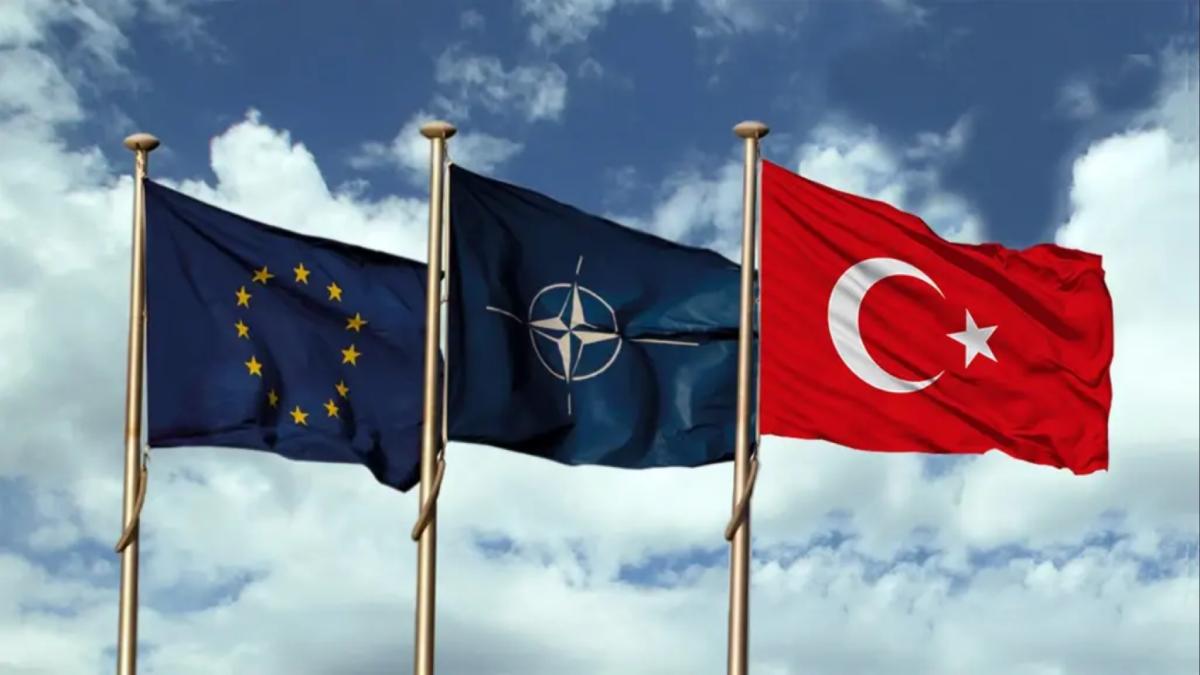
Europe's defence debate has not caught up with that reality. Bosphorus News has reported on Europe's NATO-EU split over Türkiye, where NATO depends on Ankara's operational capacity while EU defence structures remain constrained by political hesitation.
The fault line is clearest in SAFE. Bosphorus News has examined EU SAFE funding and Türkiye's exclusion from Europe's defence core, showing how Türkiye can be indispensable to European security planning while still being kept outside key defence-industrial and financial frameworks.
NATO Secretary-General Mark Rutte's messaging has sharpened the contradiction. Bosphorus News has also examined NATO's reliance on Türkiye despite EU exclusion, underlining the gap between what NATO needs from Ankara and what Europe is politically prepared to offer.
That gap is now the story. Türkiye is no longer operating at the edge of NATO's security architecture. It is carrying weight across several of its most exposed theatres. Yet the European defence debate still treats Ankara less as a strategic partner to be integrated than as a political complication to be managed.
This imbalance is becoming a strategic liability. Türkiye is supplying forces, command capacity, naval assets and air power across NATO missions while its place in Europe's defence architecture remains contested. Ankara will not ignore that contradiction indefinitely. It will shape how Türkiye defines its own security priorities, how far it stretches its forces for allied missions and how much confidence it places in European defence planning.