
By Bosphorus News Geopolitics Desk
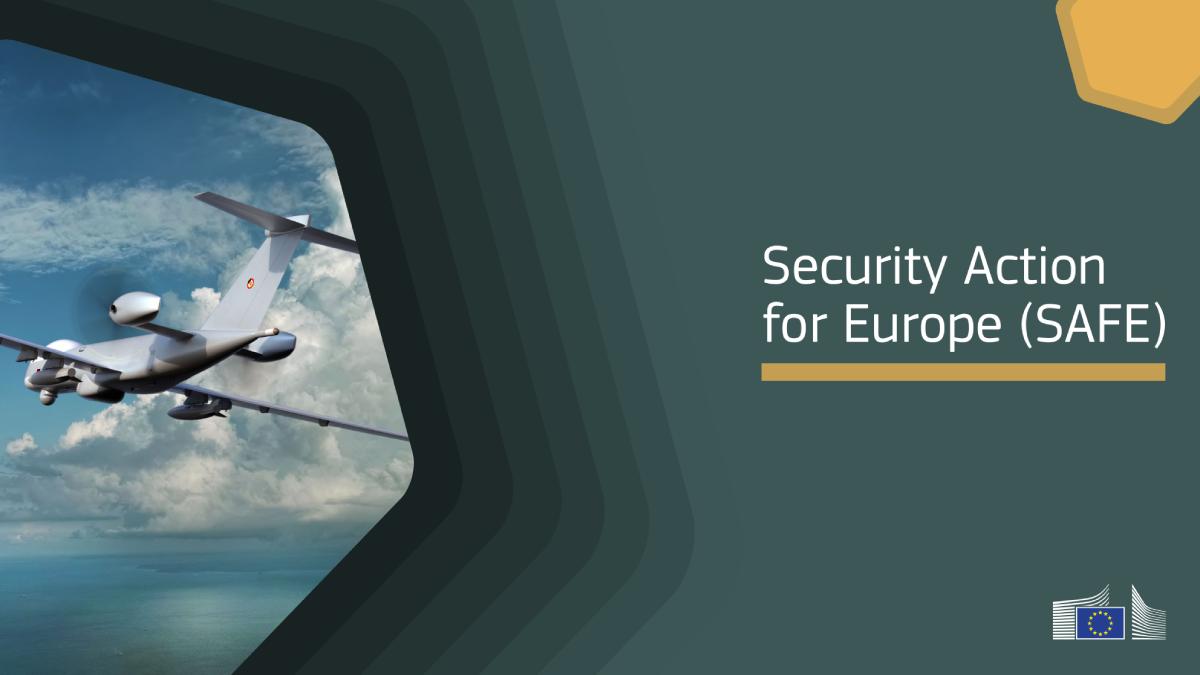
The European Union is no longer just debating who belongs in its defence architecture. It is starting to spend accordingly. As SAFE moves from framework to financing tool with new approvals and loan allocations, a clearer structure is taking shape, one that defines participation not only through policy language but through access to funding, procurement and industrial integration.
This shift is becoming harder to separate from operational reality. As Bosphorus News detailed earlier in its report on NATO's early F-16 request for Baltic Air Policing, the alliance turns to Türkiye when timelines compress and readiness gaps emerge. That reliance has since taken concrete form, with Türkiye confirming air policing deployments in Estonia and Romania for 2026, reinforcing its role on the alliance's eastern flank.
Yet the direction inside the European Union is moving along a different track. While NATO continues to rely on Turkish capacity in air defence and forward deployments, SAFE is beginning to define a defence financing system in which Türkiye remains outside the core structure, as Bosphorus News previously reported, even as new partners are brought into the framework and funding begins to flow.
Recent approvals have pushed SAFE into an implementation phase. Member states are now moving beyond policy alignment into financing decisions tied to joint procurement and long-term defence planning. The scale is already uneven. Poland alone has secured tens of billions of euros in potential financing. Romania, France and Italy follow with substantial allocations, while Greece and Cyprus remain inside the system despite their political position toward Türkiye.
This is no longer a procedural issue. SAFE is shaping who will be integrated into Europe's future defence industrial base and who will remain outside it. The framework's procurement rules and content thresholds favour those already within the system or those granted access through Security and Defence Partnerships. Others, regardless of operational contribution, are excluded from meaningful participation.
At the same time, that exclusion is becoming more visible through the expansion of the partnership network itself. Countries outside Europe are being incorporated into the framework through bilateral arrangements that open the door to joint procurement and, under certain conditions, access to funding flows. Admission is no longer explained by geography or capability alone. It reflects political alignment and agreement.
Türkiye sits directly at that intersection. It remains formally connected to the European system as a candidate country, yet functionally outside the financial and industrial mechanisms now taking shape. That gap between formal status and practical access is widening as SAFE moves deeper into implementation.
What sharpens the contrast is the continued reliance on Türkiye in operational terms. Air policing missions, eastern flank deployments and command responsibilities still depend on a limited group of contributors able to sustain readiness under compressed timelines. Türkiye remains one of those contributors. The Baltic Air Policing request was not an exception. It showed how the system behaves under pressure.
This leaves Europe with a structure that is becoming harder to reconcile. NATO continues to draw on Turkish capacity when deterrence and rapid deployment are required. The European Union, through SAFE and related mechanisms, is building a parallel system that does not integrate that same capacity into its financing and industrial base.
That divergence is no longer theoretical. It is being implemented through contracts, allocations and partnership decisions. As SAFE begins to influence procurement choices and long-term investment planning in 2026, the separation between operational reliance and financial exclusion is likely to deepen.
The result is a defence architecture that depends on Türkiye in practice while excluding it in structure. That balance may hold in the short term. Over time, it raises a more difficult question about coherence. Systems that rely on one set of actors for execution and another for integration tend to produce friction. SAFE is now moving fast enough for that friction to become visible.