
By Bosphorus News Defense Desk
On November 14, 2026, Türkiye changed the rules for marking existing military zones at sea, making physical marking of first-degree military prohibited areas discretionary and setting out how military commands must coordinate with civilian maritime authorities.
The amendment was published in Official Gazette No. 33430 under Presidential Decision No. 11991, signed by President Recep Tayyip Erdoğan on November 13. It entered into force the following day and modifies Articles 12 and 23 of the Military Forbidden Zones and Security Zones Regulation, introduced in 1983.
The new provisions cover first-degree maritime military prohibited zones and maritime military security zones. They specify how boundaries may be marked with navigation aids and how vessel traffic should be managed where physical marking is impractical or considered unsafe.
No new military zones or maritime boundaries are designated.
First-Degree Military Zones | Marking Becomes Discretionary
Under the previous Article 12, first-degree maritime military prohibited zones were to be marked wherever feasible, in accordance with instructions issued by the Naval Forces Command.
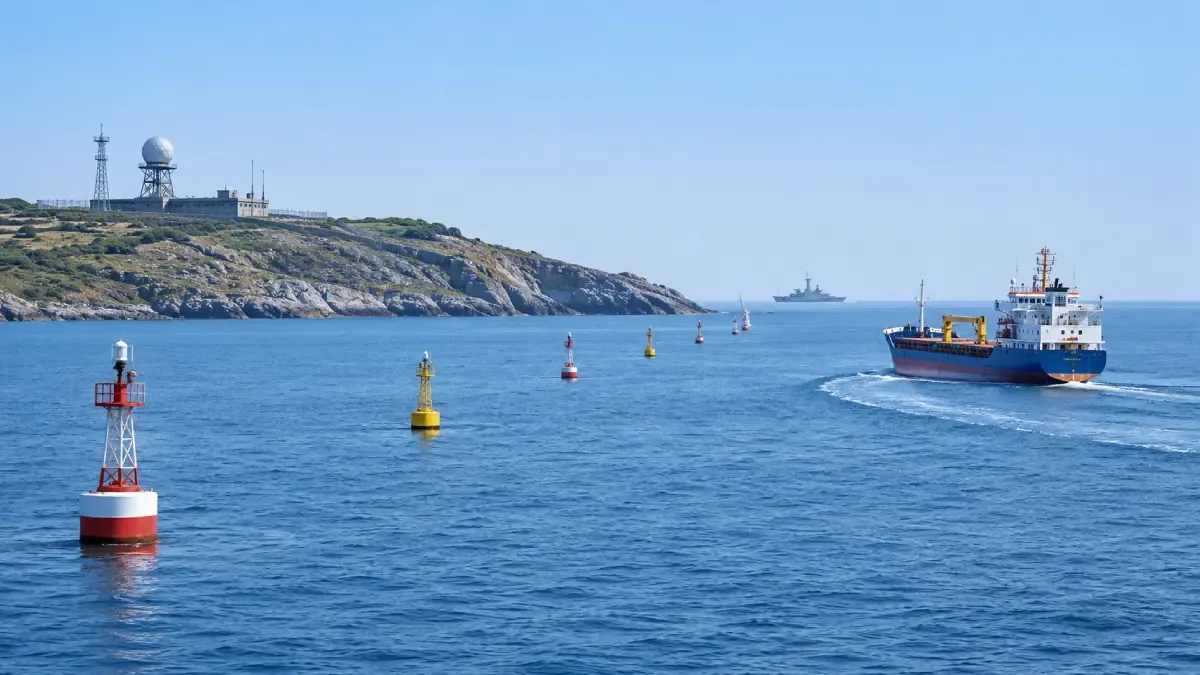
The revised provision allows marking where authorities consider it necessary and feasible. Navigation aids may be placed at the zone's corner points and at appropriate intervals along its boundaries.
The responsible military commands must coordinate installation with the Directorate General of Coastal Safety, the Coast Guard Command and the relevant port authorities. Once the navigation aids have been installed, the Office of Navigation, Hydrography and Oceanography must be notified.
The change is significant in two respects. The earlier requirement to mark zones wherever possible has been replaced by a discretionary provision, while the institutions responsible for coordinating installation are now expressly identified.
Where marking is impossible or considered unsuitable, military commanders must coordinate alternative safety measures and maritime traffic arrangements with the Coast Guard and port authorities.
The regulation therefore leaves the decision to install physical markers dependent on the conditions of each location. It does not require every prohibited zone to be marked.
Military Security Zones | New Procedures for Navigation Aids
A separate amendment adds a paragraph to Article 23, introducing comparable marking procedures for maritime military security zones.
These areas may also be marked with navigation aids at their corner points and at suitable intervals along their boundaries. Military commands must coordinate the work with Coastal Safety, the Coast Guard and the relevant port authorities.
Where installation is impossible or considered unsafe, the commands must arrange appropriate precautions and traffic measures in coordination with the Coast Guard and port authorities.
Article 23 already required maritime military and special security zones to be shown on nautical charts and announced to mariners every six months. The new paragraph adds a procedure for physical marking without replacing those existing notification requirements.
One procedural difference remains. Article 12 expressly requires notification to the Office of Navigation, Hydrography and Oceanography after markers are installed in first-degree military prohibited zones. The paragraph added to Article 23 contains no equivalent notification provision for maritime military security zones.
Existing Boundaries, New Operating Procedures
The amendments were issued under Article 33 of Law No. 2565, the Military Forbidden Zones and Security Zones Law. They regulate the marking and management of designated areas rather than the creation of new ones.
Presidential Decision No. 11991 includes no geographical coordinates, revised boundary descriptions or list of additional restricted waters.
Its effects will be felt in the practical management of maritime traffic near existing military facilities. Physical markers could make prohibited or security zone boundaries easier for vessel operators to identify. Where installation is unsuitable, military and civilian authorities will have to coordinate other measures to protect navigation.
Commercial vessels, fishing boats and other maritime traffic may be affected by the arrangements adopted for individual locations. The regulation, however, does not identify which zones will receive new navigation aids or when installation might begin.
The changes come as Türkiye and Greece continue to dispute research permissions and maritime notifications in the Aegean and Eastern Mediterranean. Recent disagreements include the Great Sea Interconnector surveys south of Karpathos and competing NAVTEX notices around Cyprus.
The amendment names neither operation and identifies no particular sea area. Nothing in its published provisions establishes a connection with those disputes.
The practical scope of the decision will become clearer when the relevant military and maritime authorities announce marking work, navigation aid locations or changes to vessel traffic arrangements.
Sources: Official Gazette of the Republic of Türkiye, November 14, 2026, No. 33430, Presidential Decision No. 11991; Military Forbidden Zones and Security Zones Law No. 2565; Military Forbidden Zones and Security Zones Regulation, Council of Ministers Decision No. 83/5949, Bosphorus News review and reporting.