
By Bosphorus News Energy Desk
Türkiye has kept importing Iranian pipeline gas almost a month after the 25-year supply contract ran out, without any official explanation of the legal basis for the flows.
Three different accounts are in circulation, and they describe three different situations. Former senior BOTAŞ officials told the ANKA news agency before the expiry that the contract carried an automatic five-year extension clause, triggered if neither side gave notice in time, adding that they did not know whether either party acted on it in 2020. Sector sources cited by Turkish media and by Iran International said instead that deliveries were continuing under force majeure. Bloomberg reported on Tuesday, citing people familiar with the matter, that the volumes are make-up gas, compensation for supply Türkiye paid for but never received.
The distinction decides how long the gas keeps coming. An automatic extension would mean a live contract with fresh obligations on both sides. Force majeure would mean an agreement whose obligations are suspended. Make-up gas would mean the contract is finished and Türkiye is drawing down a delivery debt, which ends when the balance is cleared.
It also decides how exposed the trade is to sanctions. Make-up gas requires no new payment to the National Iranian Gas Company, since the volumes were paid for years ago. A renewed or extended contract would need a working payment channel at a moment when Turkish banks are cautious about transfers to Iranian counterparties.
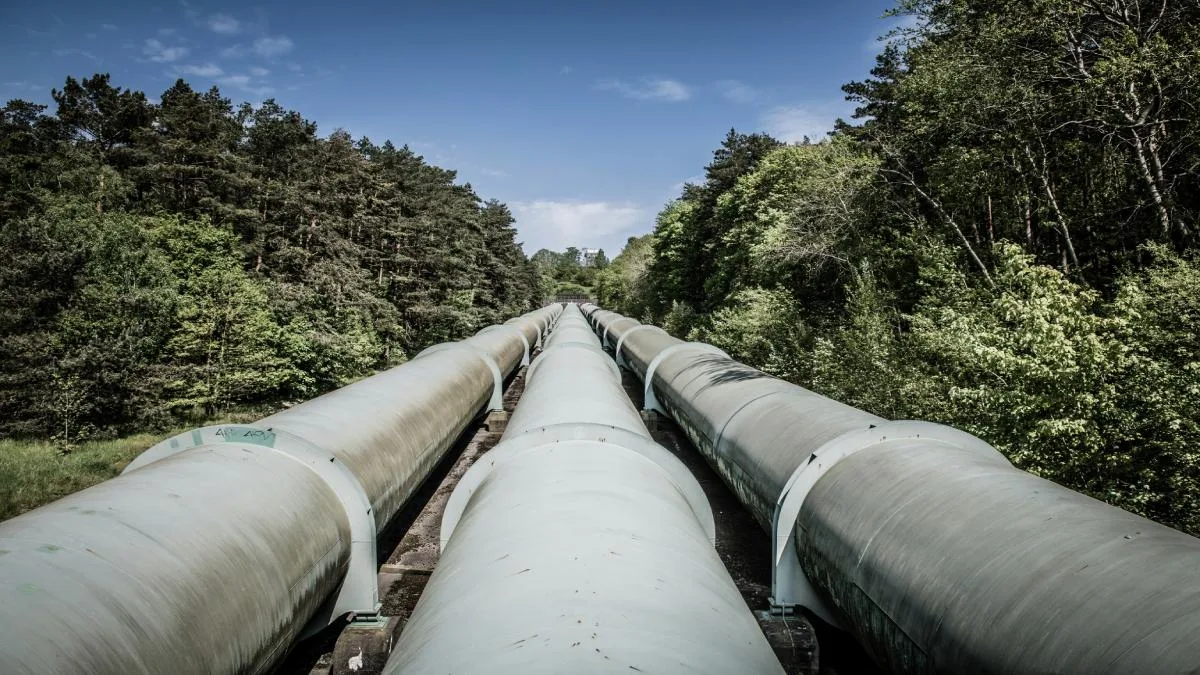
The contract term ended on 29 July. ANKA reported that former BOTAŞ officials planned to check the flow at 08:30 the following morning, treating continued deliveries as evidence that the agreement had been rolled over. The deal was signed in 1996 and deliveries began in 2001, covering up to 9.6 billion cubic meters a year through the Tabriz-Ankara pipeline, a ceiling actual volumes rarely reached.
Official import figures do not yet cover the expiry. The Energy Market Regulatory Authority (EPDK) publishes its natural gas market reports with a lag of roughly two months, so July data is expected in September. The most recent monthly figure shows Türkiye imported 882.89 million cubic meters from Iran in June, making Iran the second-largest pipeline supplier that month after Azerbaijan.
On an annual basis Iran sits lower. EPDK's 2025 market report put total imports at 58.4 billion cubic meters, up 11.73 percent on 2024. Russia led with a 36.27 percent share, followed by Azerbaijan and the United States, with Iran fourth at 7.7 billion cubic meters and 13.2 percent. Liquefied natural gas accounted for 17 billion cubic meters, or 29.30 percent of the total.
No replacement deal has been announced. Energy Minister Alparslan Bayraktar said in April that no negotiations were under way because of the war, while adding that Türkiye might still need Iranian flows for security of supply. Iran said in 2024 that talks on a new agreement with higher volumes were running. Türkiye's Energy Ministry declined to comment to Bloomberg and Iran's Oil Ministry did not respond to requests for comment.
The question has become harder to avoid since US Treasury Secretary Scott Bessent said on Monday that countries still trading with Iran after an unspecified deadline would face economic penalties, under a campaign he called operation economic outcast.
Bayraktar said in August that storage sites are full. Ankara has widened its supply base with new LNG contracts, rising output from the Sakarya field in the Black Sea and a 15-year agreement for Azerbaijani gas from the Absheron field starting in 2029. Replacing Iranian volumes at short notice would mean buying more LNG at higher cost, and the eastern transmission network was built around gas entering at Gürbulak and moving west.
Sources: EPDK, BOTAŞ, ANKA, Bloomberg, Iran International, Bosphorus News review and reporting.