
By Bosphorus News Geopolitics Desk
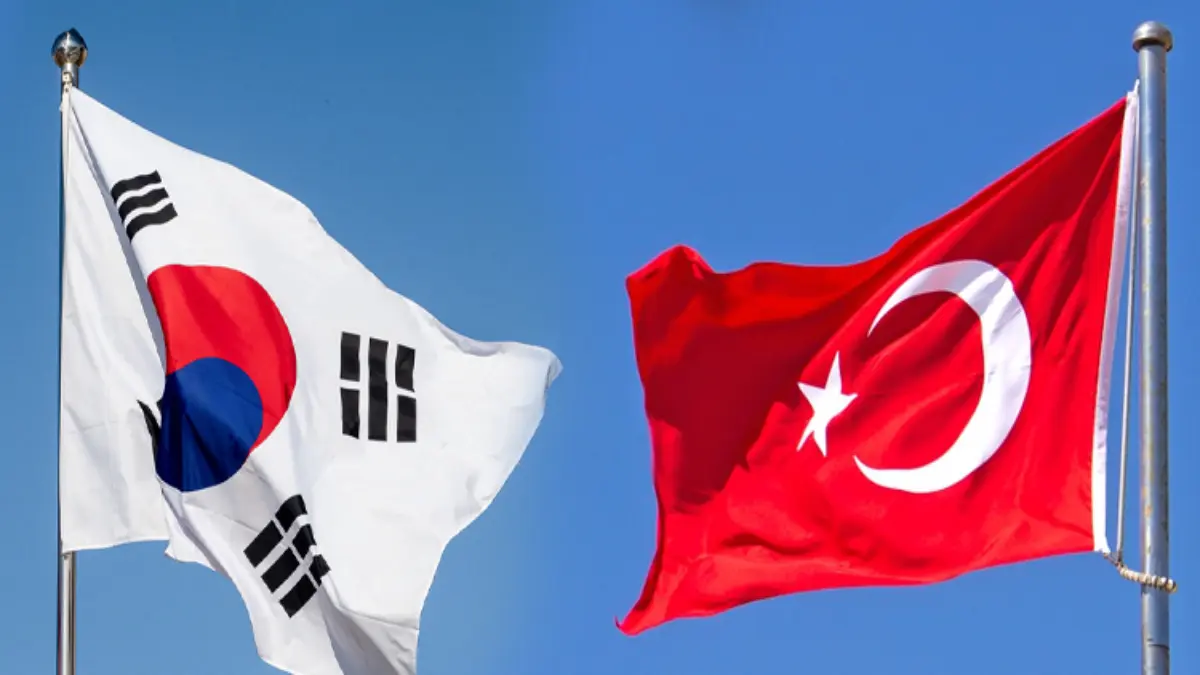
Turkish Foreign Minister Hakan Fidan will visit South Korea on June 4, extending a week of Asian diplomacy that has already taken him through Singapore and Indonesia.
Fidan is expected to meet South Korean Foreign Minister Cho Hyun in Seoul, with bilateral cooperation, regional security and international issues on the agenda. He is also scheduled to speak at Korea University under the title "Türkiye's Rise in the Global Context and Its Implications for Korea."
The Seoul visit follows Fidan's Singapore and Indonesia contacts, extending the same Asian diplomacy line built around trade, defense cooperation, technology and regional security. The Singapore leg had already placed Association of Southeast Asian Nations ties and defense cooperation inside Türkiye's wider Asia outreach, a track Bosphorus News covered through Fidan's Singapore visit and ASEAN defense ties.
South Korea gives that outreach a different weight. Unlike many of Türkiye's newer Asian partnerships, the Ankara-Seoul relationship carries a deep historical memory, a strategic partnership framework and a recent chain of high-level visits.
Türkiye recognized the Republic of Korea on August 11, 1949, and diplomatic relations were established in 1957. The two countries raised their ties to Strategic Partnership level in 2012, before joining Mexico, Indonesia, the Republic of Korea, Türkiye and Australia, known as MIKTA, in 2013 as a middle-power consultation platform.
The Korean War still sits at the emotional and political center of the relationship. Türkiye sent more than 21,000 soldiers to Korea, ranking fourth among the 16 countries that joined the war. It was also the third-highest country in terms of fallen soldiers, with 462 Turkish troops buried at the United Nations Memorial Cemetery in Busan.
The Turkish Brigade also built the Ankara School for Korean war orphans, a detail still present in Ankara's official account of the relationship. South Korea's description of Türkiye as a "brother country" rests partly on that wartime memory, giving bilateral diplomacy a language that goes beyond routine state-to-state contact.
The current diplomatic traffic is also unusually dense. South Korean President Lee Jae-myung visited Türkiye on November 24-25, 2025, in the first presidential-level visit from South Korea to Türkiye in 13 years. South Korean National Assembly Speaker Woo Won-shik followed with a visit on December 17-19, 2025, while Cho Hyun travelled to Türkiye on January 21, 2026.
Fidan's Seoul visit therefore comes less than seven months after Lee's Ankara trip and only months after Cho's visit to Türkiye. That sequence gives the June 4 talks a follow-up character, especially on trade, investment, defense industry cooperation, emerging technologies and regional security.
Economic ties already have a formal base. Türkiye and South Korea are linked through a Free Trade Agreement framework, including services and investment agreements that entered into force in 2018. That gives both governments a platform for deepening trade and investment at a time when Türkiye is trying to draw more Asian capital into industry, technology and high-value manufacturing.
Defense and technology are likely to remain central to the conversation. Ankara and Seoul both sit in demanding regional security environments, both have ambitious defense industries, and both are trying to position themselves in a global economy shaped by supply chains, artificial intelligence, advanced manufacturing and strategic infrastructure.
The multilateral layer also matters. Türkiye and South Korea work together in the United Nations, the Group of 20 and MIKTA. That gives the relationship a middle-power dimension at a time when Ankara is trying to widen its diplomatic room between Europe, the Middle East, Central Asia and the Asia-Pacific.
Fidan's visit to Seoul is not an isolated stop after Singapore and Jakarta. It brings together the older Korean War memory, the 2012 Strategic Partnership, the renewed 2025-2026 visit traffic and Türkiye's effort to place trade, technology, defense industry and regional diplomacy on the same Asian track.