
By Bosphorus News Geopolitics Desk
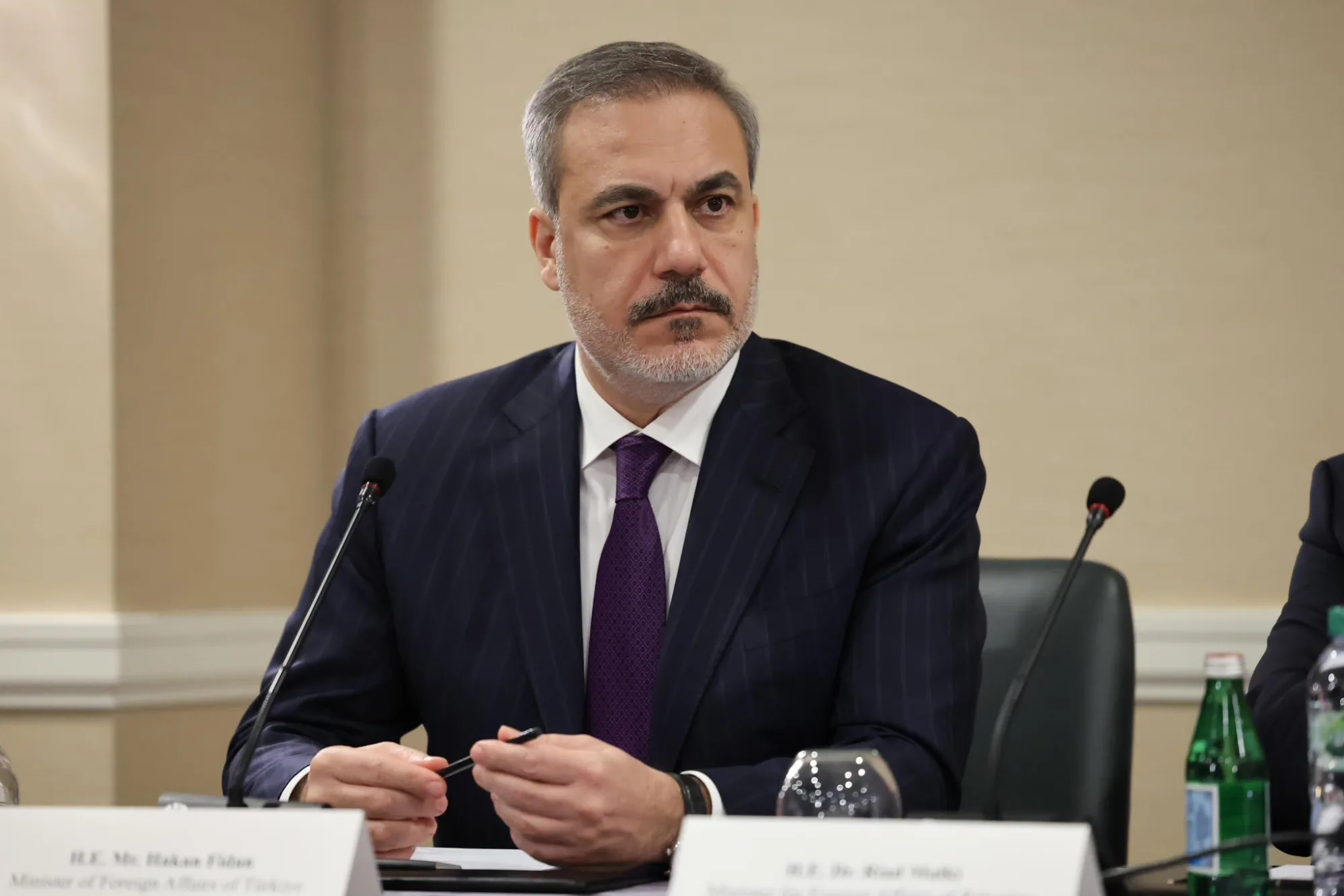
Turkish Foreign Minister Hakan Fidan on August 8 reaffirmed Ankara's support for a two-state settlement in Cyprus, describing it as Türkiye's "ideal solution" while arguing that practical cooperation between Turkish Cypriots and Greek Cypriots should proceed without waiting for agreement on the island's political future.
Speaking at Anadolu Agency's Editör Masası program, Fidan said Türkiye continued to favor an arrangement in which the two communities live side by side under separate sovereign states, arguing that such an outcome would support prosperity on the island and contribute to regional stability.
Fidan also challenged the political and legal order that followed the Republic of Cyprus joining the European Union in 2004. He argued that the internationally recognized state representing the island today was no longer the partnership created under the 1960 founding agreements, saying Greek Cypriots had retained international recognition and EU membership while Turkish Cypriots had been excluded from an equal role in governing the island.
Türkiye remains the only country that recognizes the Turkish Republic of Northern Cyprus as an independent state, and Fidan said Ankara would not change that position.
Looking back at earlier settlement efforts, he referred to the 2004 Annan Plan and the negotiations that culminated at Crans-Montana in 2017, saying President Recep Tayyip Erdoğan had supported attempts to reach an agreement based on political equality between the two communities.
Fidan argued that those efforts had repeatedly failed because the Greek Cypriot side was unwilling to share political authority and prosperity with Turkish Cypriots on an equal basis while retaining EU membership and broad international recognition.
He also criticized restrictions affecting Turkish Cypriots in areas including trade and transportation and linked Türkiye's continued non-recognition of the Republic of Cyprus to what Ankara regards as the unresolved denial of equal status to the Turkish Cypriot community.
Fidan nevertheless drew a distinction between disagreement over the island's final status and cooperation on immediate needs. Türkiye supports projects involving both sides in areas such as water, energy, electricity and tourism, he said, and sees no reason for such cooperation to wait for a comprehensive settlement.
He said he had discussed that approach directly with United Nations Secretary-General António Guterres, who has continued efforts to maintain contact between the two sides and explore whether conditions exist for renewed negotiations.
Fidan spoke positively about Guterres, saying the UN chief had placed human dignity at the center of his approach to Cyprus and other international crises, including Palestine. He added that Erdoğan trusted Guterres personally and expected any UN-led initiative to deal fairly with both communities.
The remarks follow Guterres' late-July visit to Cyprus, where he met the leaders of the two communities as part of his continuing good offices effort. The UN process has remained focused on confidence-building measures and determining whether sufficient common ground can be developed for further talks, while the two sides remain divided over the basis of a final settlement.
Fidan also defended Türkiye's military presence in northern Cyprus, arguing that Turkish forces had preserved stability on the island for five decades and that their presence would remain necessary in the absence of a durable settlement accepted by both sides.
His comments leave Ankara's position on the final-status question unchanged, but place greater emphasis on pursuing practical cooperation before that dispute is resolved. Türkiye continues to advocate two sovereign states while supporting joint projects that could operate without requiring the two sides first to agree on a comprehensive political settlement.
Sources: Anadolu Agency, United Nations, Bosphorus News review and reporting.