
By Bosphorus News Geopolitics Desk
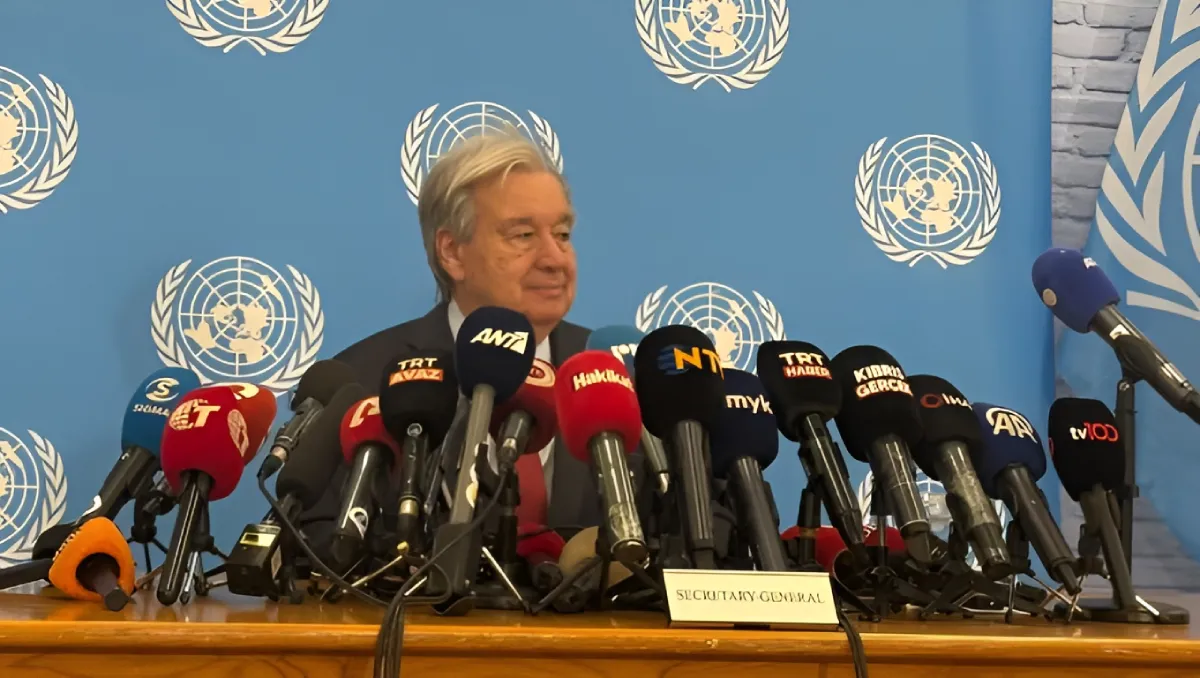
United Nations Secretary-General António Guterres said on July 29 that he would convene an enlarged five-plus-one meeting on Cyprus after sufficient preparation. Türkiye responded that the two sides still had no common ground for a settlement.
Guterres announced the move after meeting Turkish Cypriot leader Tufan Erhürman and Republic of Cyprus President Nikos Christodoulides at the residence of his special representative, Khassim Diagne, inside the United Nations buffer zone at the former Nicosia airport.
"I have the consensus of both sides and the guarantors to move into a 5+1 meeting, but with adequate preparation," Guterres told reporters.
The format brings together the Turkish Cypriot and Greek Cypriot sides, the guarantor powers Türkiye, Greece and the United Kingdom, and the United Nations.
Guterres did not set a date or announce the resumption of formal settlement negotiations. He said preparations would cover confidence-building measures, methodology and the substance of the talks.
He said he would continue consulting both sides and the guarantor powers before calling the meeting, adding that he did not intend to convene another gathering that ended without a result.
No Cyprus meeting is planned during the United Nations General Assembly week in September.
Türkiye says no common ground exists
Türkiye's Foreign Ministry welcomed Guterres' continued engagement but said there was "still no common ground for a settlement between the two sides on the Island."
Foreign Ministry spokesperson Öncü Keçeli said the process launched by Guterres in 2025 should focus for now on areas of cooperation that could build trust.
The ministry accused the Greek Cypriot side of maintaining an uncompromising position and taking steps that negatively affected regional security.
"Settlement models that have been tried and exhausted over the decades belong to the past," Keçeli said.
Türkiye said any comprehensive settlement must rest on the realities on the island and the sovereign equality and equal international status of the Turkish Cypriot people.
The Turkish Cypriot Foreign Ministry welcomed Ankara's statement, said two peoples and two sovereign states existed on the island, and rejected efforts to revive a federal settlement model.
First visit by a UN chief since 2010
The announcement followed a three-day visit that began on July 27, the first to the island by a serving United Nations secretary-general since Ban Ki-moon travelled there in early 2010.
Guterres met the two leaders separately on July 28, visiting the Presidential Palace in the south and the Turkish Cypriot presidency in the north.
He also met civil society representatives and members of the bicommunal technical committees before hosting Erhürman and Christodoulides at a private dinner that evening.
The last full settlement process collapsed at Crans-Montana, Switzerland, in 2017.
During his meeting with Christodoulides, Guterres linked the Cyprus issue to instability in the region, warning that geopolitical changes could place the island at the centre of unwanted developments.
On arriving, he wrote that the United Nations could not impose peace and that Cypriots, through their leaders, would have to build it.
Erhürman focuses on methodology
Erhürman described the visit as positive and said he was more hopeful than before, although no concrete outcome had been reached.
He placed particular emphasis on Guterres' use of the word methodology, saying it showed greater attention to how any future process would be structured.
The Turkish Cypriot side, he said, wanted the conditions for success to be established in advance rather than another open-ended meeting without a defined route.
Erhürman said Guterres was in close contact with the guarantor powers and confirmed that the Turkish Cypriot side was working in full consultation with Türkiye.
He also raised the Greek Cypriot government's military procurement and defense cooperation and rejected reports that a completed settlement plan had been presented to the sides.
Ziya Öztürkler, president of the Assembly of the Republic, called on the United Nations to act impartially towards the Turkish Cypriot people and take concrete steps towards ending their international isolation.
Christodoulides seeks return to Crans-Montana framework
Before the trilateral meeting, Christodoulides said he wanted negotiations to resume from the point where they ended at Crans-Montana.
Afterwards, he said Guterres' remarks left no room for interpretation and described the process as being at a critical juncture.
Asked about further contact with Türkiye, Christodoulides referred to Guterres' telephone conversation with Turkish Foreign Minister Hakan Fidan and United Nations envoy María Ángela Holguín Cuéllar's meeting with Fidan in Türkiye the previous week.
He said he did not know what had been discussed but acknowledged that Türkiye was part of the effort.
The Greek Cypriot government spokesman was more cautious, saying progress was hoped for before the end of the year while the conditions for formal negotiations were not yet in place.
The Greek Cypriot side wants talks to resume under the existing United Nations framework. Türkiye and the Turkish Cypriot government reject a return to a federal model and insist on sovereign equality and equal international status.
European Union envoy follows UN visit
European Commission Executive Vice-President Raffaele Fitto was due to arrive on the island on July 30 for his first visit as the European Commission's special representative for Cyprus, with meetings expected with both leaders.
Erhürman has said the European Union cannot participate as a party in the five-plus-one format, which is limited to the two sides, the three guarantor powers and the United Nations.
Sources: United Nations, Türkiye's Foreign Ministry, Turkish Cypriot Presidency, Turkish Cypriot Foreign Ministry, Republic of Cyprus Presidency, European Commission, Bosphorus News review and reporting.