
By Bosphorus News Geopolitics Desk
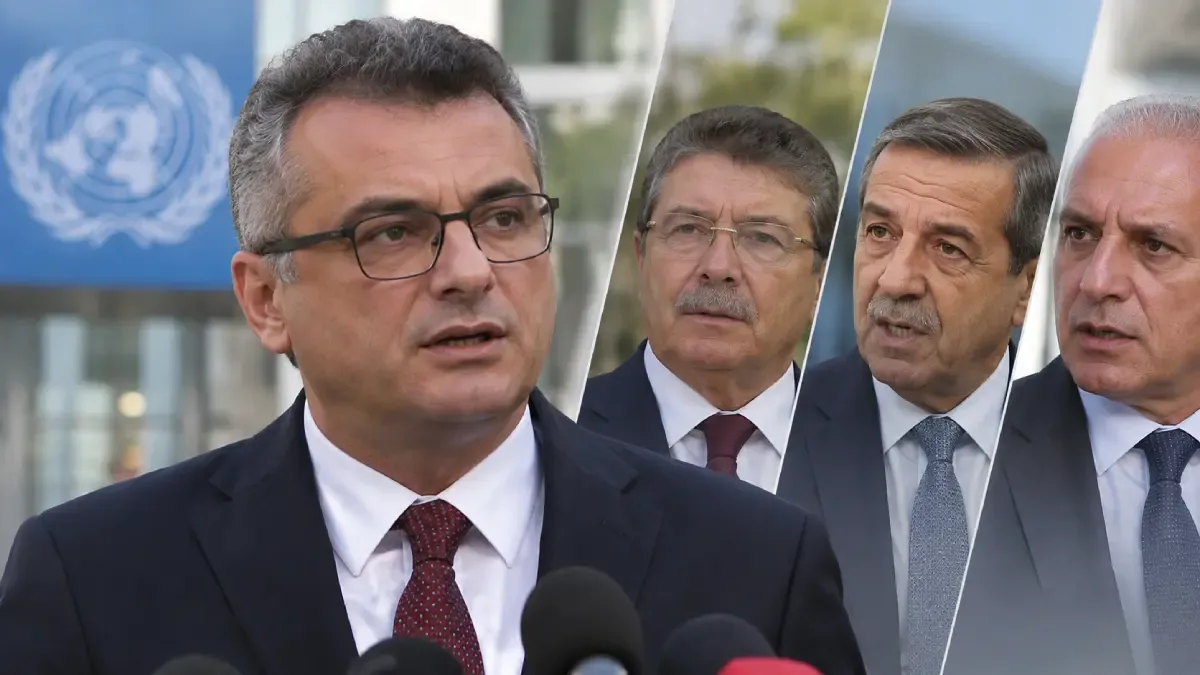
On November 13, 2026, President Tufan Erhürman of the Turkish Republic of Northern Cyprus (TRNC) said his unpublished proposal for Cyprus talks would remain on the agenda at a planned trilateral meeting with United Nations (UN) Secretary-General António Guterres and Republic of Cyprus President Nikos Christodoulides. Economy and Energy Minister Hasan Taçoy has meanwhile joined senior government figures challenging the president's handling of negotiations.
Taçoy's objections followed Erhürman's November 9 meeting with Republic of Cyprus President Nikos Christodoulides and UN Personal Envoy María Ángela Holguín. Prime Minister Ünal Üstel and Foreign Minister Tahsin Ertuğruloğlu had already questioned the president's consultation with the cabinet and the terms for resuming formal talks.
The Proposal Erhürman Will Take to Guterres
Speaking on Kanal T on November 13, Erhürman said he intended to return to the proposal at the meeting with Guterres. No date has been announced. He maintained that the proposal required no concession from the Turkish Cypriot side and that the UN had not reacted negatively. The UN has not publicly endorsed it.
Erhürman declined to disclose the proposal after the November 9 meeting, saying he wanted to leave room for diplomacy. He described it as a possible way to change the negotiating process. Separately, he argued that political equality, including rotating presidency, should be addressed in the negotiating rules before substantive settlement talks begin. On November 13, he reaffirmed that his negotiating methodology also includes at least one affirmative Turkish Cypriot vote and said he was acting in consultation with Türkiye. His statements do not establish whether rotating presidency forms part of the unpublished proposal.
The leaders agreed to open two crossings simultaneously: Akıncılar/Louroujina–Limya/Lympia and Kambo/Kampos–Gemikonağı/Karavostasi. The UN also announced work on education, cultural heritage, environmental cooperation and emergency response. No opening date was set. Haspolat/Mia Milia and other proposed crossings remain unresolved.
Taçoy Joins the Government's Objections
In a November 11 interview with Hakikat Web TV, Taçoy said he had not seen the record of the leaders' meeting or been consulted about the crossings. If rotating presidency had been discussed, he argued, that would conflict with the government's commitment to sovereign equality, equal international status and a two-state settlement.
Taçoy's objection was conditional: he did not establish that rotating presidency had been negotiated, much less accepted. He also questioned Erhürman's political impartiality, asked whom the new crossings would benefit and warned that proposals advanced without government consultation could meet resistance in parliament.
Taçoy's comments extend the dispute over negotiations and executive powers that emerged after the meeting. Ertuğruloğlu accused the president of bypassing the cabinet and overstepping its responsibilities. He claimed the presidency had no executive authority, although Article 5 of the TRNC Constitution assigns executive authority to the president and the Council of Ministers. That provision does not settle which ministries must approve arrangements for a crossing.
Üstel also opposes Erhürman's negotiating approach, insisting on sovereign equality and equal international status before formal talks. He has nevertheless supported crossings that offer practical benefits and urged priority for Haspolat. Ertuğruloğlu, by contrast, has questioned whether the two agreed crossings would benefit Turkish Cypriots.
Christodoulides Rejects the New Element
Christodoulides said after the November 9 meeting that all but one element of Erhürman's proposals were already familiar, and that the new element could not be accepted. He did not identify it. He also ruled out opening discussions on rotating presidency at this stage, saying the issue belonged in formal negotiations.
Christodoulides wants the planned meeting with Guterres to lead towards an expanded conference and renewed settlement talks. Erhürman wants agreement on the negotiating method first. The UN has confirmed continued contacts, but no common procedure for restarting formal negotiations.
The crossing agreement still requires work by the relevant authorities. The Republic of Cyprus government said coordination on a timetable had begun on November 10; road links, staffing and crossing procedures will also require action by Turkish Cypriot agencies. Üstel supports useful crossings, but no opening schedule has been published. Implementation will involve agencies overseen by a government whose senior members dispute how the agreement was reached.
Sources: TRNC Presidency, United Nations Good Offices Mission in Cyprus, Republic of Cyprus Presidency, TRNC Constitution, Kanal T, Kıbrıs Postası, Haber Kıbrıs, Bosphorus News review and reporting.