
By Bosphorus News Energy Desk
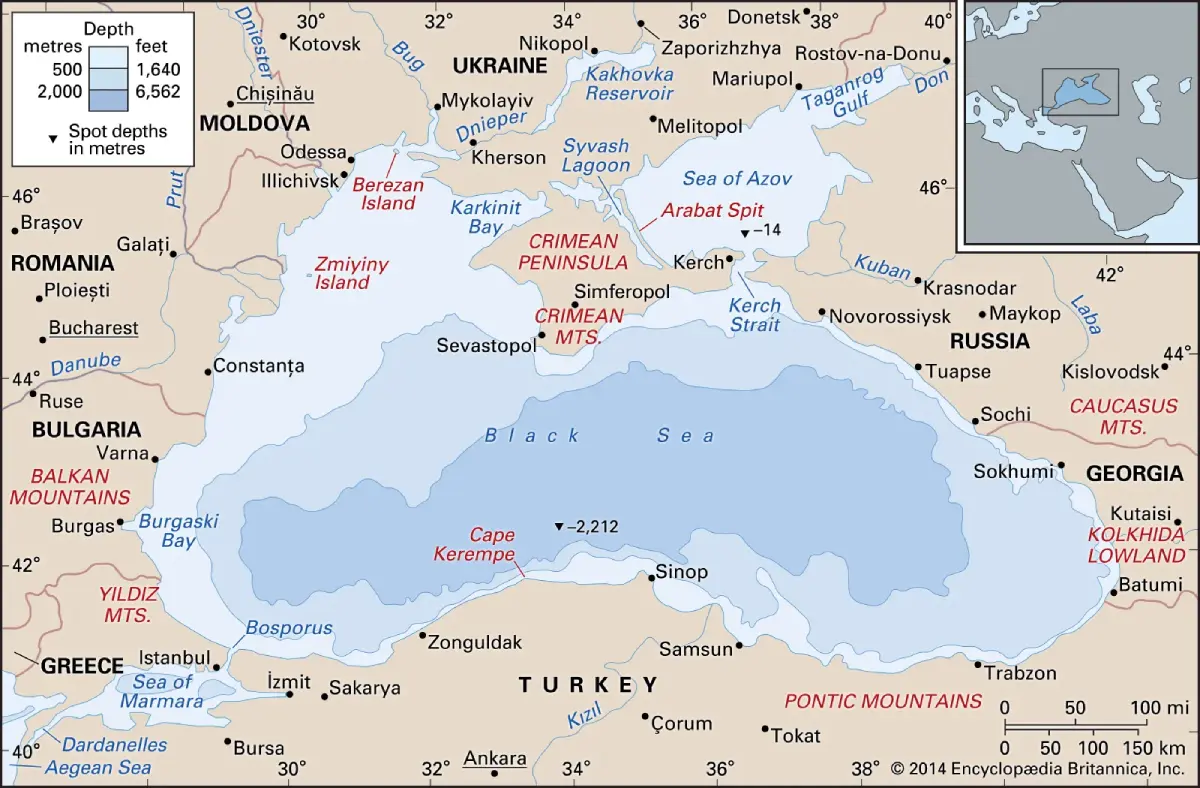
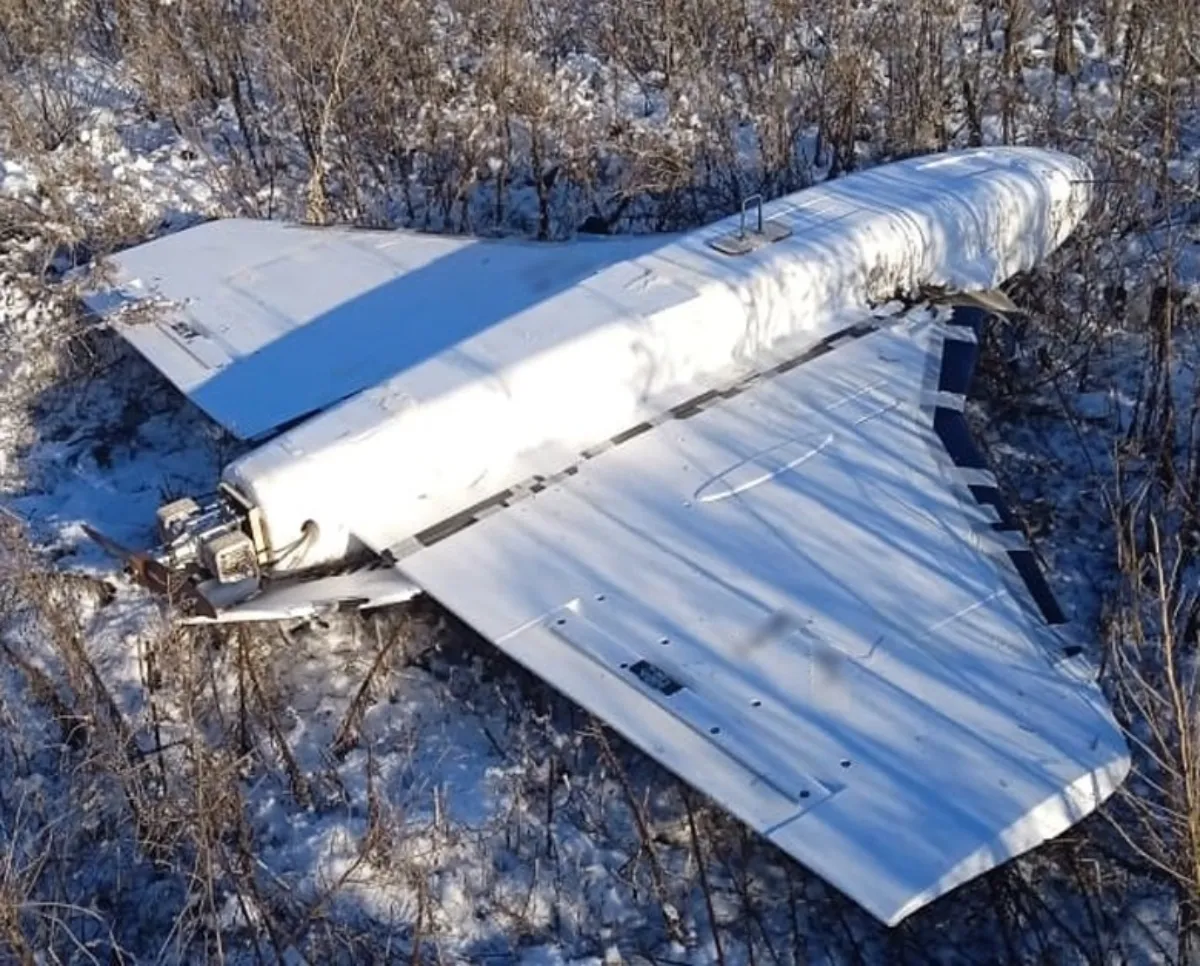
An unmanned aerial vehicle assessed to be carrying explosive ordnance came ashore at Karaburun on Istanbul's Black Sea coast on Friday morning and was destroyed at sea a few hours later. It was the third such find reported on that coastline in August.
Output from the gas field behind that coastline is scheduled to double when a floating production platform deploys at the end of September.
Friday, Karaburun
People fishing from the shore at Karaburun, in Istanbul's Arnavutköy district, spotted an object they had not seen before and alerted lifeguards working in the area. The lifeguards assessed it as an unmanned aerial vehicle and informed the Coast Guard.
After an initial examination indicated the aircraft might be carrying explosives, SAS commandos were sent to the site. Security measures were put in place along the beach, the aircraft was towed offshore, and it was destroyed in a controlled detonation.
Karaburun sits on the Black Sea about 29 kilometres west of the northern entrance to the Istanbul Strait.
Turkish agency reporting said the aircraft's origin, how it reached the area and the systems it carried were expected to be established through technical examination. No named Turkish official has publicly addressed those questions since, and no origin assessment has been released.
Six Days Earlier, in the Same District
An unmanned aerial vehicle washed ashore at Yeniköy beach in Arnavutköy on August 15. Walkers found it, gendarmerie and Coast Guard teams secured the area, and the object was taken to the Coast Guard Command so its origin and nature could be established.
Turkish coverage subsequently reported that the aircraft was identified as a Russian-made Geran-2, the designation used for the Shahed-136. That identification has not been set out in a statement by a named official.
The same reporting was explicit that no such determination exists for the aircraft destroyed at Karaburun six days later, and that assessments attributing it to Russia, Ukraine or any other actor remain unconfirmed until the technical examination is complete.
Two aircraft reached two beaches in the same district within a week. One was carried away for examination and later reported as a Geran-2. The other was destroyed where it lay.
Hopa, and What a Detailed Account Looks Like
The public record is not uniformly thin.
On August 8, a report came in at 16:35 of an object near the Sugören fishing shelter on the shore at Hopa, in Artvin province. Artvin Governor Turan Ergün held a press conference at the Hopa District Governor's Office the following day and set out what had happened.
Ergün said marine police carried out underwater imaging after the report, and that SAS commandos assessed the object as a possible unmanned surface vessel. He said teams worked on the assumption that it might carry explosives, noting that similar cases had occurred in the Black Sea before, including one previously off Hopa.
He said precautions were taken because Hopa Port holds diesel and petrol stocks, that a 600-metre net had been strung across the approach, and that wind had brought the object to within 50 metres of the shore before it drifted back to roughly 400 metres out, where a Coast Guard station was monitoring it from a distance. He said it would be neutralised by SAS commandos from a safe distance.
Provincial authorities elsewhere have also gone on the record. The Düzce Governor's Office announced that an object had fallen into a hazelnut orchard in the Yeşilköy village of Akçakoca at around 11:30 on August 15, that security units had secured the site, that initial assessments suggested it could be an unmanned aerial vehicle, and that the Düzce Chief Public Prosecutor's Office had opened a judicial investigation.
The Accumulation
Karaburun was not an isolated find. In mid-August, three suspected drone-related objects were found along the Turkish Black Sea coast within two days, following earlier cases involving Gerbera-type drones, unmanned aerial vehicles with suspected explosive payloads and an armed unmanned surface vessel.
Drone parts and complete aircraft have also been reported on the Sakarya coastline this year.
None of these has been officially described as a deliberate attack on Türkiye.
What Is Going Into the Water
The Sakarya Gas Field has supplied Türkiye's grid since 2023 and currently produces about 9.5 million cubic metres per day, enough for around four million households.
Energy and Natural Resources Minister Alparslan Bayraktar said on August 11 that the Osman Gazi floating production platform would leave Filyos Port for the field at the end of September and enter service in the fourth quarter, doubling daily output to roughly 20 million cubic metres and covering eight million households. A second floating production platform is planned for 2028, which Bayraktar said would raise daily output to 45 million cubic metres and supply around 17 million households.
The reserves Türkiye has discovered in the Black Sea since 2020 are estimated at approximately 785 billion cubic metres, of which the Sakarya field accounts for about 710 billion.
Sakarya connects through subsea infrastructure to the Filyos processing complex on the western Black Sea coast. As of the start of this year, the drillships Fatih, Kanuni and Abdülhamid Han were operating at capacity, and two new deep-sea vessels, Çağrı Bey and Yıldırım, were at Taşucu in Mersin. Osman Gazi will add a permanent floating production component to a system that already includes subsea wells, pipelines, drilling vessels and a shore facility.
Nothing connects any of the objects found this month to that infrastructure. Karaburun and Yeniköy lie near Istanbul; Sakarya is off the coast near Zonguldak. No authority has suggested that any of the aircraft was targeting energy assets.
Romania Moved Faster to Attribution
At 06:28 on August 20, a commercial vessel reported a small maritime drone drifting in Romania's exclusive economic zone, roughly 80 nautical miles east of Constanța and a few hundred metres from active facilities at the Neptun Deep gas project.
Defence Minister Radu Miruță said Bucharest established a command cell and requested the transfer of NATO-level command authority to the Romanian military. Two F-16s were scrambled and one fired its onboard cannon at the target, after which an explosive ordnance disposal team neutralised the remains. Miruță said the drone was carrying explosives and that a direct communication channel with Ukraine had produced official confirmation that it was not Ukrainian.
President Nicușor Dan named Russia within the day. European Commission President Ursula von der Leyen described the incident as hybrid warfare without identifying the drone's owner. Russia did not comment publicly. Reports also said Romanian army divers destroyed two Gerbera-type drones inside the same exclusive economic zone earlier in August.
The two countries were not handling identical problems. Romania intercepted an explosive device approaching an offshore industrial site inside its exclusive economic zone. Türkiye recovered aircraft that had already drifted onto public beaches. Neptun Deep is expected to begin production in 2027 and to make Romania the European Union's largest gas producer. Sakarya is already producing.
The difference in speed is on attribution. Romania named a state within hours of a single incident. Türkiye has processed at least half a dozen incidents this year, has named none, and confirmed a manufacturer in only one reported case.
The Collective Track
Romania, Bulgaria and Türkiye have neutralised more than 150 mines drifting across Black Sea trade lanes, and in July the three agreed to expand their joint mine countermeasures task force to include missions protecting critical infrastructure.
Bayraktar has said Turkish teams were already working on the protection of critical energy infrastructure and were considering further measures in response to drone activity in the sea.
Ankara has spent the Russia-Ukraine war maintaining relations with both parties, enforcing the Montreux Convention and avoiding public attribution where the evidence did not establish a direct attack on Türkiye. That approach has kept channels open to Moscow and Kyiv at the same time.
It also means the incidents are handled one at a time. Each is reported locally, examined, and closed. There is no publicly available official tally bringing together the unmanned systems and suspected war debris that have reached Türkiye's Black Sea coast during 2026, and no published origin assessment for the aircraft destroyed off Karaburun.
Sources: Türkiye Ministry of Energy and Natural Resources, Artvin Governor's Office, Düzce Governor's Office, Romanian Ministry of National Defence, Anadolu Agency, Demirören News Agency, İhlas News Agency, Reuters, European Commission, Bosphorus News review and reporting.