
By Bosphorus News Economy Desk
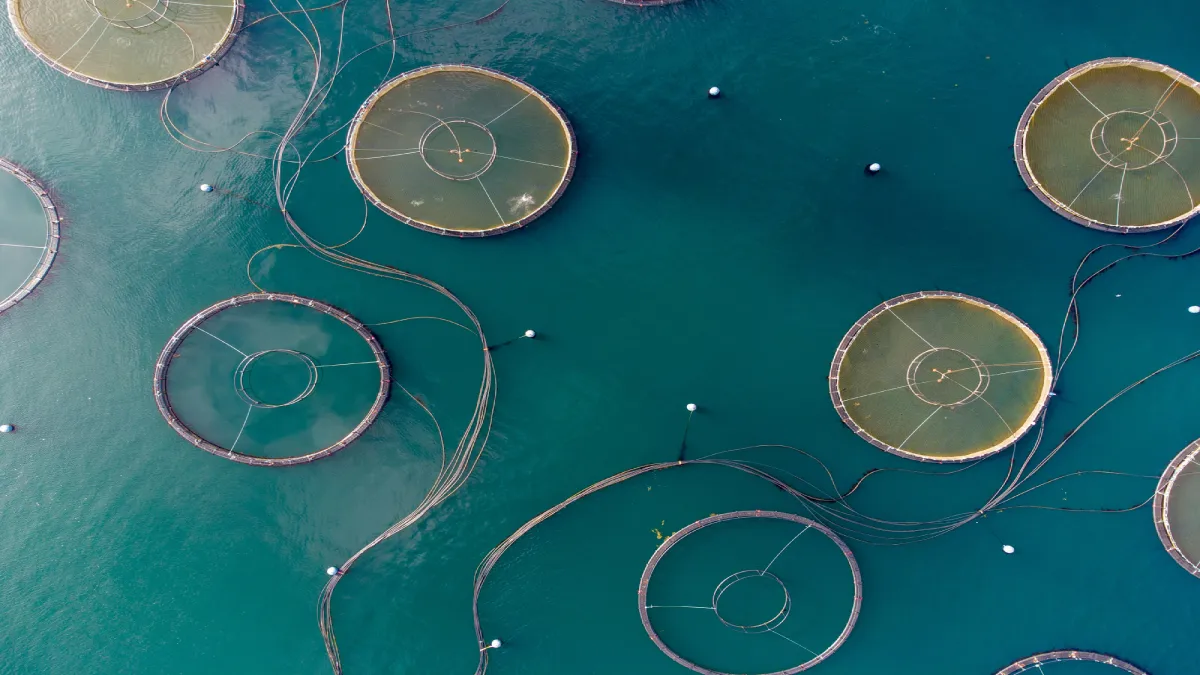
Aquaculture widened its lead over wild catch in 2024 as global farmed aquatic animal production passed 100 million tonnes for the first time. Türkiye moved further above the global average in 2025, with farms supplying 60.4 percent of national fisheries and aquaculture output.
Global aquaculture passes 100 million tonnes
The Food and Agriculture Organization of the United Nations (FAO) unveiled the 2026 edition of The State of World Fisheries and Aquaculture (SOFIA 2026) on June 16 at the 11th Our Ocean Conference in Mombasa, Kenya. Global fisheries, aquaculture and algae production reached a record 235 million tonnes in 2024, up 5.2 percent from 2022, with aquatic animals accounting for 195 million tonnes.
Global aquaculture supplied 103 million tonnes of aquatic animals, passing 100 million tonnes for the first time, while their first-sale value reached $371 billion. Including algae, aquaculture production rose to about 141 million tonnes, worth $391 billion at first sale.
Farms supplied 53 percent of global aquatic animal production and more than 59 percent of the aquatic animals intended for human consumption. Asia produced about 89 percent of the aquaculture total, with China, India, Indonesia, Vietnam and Bangladesh accounting for 82 percent.
Freshwater farms supplied about 64 million tonnes, or 63 percent of farmed aquatic animals, while marine and coastal systems produced about 38 million tonnes. FAO projects aquaculture production to reach 119 million tonnes by 2034, while capture fisheries are expected to remain near 95 million tonnes.
Wild catch remains on a long plateau
Capture fisheries supplied about 92 million tonnes of aquatic animals in 2024, including roughly 80 million tonnes from marine waters. Global catch has moved between about 86 million and 94 million tonnes since the late 1980s, while the fishing fleet has shrunk from a 2012 peak of 5.2 million vessels to about 4.7 million.
FAO estimated that 62.4 percent of assessed fish stocks were biologically sustainable, while a separate measure found that 72.6 percent of the volume landed in 2023 came from sustainable stocks. The first figure counts individual stocks, while the second weights them by the amount caught, meaning large, better-managed stocks still provide most landings even as many smaller stocks remain overexploited.
International trade in aquatic animal products reached $184 billion in 2024, while aquatic animal foods provide at least one-fifth of animal protein intake for about 3.1 billion people.
Türkiye's aquaculture lead widens despite stronger catch
The Turkish Statistical Institute (TÜİK) reported on June 4 that Türkiye's fisheries and aquaculture production rose by 11.1 percent to 1.037 million tonnes in 2025. Aquaculture produced 626,591 tonnes, equal to 60.4 percent of the total, compared with 410,428 tonnes from capture fisheries.
Farmed production increased by 8.6 percent, with marine farms supplying 440,817 tonnes and inland systems producing 185,774 tonnes. European seabass led marine aquaculture with 174,859 tonnes, followed by gilthead seabream with 164,643 tonnes, while inland trout production reached 185,310 tonnes.
Wild catch rose by 15.3 percent, but aquaculture still exceeded it by 216,163 tonnes. The increase depended heavily on anchovy, as marine fish landings reached 346,366 tonnes, including 245,261 tonnes of anchovy, equal to close to 60 percent of Türkiye's capture fisheries production.
Türkiye and Greece compete inside the same supply chain
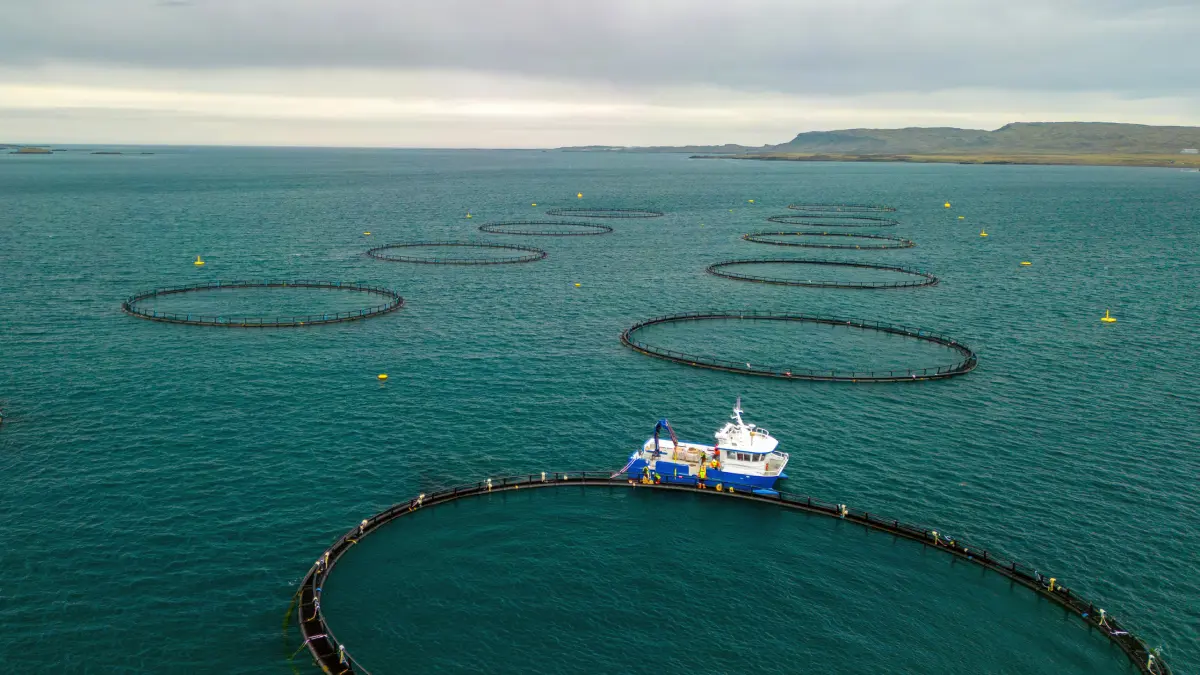
Türkiye and Greece run the Eastern Mediterranean's most closely connected seabass and seabream industries. Greek industry figures for 2023 put total aquaculture production at 153,852 tonnes, valued at €774.78 million, with about 80 percent of Greek farmed fish exported to 38 markets.
Ümüt Yiğit compared seabass and seabream farming in Türkiye and Greece in a study published in Aquatic Animal Reports in 2026. Greece produced 52.79 percent more than Türkiye in 2003, but by 2023 Türkiye's output was 34.84 percent higher, while the economic value of its seabass and seabream production was 2.86 times that of Greece.
Yiğit also found a positive correlation of 0.938 between population growth and production in Türkiye, compared with a negative correlation of 0.667 in Greece. Exchange rates, licensing, investment, export demand and production costs also contributed to the widening gap.
A market study by the Turkish Trade Ministry's commercial office in Thessaloniki found that Türkiye was Greece's largest supplier of live and unprocessed fish in 2024. Turkish exports in the category were worth $169.3 million and accounted for 23.11 percent of Greece's import bill, while seabass exports alone were valued at about $43 million.
The Hellenic Aquaculture Producers Organization (ELOPY), which uses the Fish From Greece label, reported that more than 12,000 tonnes of fresh Turkish-origin farmed fish were traded through Greece in 2023. Greece exports most of its own farmed production but still imports Turkish fish to supply its domestic market and regional distribution networks.
Higher volumes do not guarantee higher returns
FAO GLOBEFISH data show that Türkiye's production advantage does not always bring the same increase in export revenue. Turkish seabass exports rose by 24 percent in volume during the first nine months of 2024, while their value increased by 12 percent.
Seabream followed a different course, with volume rising by 5 percent and value by 26 percent. The weaker Turkish lira improved price competitiveness but reduced hard-currency revenue per unit in parts of the market.
Greek seabass exports increased by 12 percent in volume and 20 percent in value during the first half of 2025. High mortality during the hot summer of 2024 reduced supplies of larger seabass and pushed European prices higher in early 2025.
Different models across the region
Egypt operates the region's largest aquaculture industry, but its system bears little resemblance to those of Türkiye and Greece. United States Department of Agriculture (USDA) figures put Egyptian aquaculture production at about 1.57 million tonnes in 2023, close to 80 percent of the country's total fish output.
Nile tilapia accounted for 61.7 percent of farmed production, followed by mullet with 22 percent and carp with 9 percent. Most output comes from freshwater and brackish-water ponds and is consumed domestically, with Kafr El Sheikh governorate alone accounting for about 40 percent of farm production.
While Egypt relies on large-scale pond farming, Israel is pursuing land-based, recirculating and offshore systems because of limited freshwater and coastal space.
Romania produced about 10,000 tonnes of farmed aquatic animals in 2024, largely from inland carp and trout farms, while Georgia reported 2,452.5 tonnes. Türkiye's marine aquaculture production alone reached 440,817 tonnes in 2025.
Pressure remains on regional stocks
The General Fisheries Commission for the Mediterranean (GFCM) reported that fishing pressure in the Mediterranean and Black Sea had fallen by about half over the previous decade, although 52 percent of assessed stocks remained subject to overfishing.
Marine capture fisheries together with marine and brackish-water aquaculture produced about 2.06 million tonnes across the Mediterranean and Black Sea in 2023. The value chain generated $21.5 billion and supported 1.17 million jobs.
Five species provide about 90 percent of Black Sea catch, with Türkiye's reliance on anchovy offering the clearest national example. Faster production growth is now colliding with feed costs, disease, warmer waters, currency pressure and weaker hard-currency returns per unit.
Sources: Food and Agriculture Organization of the United Nations, Turkish Statistical Institute, General Fisheries Commission for the Mediterranean, FAO GLOBEFISH, Turkish Trade Ministry Thessaloniki Commercial Office, Hellenic Aquaculture Producers Organization, Ümüt Yiğit, United States Department of Agriculture Foreign Agricultural Service, Frontiers in Sustainable Food Systems, Romania's National Agency for Fisheries and Aquaculture, National Statistics Office of Georgia, Bosphorus News review and reporting.