
By Bosphorus News Energy Desk
Türkiye aims to nearly double the combined domestic and overseas hydrocarbon production of the Turkish Petroleum Corporation (TPAO) to around 600,000 barrels of oil equivalent per day by 2028, Energy and Natural Resources Minister Alparslan Bayraktar said, as the state energy company moves from cooperation agreements into equity stakes, production-sharing contracts and active drilling across three continents.
TPAO currently produces around 330,000 barrels of oil equivalent per day from its operations in Türkiye and abroad, according to Bayraktar, who said the longer-term objective is to reach 1 million barrels of oil equivalent per day.
Much of the increase expected through 2028 will come from higher production at the Sakarya Gas Field in the Black Sea, where Türkiye is expanding offshore processing capacity, but TPAO's international portfolio has also changed considerably during 2026 as projects in Iraq, Somalia, Libya and Oman moved beyond preliminary agreements.
Bayraktar said the overseas expansion was intended not only to increase production but also to take Turkish engineering, technology, capital and operational capabilities into international energy markets as part of Ankara's broader energy strategy.
One of the most substantial additions came in Iraq in July, when TPAO agreed to acquire a 15% interest in BP Energy Company of Kirkuk Limited, bringing the Turkish company into a partnership with BP and ConocoPhillips covering major Kirkuk-area oil fields.
The portfolio includes the Baba and Avanah domes of the Kirkuk field as well as Bai Hassan, Jambur and Khabbaz. Turkish officials have cited reserve potential exceeding 3 billion barrels of oil equivalent across the assets, while the fields currently produce around 300,000 barrels per day in total.
That production figure refers to the fields as a whole rather than TPAO's individual entitlement. The partners plan to develop existing reserves, raise output and assess additional exploration potential.
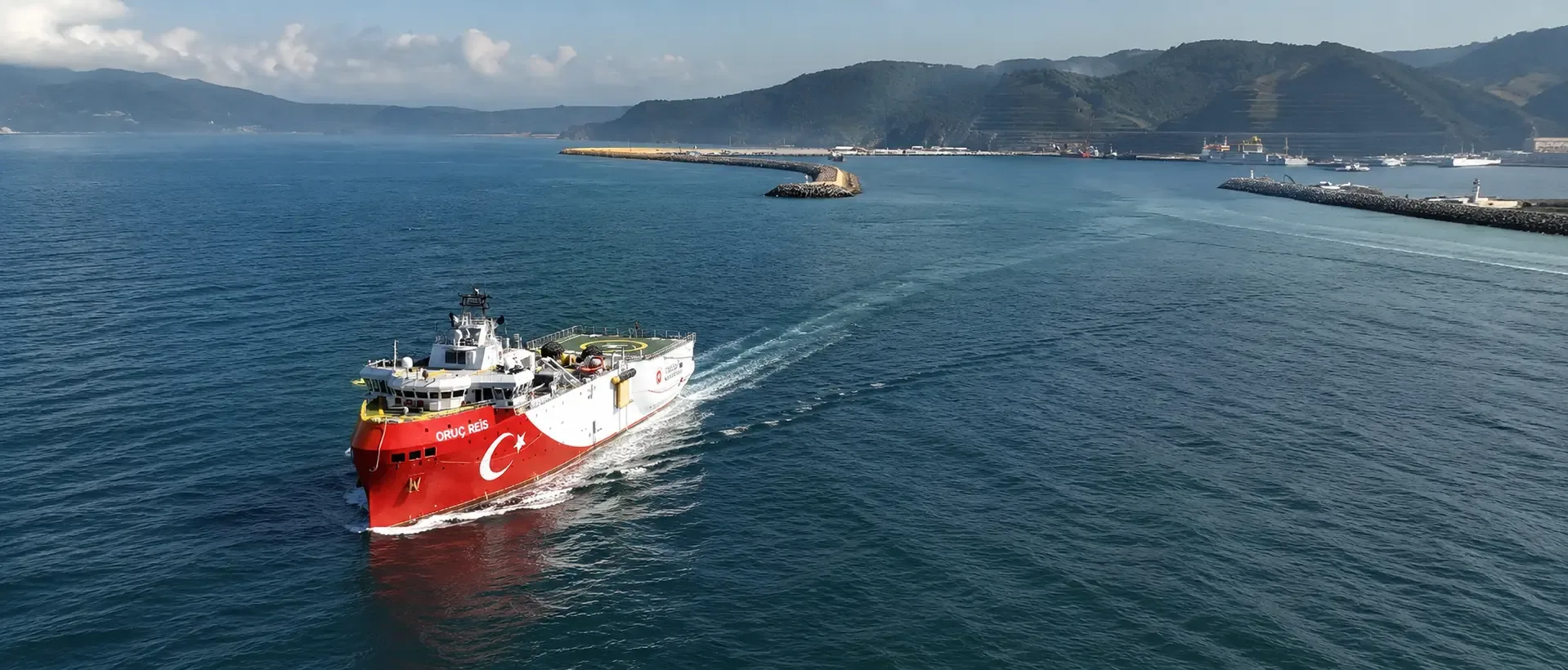
In Somalia, TPAO has already moved from seismic exploration to offshore drilling. The Oruç Reis seismic research vessel spent 234 days surveying three offshore blocks and collected around 4,464 square kilometers of three-dimensional seismic data before Türkiye decided to proceed to an exploration well.
The Çağrı Bey drilling vessel is now operating at the Curad-1 well off Somalia, which Bayraktar has described as Türkiye's first deep-sea exploration drilling operation outside the country. The well lies roughly 372 kilometers offshore and involves drilling in water around 3,500 meters deep, with the program targeting a total depth of approximately 7,500 meters from the sea surface.
TPAO has also expanded into Oman through a 50-50 partnership with OQ Exploration and Production at offshore Block 80 near the Strait of Hormuz. The concession covers about 5,737 square kilometers and includes the producing Bukha and West Bukha fields, giving the Turkish company exposure to an asset that combines existing production with further exploration potential.
The initial exploration phase is expected to include three-dimensional seismic work and drilling, with OQEP operating the block.
In Libya, TPAO has entered both offshore and onshore projects following the country's latest licensing round. The company holds a 40% interest in offshore Block O7 alongside operator Repsol, which also holds 40%, and Hungary's MOL with 20%.
The block covers around 10,300 square kilometers northwest of Benghazi in waters reaching depths greater than 1,500 meters. The agreed work program includes seismic acquisition and at least one exploration well.
TPAO and Repsol have also secured an onshore block, adding another North African component to a portfolio that had previously been concentrated more heavily on Türkiye, Azerbaijan and Iraq.
Türkiye has separately explored expanding energy cooperation with Syria, including potential offshore work in the Eastern Mediterranean, although those plans remain at an earlier stage than TPAO's producing assets, equity investments and active drilling projects elsewhere.
Pakistan is expected to become another operational focus after the monsoon season. TPAO already holds interests through partnerships in three offshore and two onshore blocks, while Oruç Reis is scheduled to conduct seismic surveys as part of the exploration program.
The company is also extending its European footprint. In Bulgaria, TPAO is working with Shell on exploration at the Khan Tervel block in the Black Sea, an area covering more than 3,800 square kilometers and located relatively close to Türkiye's Sakarya gas development. In Hungary, it is conducting seismic work with MOL.
Azerbaijan remains one of TPAO's established international markets through its stakes in the Azeri-Chirag-Gunashli oil complex and Shah Deniz gas development.
A separate long-term agreement signed in June will bring a total of 33 billion cubic meters of Azerbaijani gas to Türkiye over 15 years beginning in 2029 through arrangements involving BOTAŞ, SOCAR, TotalEnergies and ADNOC. The supply agreement is distinct from TPAO's upstream portfolio but adds to the wider expansion of Türkiye's regional energy relationships.
Domestic production will remain central to meeting the 2028 target. Türkiye plans to increase daily gas output from Sakarya to around 20 million cubic meters in the next development phase before pushing capacity above 40 million cubic meters per day with an additional floating production platform expected in 2028.
The overseas side of TPAO's strategy, however, has become more tangible during 2026. Agreements that were previously centered on exploration cooperation are increasingly being followed by equity acquisitions, concessions, production-sharing agreements and drilling programs from Kirkuk and the Gulf of Oman to Libya and the Somali coast.
Sources: Türkiye's Ministry of Energy and Natural Resources, TPAO, BP, MOL Group, OQ Exploration and Production, Anadolu Agency, Bosphorus News review and reporting.