
By Bosphorus News Defense Desk
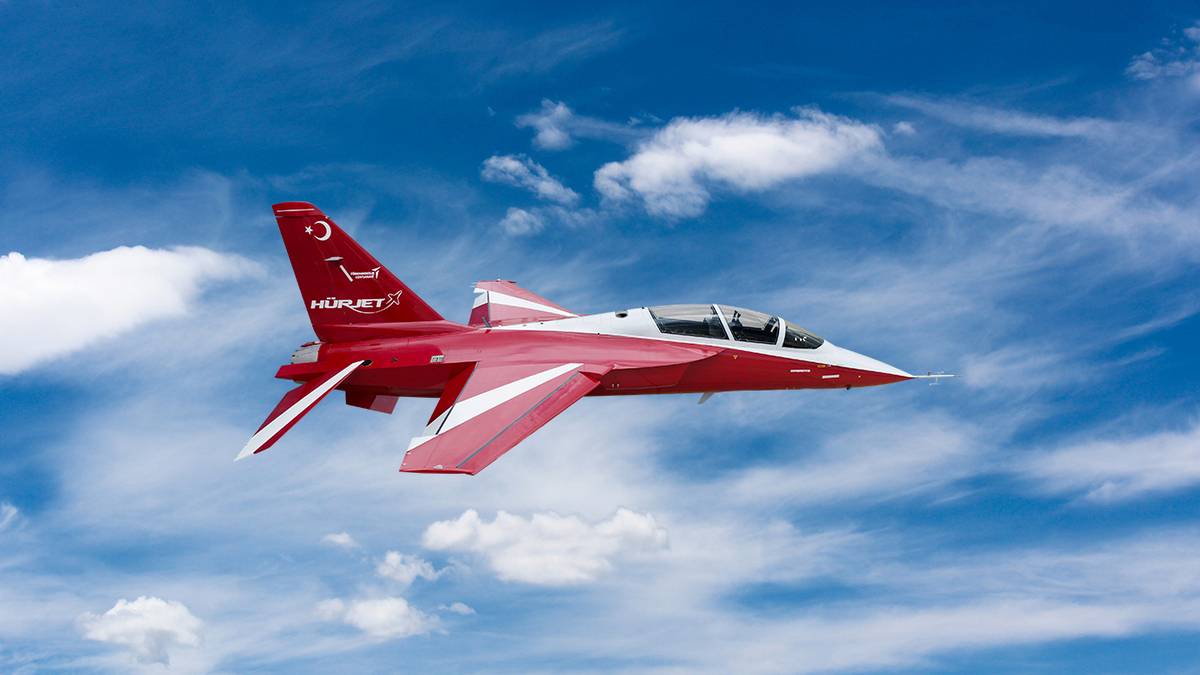
Spain's HÜRJET program has turned a Turkish jet trainer into a test of Europe's defence logic. Brussels continues to debate how far Türkiye should be allowed into EU-linked defence frameworks, while Madrid is building its future combat pilot training system around a Turkish platform adapted by Airbus and Spanish industry.
The program is not a symbolic purchase. It places HÜRJET inside Spain's long-term plan to replace its ageing F-5 training aircraft and modernize the way Spanish combat pilots are prepared for next-generation air operations. Airbus said the new Integrated Training System for Combat, known as ITS-C, is based on a joint development agreement with Turkish Aerospace, the producer of HÜRJET, and will cover the advanced training system for Spain's fighter pilots.
Spain's decision did not come out of nowhere. As Bosphorus News reported earlier, Madrid signed a €2.6 billion deal for 30 Turkish-built HÜRJET training jets, giving Turkish Aerospace its first foreign customer for the platform and placing the aircraft inside Spain's future pilot training structure.
The latest stage gives the deal a more strategic weight. The signing ceremony at Airbus facilities in Getafe, near Madrid, on April 28 brought together Turkish Defence Industries President Haluk Görgün, Spanish Defence State Secretary María Amparo Valcarce, Turkish Aerospace representatives and Airbus Defence and Space executives. The setting mattered. HÜRJET entered the Spanish program through an Airbus-led structure, with Madrid framing the project as a national industrial and training ecosystem rather than a simple aircraft acquisition.
That is where the European contradiction begins.
Valcarce described SAETA II as a project that would allow Spain to design, integrate and develop its own capabilities, reduce "critical dependencies" and strengthen "strategic autonomy." Yet the platform at the centre of that autonomy is Turkish. The paradox is not that Spain is becoming dependent on Türkiye. It is that Spain is using a Turkish aircraft architecture, Airbus integration and domestic industrial content to build a more sovereign training system of its own.
Airbus said Spanish industrial participation would reach about 60 percent. The consortium includes companies such as Indra, GMV, Sener, Aertec, Grupo Oesía, Orbital and ITP Aero. That makes SAETA II a Spanish defence industry program built around a Turkish platform, with European companies shaping integration, training systems, simulation, maintenance and adaptation for Spanish requirements.
The program also carries a software and systems layer. Turkish defence reporting has pointed to the export of HAVELSAN's Flight and Mission Planning System as part of the HÜRJET package. If fully integrated into the Spanish training ecosystem, the deal would export more than an aircraft. It would carry Turkish mission planning, training logic and operational support tools into a European air force environment.
A new engine agreement has kept the program moving. GE Aerospace announced on May 5 that it had reached an agreement with Turkish Aerospace for F404 engines to power HÜRJET aircraft. The company said the deal supports the aircraft's growing global footprint and future variants. For Turkish Aerospace, that matters because the Spain program is now connected to serial production, engine supply and a wider export pathway rather than a one-off diplomatic success.
The European politics around the program remain awkward. Türkiye is a NATO ally with one of the alliance's largest militaries and a defence industry that has moved from regional supplier to international competitor. Yet Ankara's access to EU-controlled defence funding, research and industrial mechanisms remains contested.
As Bosphorus News reported in its coverage of EU SAFE funding and Türkiye's exclusion from Europe's defence core, Ankara has been pressing against a framework that treats Turkish military capacity as useful to Europe while keeping Türkiye outside key EU-controlled funding and industrial mechanisms. The HÜRJET deal now shows how national defence needs can move faster than Brussels-level caution.
That does not mean Spain has broken EU policy. It has done something more practical. Madrid has chosen a Turkish platform because the platform fits a training need, because Airbus can localize and integrate it, and because Spanish companies can capture a large share of the industrial value. The result is a defence partnership that advances through procurement and engineering while the political argument in Brussels remains unresolved.
The same tension sits inside the wider NATO-EU debate. As Bosphorus News examined in its analysis of Türkiye's NATO burden and Europe's defence gap, Ankara argues that European security planning cannot keep relying on Turkish military capacity while treating Türkiye as peripheral inside EU-led defence frameworks.
HÜRJET gives that argument a concrete case. This is no longer an abstract dispute over whether Türkiye belongs in European defence conversations. A Spanish pilot training system, designed for future combat aviation, will be built around a Turkish jet trainer. Airbus will lead the Spanish industrial side. Turkish Aerospace will gain a European reference user. Spanish companies will work inside the adaptation chain. NATO interoperability will sit beneath the program's practical logic.
There is also a market effect. Spain gives HÜRJET something Turkish Aerospace needed: a European customer with NATO credentials and a structured training requirement. That reference could matter in future competitions, especially in countries looking to replace ageing trainer fleets without waiting for larger European programs to mature.
The light combat aircraft question adds another layer. Turkish defence sources have pointed to possible future evolution of the platform beyond advanced training. Any move in that direction would make the Spain program more important, because a trainer selected by a European air force can become a bridge toward wider operational variants, export campaigns and joint development options.
Brussels can still debate Türkiye's place in EU defence instruments. The HÜRJET program shows another route already forming: national procurement, Airbus-mediated integration, Spanish industrial participation and a Turkish platform entering Europe through operational need. That route is narrower than full institutional access, but it is harder to dismiss because it is tied to aircraft, contracts, engines, training systems and delivery schedules.
Spain's decision will not settle Europe's argument over Türkiye. It will keep that argument grounded in facts that are harder to ignore. A country that some EU-level defence debates still treat as a difficult outsider is now helping build the combat pilot training system of an EU and NATO member state.