
By Bosphorus News Geopolitics Desk
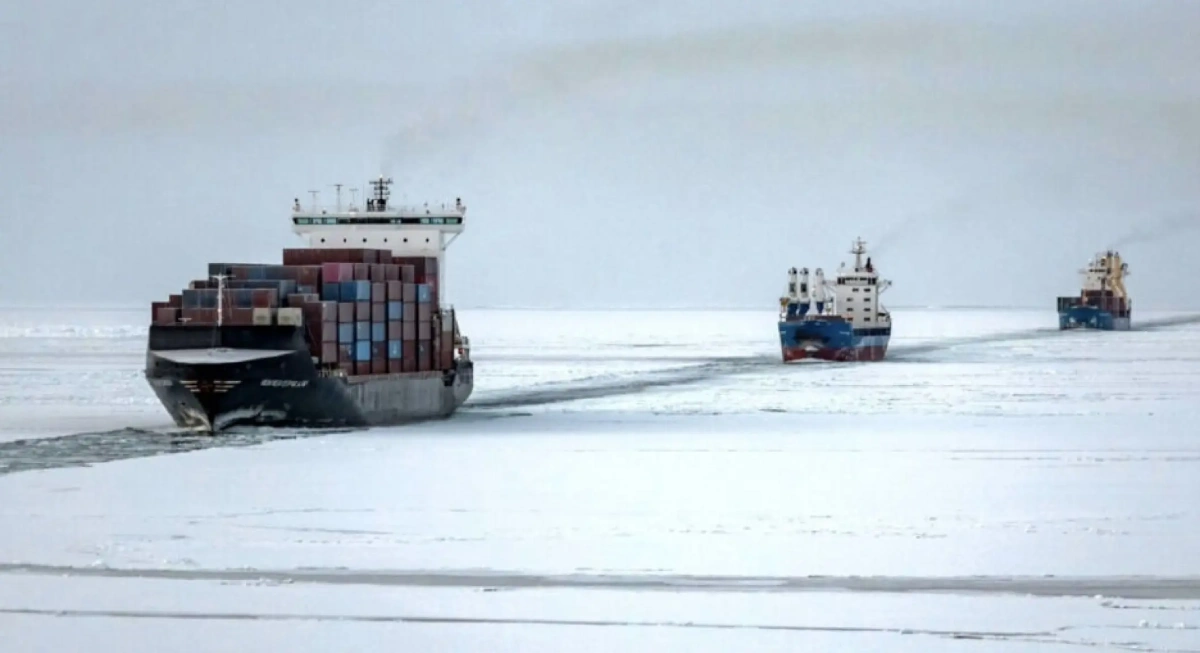
South Korea has begun testing a commercial shipping route through the Arctic to Europe, bringing the Northern Sea Route back into discussions over future Asia-Europe trade links. The trial connects Seoul's maritime ambitions with a wider effort by governments and companies to explore alternatives to established shipping routes.
The voyage does not represent an immediate replacement for existing Asia-Europe shipping networks. Arctic conditions, limited infrastructure, seasonal access and dependence on specialized vessels remain major obstacles. But the move shows how countries are examining additional routes as trade connections become increasingly linked with security and political risks.
Seoul Tests Arctic Shipping Potential
South Korea's Arctic interest is closely tied to its position as one of the world's largest shipbuilding powers. Seoul has focused on expanding capabilities in ice-class vessels, maritime technology and Arctic logistics while strengthening Busan's role as an international shipping centre.
The Northern Sea Route follows Russia's Arctic coastline, connecting the Pacific and Atlantic through waters that can shorten the distance between parts of Asia and Europe compared with the traditional Suez Canal route.
For South Korea, the potential value extends beyond shorter sailing distances. Arctic shipping could create demand for advanced vessels, navigation systems and maritime services where Korean companies already have industrial capacity.
Russia Remains Central to the Route's Future
The commercial future of the route is closely connected to Russia's role. Most of the Northern Sea Route operates along Russia's Arctic coastline, with Moscow controlling navigation procedures, icebreaker support and access arrangements.
That creates challenges for companies and governments assessing long-term use. The route offers a shorter connection, but it also raises questions over sanctions exposure, insurance costs and reliance on Russian infrastructure.
European policy discussions on the Arctic increasingly combine commercial access questions with security concerns linked to Russia's presence in the region. The result is a gap between economic interest and political caution.
Europe Watches New Transport Options
The Arctic trial comes as Europe and Asia continue to examine different ways of moving goods between the two regions. The Suez Canal remains the main maritime link, but recent disruptions and geopolitical risks have encouraged interest in additional routes.
The debate over Arctic shipping also comes as countries reassess how goods move between Asia and Europe.
The Northern Sea Route is becoming one option among several routes competing for future Asia-Europe trade flows. Rail connections, land corridors and multimodal networks are also being developed as companies seek greater flexibility.
No single alternative currently matches the scale and reliability of existing global shipping routes. The competition is about building additional options rather than replacing the current system overnight.
Türkiye and Eurasian Connectivity
The same competition over transport routes also keeps attention on Eurasian corridors running through the south and centre of the continent.
Türkiye's Middle Corridor approach, linking China and Central Asia with Europe through the Caspian region, the Caucasus and Türkiye, is part of this wider transport network. Its development depends on rail capacity, customs coordination and stable connections across the region.
The Arctic route and the Middle Corridor are different systems. One depends on northern maritime access, while the other combines rail and maritime links across Eurasia. Their parallel development reflects the growing number of routes being considered for Asia-Europe trade.
The Black Sea remains an important factor in regional connectivity. Maritime security conditions and commercial access in the region affect routes linking Europe, the Caucasus and Central Asia.
A Route Still Facing Commercial Tests
The Northern Sea Route is unlikely to replace established maritime routes in the near term. Its future depends on costs, infrastructure, political conditions and whether companies see the route as reliable enough for regular operations.
South Korea's Arctic trial links a commercial shipping experiment with Seoul's wider maritime industry goals. The outcome will depend on whether the route can move from a strategic possibility into a commercially sustainable service.
Sources: South Korea Ministry of Oceans and Fisheries, Reuters, European Union documents, Bosphorus News review and reporting.