
By Bosphorus News Energy Desk
Azerbaijan's State Oil Company of Azerbaijan (SOCAR) has taken over operatorship of the Baku-Tbilisi-Ceyhan (BTC) oil pipeline from BP, shifting day-to-day responsibility for one of the main Caspian-to-Mediterranean export routes while leaving the ownership structure unchanged.
The Baku-Tbilisi-Ceyhan Company said the transfer took effect on July 1, 2026, with operatorship passing from BP Exploration (Caspian Sea) Limited to SOCAR Midstream Operations LLC, a wholly owned SOCAR subsidiary.
The handover covers the Azerbaijan, Georgia and Türkiye sections of the BTC pipeline. It also includes dedicated BTC facilities and common activities linked to both the BTC and South Caucasus Pipeline systems, excluding facilities inside the Sangachal terminal near Baku.
BP will continue to operate the Sangachal terminal, as well as the Azeri-Chirag-Gunashli and Shah Deniz fields and other upstream projects in the Caspian. BTC Co's shareholding structure remains unchanged, making the July 1 move an operatorship transfer rather than a sale or exit by BP.
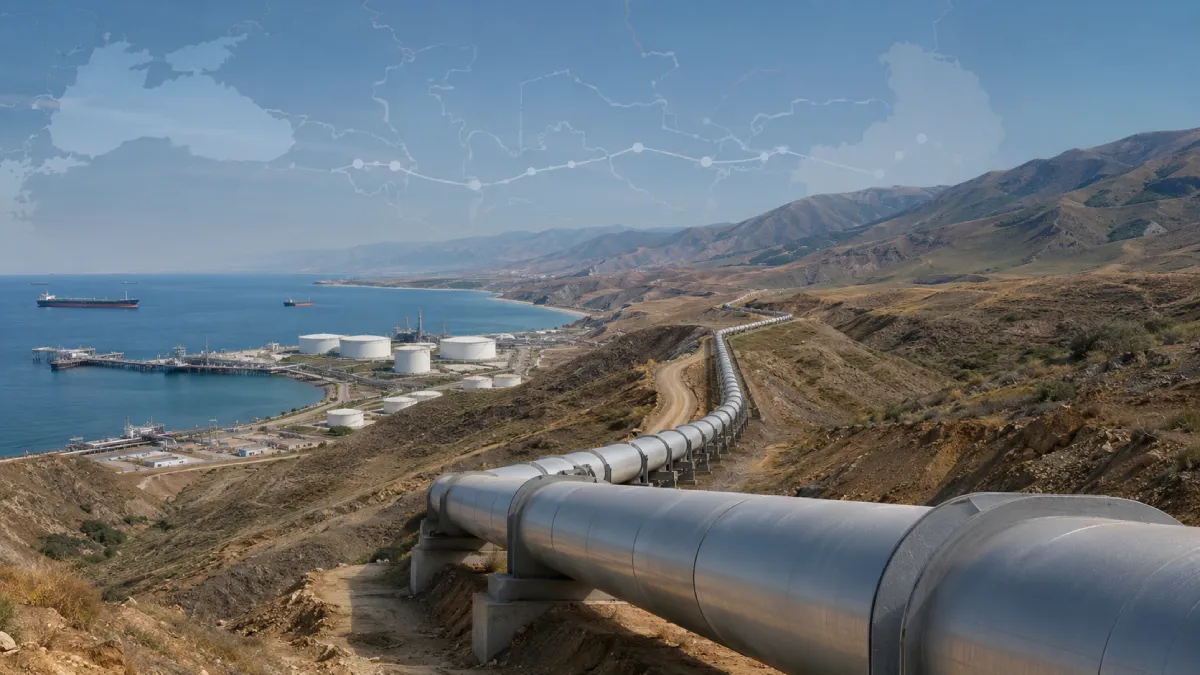
BTC carries Caspian crude across Azerbaijan and Georgia to Türkiye's Ceyhan Marine Terminal on the Mediterranean. The 1,768-kilometer line gives Azerbaijan and other Caspian producers a route to global markets without crossing Russian or Iranian territory.
Reuters previously reported that BTC has capacity of more than one million barrels per day and has operated since 2006. The pipeline is mainly associated with Azeri crude, but it has also served wider Caspian export flows, including volumes linked to Kazakhstan.
For SOCAR, the transition expands its operational role in the infrastructure that underpins Azerbaijan's energy export position. For Türkiye, the handover does not change the route's legal or ownership structure, but it keeps Ceyhan at the center of the Caspian export map.
The BTC move follows a separate June handover involving the Western Route Export Pipeline, under which facilities in Azerbaijan and Georgia were returned to entities acting for the Azerbaijani and Georgian governments. The two transfers point to a gradual shift in corridor management toward regional operators while BP remains embedded in upstream production and consortium structures.
SOCAR President Rovshan Najaf said the BTC transfer reflected the company's capacity to manage large-scale energy infrastructure. BP's regional president Gio Cristofoli said BP would continue its partnership with SOCAR and the other BTC participants as a shareholder in BTC and the South Caucasus Pipeline.
BTC's value rests on reliable flows from the Caspian to Ceyhan. SOCAR's new role gives Azerbaijan greater operational visibility over that corridor without removing BP from the wider Caspian energy structure.
Sources: BP, BTC Co, Reuters, Report.az, News.Az, Bosphorus News review and reporting.