
By Bosphorus News Geopolitics Desk
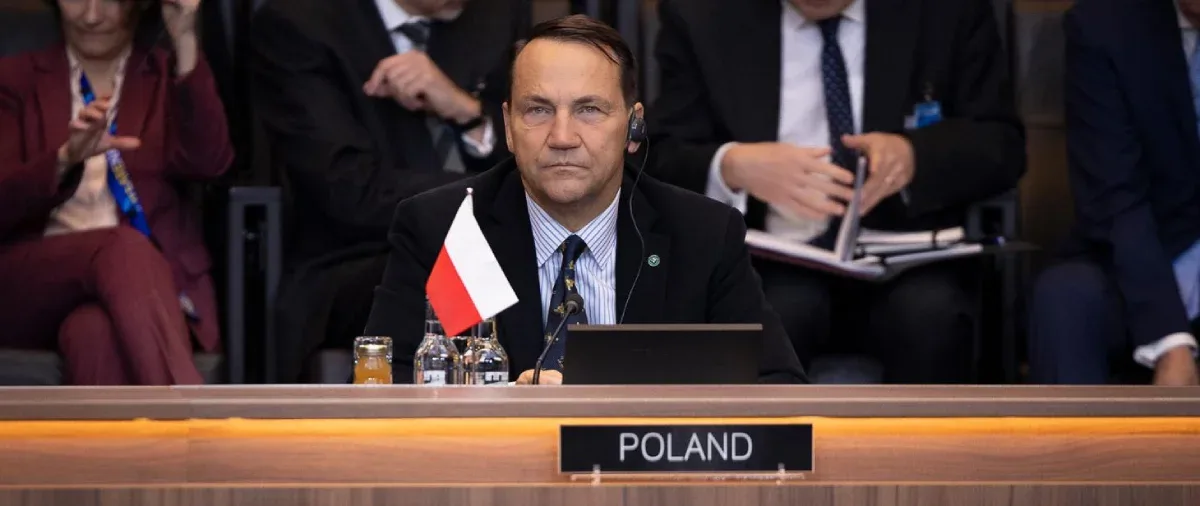
Polish Deputy Prime Minister and Foreign Minister Radosław Sikorski said Türkiye and India are conducting negotiations over freedom of shipping in the Black Sea, providing fresh outside confirmation of Ankara's publicly acknowledged effort to restore maritime security between Russia and Ukraine.
Speaking at the Yalta European Strategy meeting in Kiev on Sept. 11-12, Sikorski referred to diplomatic efforts underway alongside attempts to end the war.
"There are also negotiations run by the Indians over the freedom of shipping in the Black Sea and by the Turks," Sikorski said, according to Interfax-Ukraine.
His wording did not describe a joint Türkiye-India mediation process. Bosphorus News found no official statement indicating that Ankara and New Delhi are operating a common negotiating mechanism. The records reviewed point instead to separate Turkish and Indian contacts over Black Sea navigation.
Foreign Minister Hakan Fidan said on Aug. 31 that Türkiye had prepared a proposal and was in contact with both Russia and Ukraine. Ankara was working toward another agreement similar to the Black Sea Grain Initiative if conditions allowed, he said.
"We have prepared a study. We are in contact with both sides through this work," Fidan said, adding that Türkiye was seeking an arrangement that could again protect grain movements through the Black Sea.
The talks were underway before that announcement. During a joint press conference with Ukrainian Foreign Minister Andrii Sybiha on July 16, Fidan said he had discussed maritime security with Russia and Ukraine and that proposals covering navigation and energy security remained before the parties.
Fidan said Türkiye and the United Nations had earlier proposed a war moratorium covering Black Sea navigation and energy security, with the relevant targets spared from attack. He also said the Ukrainian side shared "a serious common understanding" with Türkiye on the proposal.
President Recep Tayyip Erdoğan went further on Sept. 2, saying the Black Sea needed a mechanism capable of protecting commercial shipping on a lasting basis.
"The security of all commercial maritime transport in the Black Sea" was not only a matter for Turkish vessels or operators, Erdoğan said, warning that attacks were putting civilian lives and trade at risk. He also linked the disruption to renewed pressure on grain supplies, particularly in Africa.
Ankara is therefore no longer speaking only about restoring the 2022 grain corridor. Its current proposal covers commercial shipping, navigation safety, grain exports and protection of maritime and energy targets from attack.
India has disclosed less about its role, but Black Sea shipping now appears in its official contacts with both Kiev and Moscow.
Ukrainian President Volodymyr Zelenskyy discussed threats to civilian shipping with Indian External Affairs Minister Subrahmanyam Jaishankar in Kiev on Sept. 3. The Ukrainian presidency said Jaishankar raised the deaths of Indian sailors in attacks on vessels and described maritime safety as an important issue for India, one of the world's largest maritime nations.
Prime Minister Narendra Modi then discussed the Black Sea with Russian President Vladimir Putin during their Sept. 11 meeting in New Delhi.
According to the Indian Prime Minister's Office, the two leaders discussed conflicts affecting the Black Sea region, maritime trade and the safety of Indian seafarers. Modi also repeated India's readiness to support peace efforts.
Sikorski's statement is the clearest public claim so far that India is conducting negotiations over Black Sea shipping. New Delhi has confirmed that maritime security is part of its contacts with both Kiev and Moscow, but it has not publicly described those contacts as a formal mediation channel.
Moscow has made clear that it does not want simply to restore the previous grain agreement.
Russian Deputy Foreign Minister Alexander Grushko said on Sept. 2 that Moscow saw no basis for reviving the Black Sea Grain Initiative because, in Russia's view, provisions concerning its own agricultural exports, payments and logistics had not been implemented.
The 2022 agreement, mediated by Türkiye and the United Nations, allowed nearly 33 million metric tons of Ukrainian grain to leave Black Sea ports before Russia withdrew in 2023.
The Polish foreign minister's remarks add a new element to negotiations already acknowledged by Ankara. Türkiye is pursuing a maritime arrangement with Russia and Ukraine, while Sikorski says India is also holding talks over freedom of navigation.
Ankara has publicly outlined the substance of its proposal, while New Delhi has so far limited its official statements to maritime security, commercial shipping and support for peace efforts. No side has announced an agreed text, timetable or joint Türkiye-India mechanism.
Sources: Türkiye's Foreign Ministry, Presidency of the Republic of Türkiye Directorate of Communications, Office of the President of Ukraine, Prime Minister's Office of India, Interfax-Ukraine, Reuters, Bosphorus News review and reporting.