
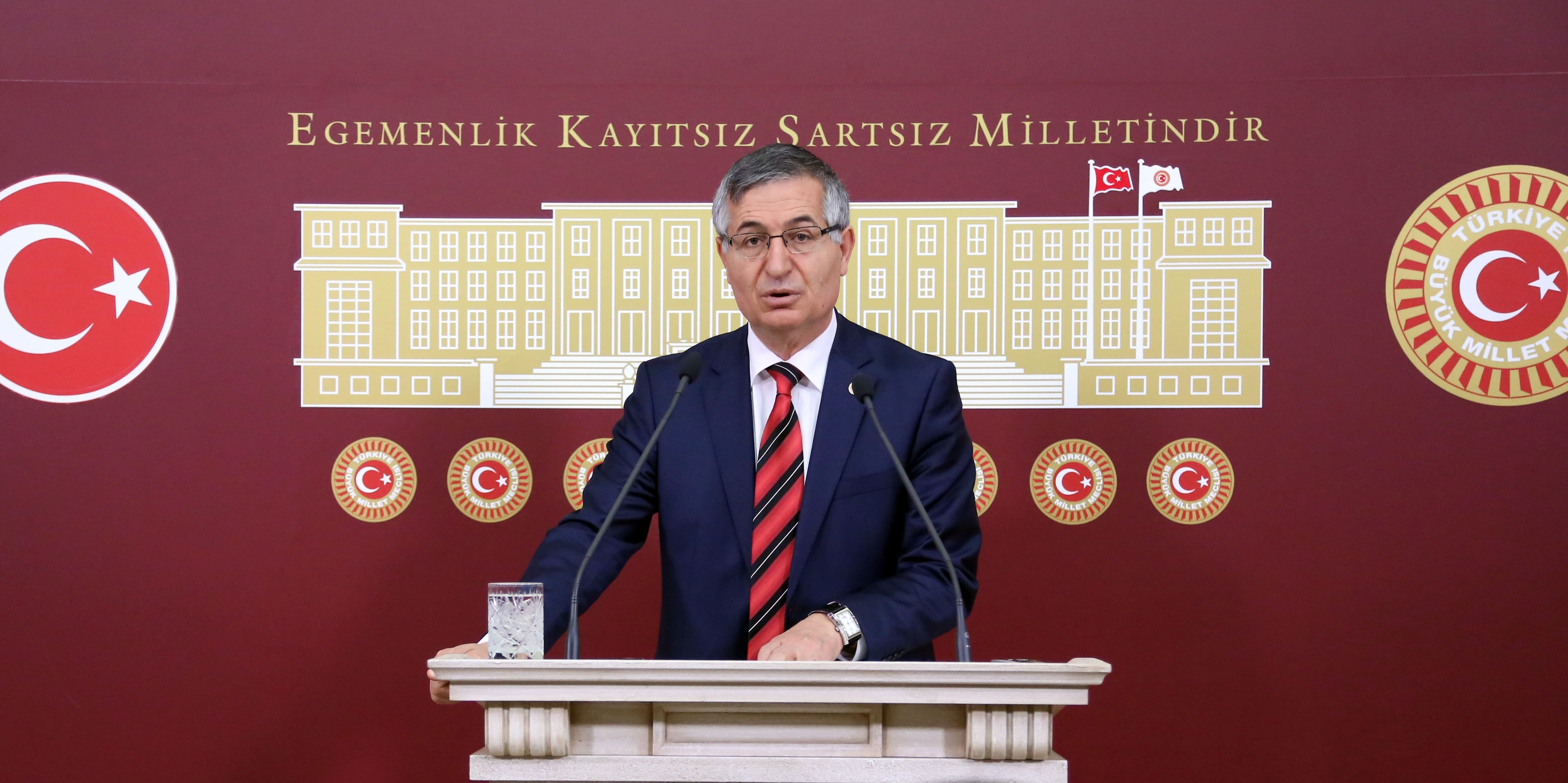
By Prof. Dr. Özcan Yeniçeri
In the gynecology ward of a state hospital in Türkiye, two patients lying side by side were confused by a surgical team because they had the same first name and similar surnames. As a result, a patient waiting for urinary tract treatment underwent a uterus operation intended for another patient.
The operation was extremely successful. Yet because it was performed on the wrong patient, it did not solve a problem. It created a human tragedy.
A small mistake changed a person's life forever.
A small mix-up
The confusion unfolded in a simple way. Two patients with the same first name and similar surnames had operations scheduled at close times. When staff called the patient who was supposed to undergo uterus surgery by first name only, the patient waiting for urinary tract treatment answered, "That's me," and was taken into the operating room.
The healthy uterus of a patient who should have received urinary tract treatment was removed in a successful operation.
What follows after such a case is familiar. The prosecutor will probably step in after the patient files a complaint. A lawsuit will be opened. Defenses will be made. Compensation will be demanded. Then the incident will slowly be left to oblivion.
Perhaps those responsible will say "pardon," apologize and pay compensation. But none of this will change the truth. A person will pay for life because another person did not do the job correctly.
Such incidents occur in Türkiye more often than people assume. People contracting deadly diseases from contaminated blood given to patients, or infant deaths caused by infections, are among the examples. These are cases that stand at the peak of carelessness and irresponsibility. What happens is the result of some people failing to perform their duties at the highest standard.
Some people pay a heavy price for the carelessness and inattention of others.
Human beings and systems
Some mistakes can always happen and may be tolerated. Some mistakes happen from time to time and, even if their consequences are serious, can be compensated for. But there are some mistakes that happen once and can never be repaired.
These are life-and-death duties that must be performed with zero error. Such strategic tasks cannot tolerate frivolity, informality or irresponsibility. They require first-class attitude, seriousness, awareness and responsibility.
Of course, a human being is a human being everywhere. A person can lose concentration, become tired, face problems and make mistakes from time to time. But some duties are too important to be left only to human initiative. Human action must also be checked by the system and the structure around it. Even if someone wanted to make a mistake, the system should be arranged in such a way that it does not allow the error.
Where both the structure and the system are broken, and where people lack responsibility and awareness, doing the right thing becomes a matter of chance.
Doing the job right and doing the right job
In this case, surgeons performed a very successful operation on one of a patient's organs. But because the operation was performed on the wrong person and the wrong organ, the problem was not eliminated. It grew.
This shows that the essential point is not simply that people perform their tasks very well. What matters is not doing the job well, but doing the right job.
Institutions can protect themselves from such grave mistakes through continuous learning and improvement. That does not happen through denial or by rejecting the reality of the situation, as so often occurs. Errors that directly affect quality of life cannot be dismissed with a simple "pardon."
Such mistakes reveal the gaps, deficiencies and leaks in a system. If lessons are learned and measures are developed, they can be prevented. The way forward is not to pass the blame on to someone else, but to assume responsibility; not to minimize the mistake, but to take it seriously.
Everyone's quality of life depends, in part, on this.
Prof. Dr. Özcan Yeniçeri is a Turkish academic, author and former member of parliament. He served as a 24th-term Ankara deputy in the Turkish Grand National Assembly and has written columns for Yeniçağ and other Turkish publications. His academic work has focused on management, organization and institutional responsibility.
This article was originally published in Turkish by Yeniçağ on September 1, 2008. It is published in English by Bosphorus News with the author's permission. Translation and editing by Bosphorus News.
Sources: Yeniçağ archive, Özcan Yeniçeri author permission, Bosphorus News translation and editing.