
By Bosphorus News Geopolitics Desk
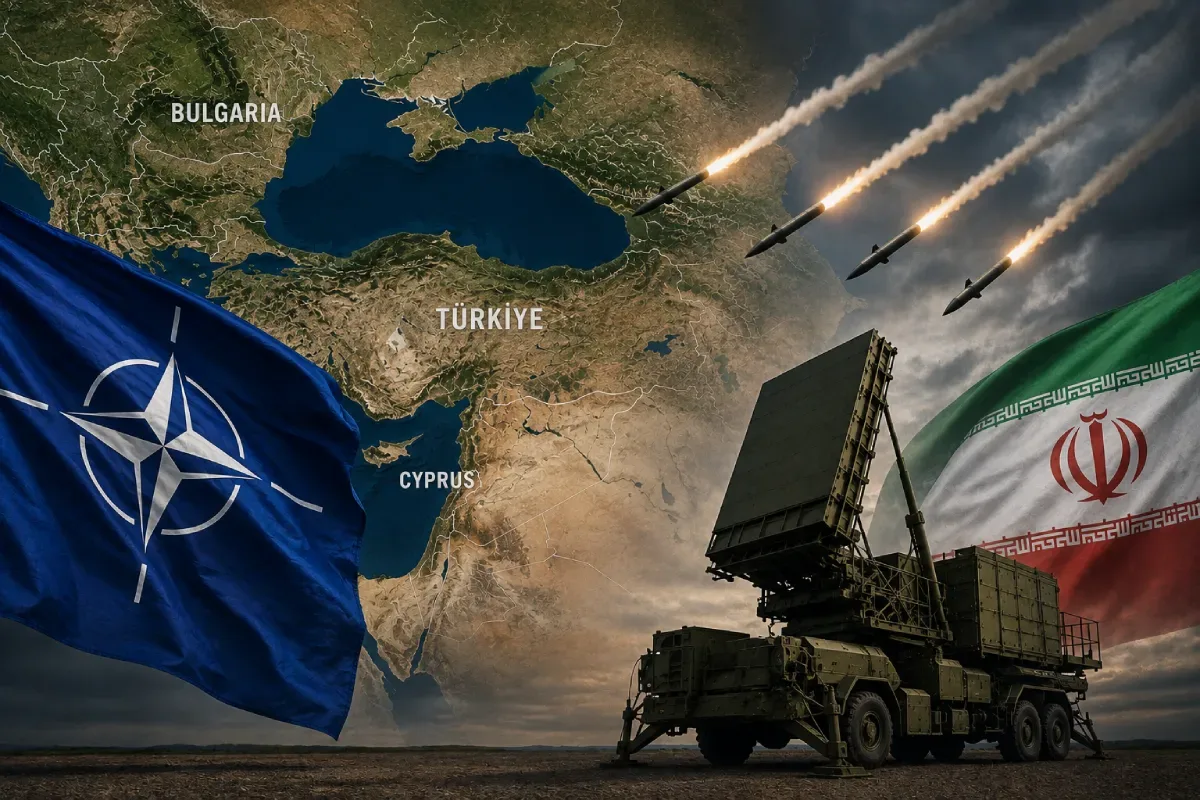
NATO said it was prepared to respond to any threat after a report that Iran had examined possible strikes on US military assets in southeastern Europe, pointing to four Iranian ballistic missiles intercepted while heading toward or entering Turkish airspace earlier this year.
A NATO official told Anadolu Agency that the alliance would take the measures necessary to defend its members and cited the four interceptions as evidence of its existing air and missile defense capability.
NATO air and missile defense assets deployed in the Eastern Mediterranean intercepted Iranian ballistic munitions heading toward or entering Turkish airspace on March 4, March 9 and March 13. A fourth was intercepted after entering Turkish airspace on March 30.
The Financial Times reported Wednesday that Iranian forces had assessed potential US military targets in Europe if President Donald Trump escalated the war, citing two people close to the Iranian leadership.
Bulgaria was among the countries examined. Its parliament approved the deployment of up to eight US Air Force KC-135 aerial refueling aircraft and up to 250 American military personnel at Bezmer Air Base from July 24 to October 1 in support of US operations in the Middle East.
One of the FT's sources also identified Cyprus as a possible target if the United States renewed military operations against Iran. Iranian forces had separately examined possible strikes against subsea fiber-optic cables in the Strait of Hormuz, according to the report.
Bulgaria Tightens Bezmer Security but Sees No Direct Threat
Bulgarian Defence Minister Dimitar Stoyanov said Wednesday that military intelligence had found no direct threat to national security, either to Bezmer Air Base or elsewhere in the country.
Interior Minister Ivan Demerdzhiev said security measures at the base had been coordinated with the Defence Ministry and were set above the threat level indicated by current intelligence.
Iran had already raised the US deployment at Bezmer directly with Sofia. Iranian Foreign Minister Abbas Araghchi spoke with Bulgarian Foreign Minister Velislava Petrova on July 30 after parliament approved the American presence.
Petrova told Araghchi that no direct military operations connected to the Middle East conflict would be conducted from Bulgarian territory.
Akrotiri Has Already Been Hit
Cyprus has already experienced direct spillover from the war. An Iranian-made Shahed drone struck the runway at Royal Air Force (RAF) Akrotiri in March, causing limited damage and no casualties.
Cypriot and British officials assessed at the time that the drone was believed to have been launched from Lebanon by Iran-backed Hezbollah rather than directly by Tehran. Two other drones heading toward Akrotiri were intercepted later the same day.
The Republic of Cyprus rejected the Financial Times report's implication that the island itself faced an Iranian threat, saying Wednesday that it did not consider Cyprus a target.
RAF Akrotiri is one of two sovereign base areas retained by the United Kingdom when Cyprus became independent in 1960. The facility is British sovereign territory but sits on the island close to Cypriot population centers.
Iran's Islamic Revolutionary Guard Corps (IRGC) has previously warned that military facilities used to launch attacks against Iranian territory could be treated as legitimate targets.
Türkiye Pushes Diplomacy as NATO Points to Earlier Missile Threat
Türkiye has already been directly exposed to Iranian ballistic missile activity during the war. NATO is now citing the four interceptions as it responds to the possibility that the conflict could spread farther into Europe.
The March 30 incident involved an Iranian ballistic munition that entered Turkish airspace before NATO air and missile defense assets deployed in the Eastern Mediterranean intercepted it. Tehran had denied deliberately targeting Türkiye after earlier interceptions.
Formal US-Iran diplomacy remains stalled. Trump said Tuesday that no talks or conversations were under way or scheduled with Tehran after the June memorandum of understanding collapsed in early July.
President Recep Tayyip Erdoğan urged Trump during an August 17 telephone call to continue pursuing diplomacy with Iran and offered Türkiye's support for peace efforts.
Ankara has also argued for the reopening of the Strait of Hormuz to commercial traffic, as the confrontation there hardened into competing military and diplomatic claims.
Sources: Financial Times, NATO, Anadolu Agency, Reuters, Al Jazeera, Türkiye's Ministry of National Defence, Bulgarian News Agency, Cyprus Mail, Bosphorus News review and reporting.