
By Bosphorus News Energy Desk
French infrastructure investment group Meridiam signed an agreement in Athens on Wednesday to become the majority shareholder in Great Sea Interconnector (GSI), the company established to develop the planned electricity link between Greece and Cyprus.
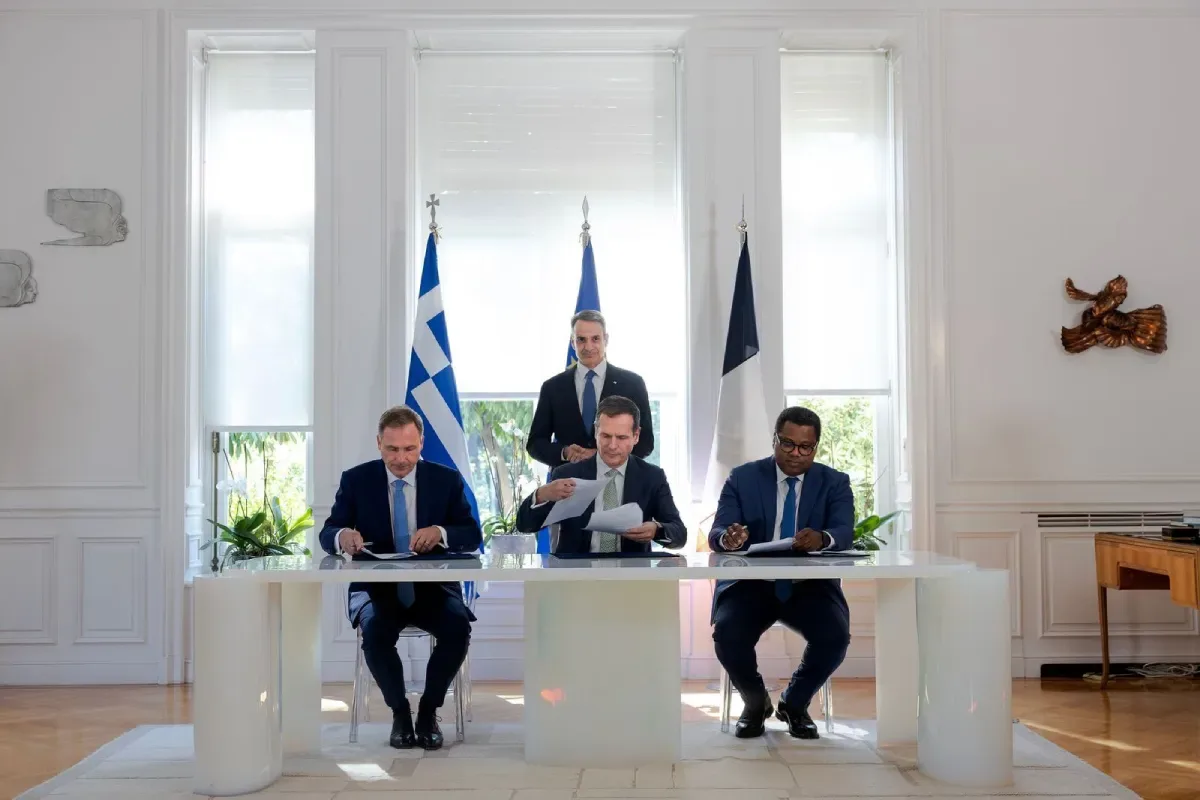
The agreement was signed at Maximos Mansion on August 5 in the presence of Greek Prime Minister Kyriakos Mitsotakis, according to an official briefing circulated by the Greek prime minister's press office, while a separate three-party accord between Greece's Independent Power Transmission Operator (IPTO), known by its Greek acronym ADMIE, GSI and French cable manufacturer Nexans will move forward the seabed surveys required for the project.
IPTO retains technical leadership
GSI was established as a special purpose vehicle (SPV) to finance and deliver the subsea electricity connection with strategic investors, and Meridiam's majority stake now changes the ownership structure by adding private capital and long-term infrastructure financing experience to a project that has faced regulatory, financial and scheduling delays.
IPTO will remain a strategic shareholder with statutory minority rights, retain technical leadership and operate the interconnector once construction is completed, preserving its central role in the project despite Meridiam taking control of the company's equity.
The Greek grid operator created GSI in January 2024 as the implementing and financing vehicle for the Crete-Cyprus-Israel electricity connection, whose first phase is intended to connect Cyprus to Europe's transmission system through Crete before a later extension toward Israel.
Nexans agreement puts seabed surveys first
The agreement between IPTO, GSI and Nexans places the completion of offshore seabed surveys at the front of the revised implementation schedule, as the work is needed to determine the cable route, seabed conditions and installation requirements along one of the deepest proposed subsea electricity corridors in the world.
Nexans holds the cable contract for the Greece-Cyprus section, which is planned as a high-voltage direct current (HVDC) system extending about 900 kilometers and reaching depths of more than 3,000 meters.
The company said earlier this year that it remained committed to the project while working with its customer on a revised execution schedule, although its first-quarter financial outlook did not assume GSI execution during 2026, leaving the new agreements to be translated into a fresh construction program.
Meridiam adds capital and project experience
Paris-based Meridiam develops, finances and manages long-term infrastructure projects across Europe, the United States and Africa, and its entry is intended to strengthen GSI's capital base, improve access to long-term bank financing and support efforts to resolve outstanding regulatory questions between the authorities involved.
The agreement follows a capital increase completed by IPTO and comes as a separate approval process continues over potential financing from the European Investment Bank (EIB), adding another financial track to a project whose long-term viability depends on regulatory clarity and a credible implementation timetable.
The Greek government described Meridiam's participation as a vote of confidence in the country's energy infrastructure sector and in IPTO's ability to deliver the interconnector, although that assessment reflects the government's position rather than a finalized construction or financing schedule.
Cyprus-Israel study nearing regulatory review
IPTO has also completed a cost-benefit study for the proposed electricity connection between Cyprus and Israel and is expected to send the document to the Cypriot and Israeli energy regulators within days, opening the next regulatory stage for the eastern section of the wider interconnector.
The Greece-Cyprus phase is designed to end Cyprus's isolation from the continental European electricity grid and allow electricity to move in both directions between the island and Europe.
Athens is placing the project alongside Greece's domestic island interconnections and planned cross-border links as it seeks a larger role in connecting Eastern Mediterranean electricity systems with the European market.
Sources: Greek Prime Minister's Press Office, Independent Power Transmission Operator, Great Sea Interconnector, Nexans, Bosphorus News review and reporting.