
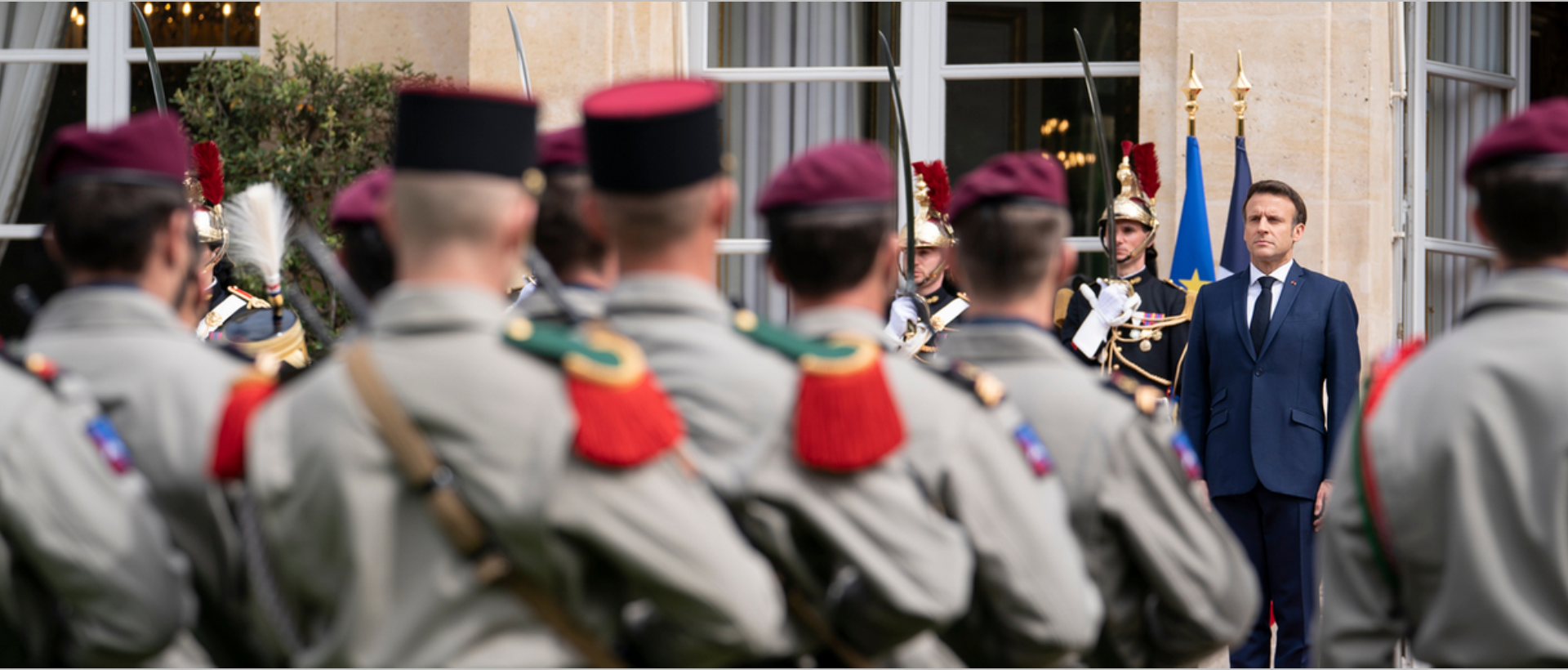
In a significant diplomatic articulation, French President Emmanuel Macron has sketched out a vision for security stabilization in Ukraine, identifying a specialized trilateral contingent from Türkiye, the United Kingdom, and France as the prospective peacekeeping force to be deployed the very day a peace treaty is signed. The proposal underscores a strategic commitment from key NATO members, signaling a unified approach to guaranteeing the integrity of Ukrainian territory once hostilities cease.
Speaking on the sensitive issue of post-war guarantees, Macron made it explicitly clear that the presence of allied troops would be crucial not for combat, but for securing the delicate transition to peace. The deployment, he stated, would be an immediate action, not a protracted process, commencing the moment a ceasefire or peace agreement is formally ratified.
Türkiye: The Essential Geopolitical Key
Central to Macron's strategic blueprint is the critical role earmarked for Türkiye. The French President reportedly emphasized that Ankara, under President Erdoğan, is viewed as a "key player" in any architecture designed to provide long-term security assurances to Kyiv.
Türkiye's involvement is considered vital for several geopolitical reasons:
- Black Sea Dynamics: As a major Black Sea power, Türkiye possesses unmatched influence over naval and maritime security issues, which will be central to de-escalation in the region.
- Strategic Dialogue: Ankara maintains unique channels of high-level communication with both Kyiv and Moscow, making it an indispensable mediator and guarantor in enforcing any peace provisions.
- Military Credibility: The Turkish Armed Forces (TSK) offer a formidable and regionally-respected military presence, lending significant weight to the security guarantees provided by the coalition.
The inclusion of Türkiye alongside nuclear-armed NATO states France and the UK suggests an effort to leverage a combined force of diplomatic influence, geographical relevance, and military prowess to underpin the durability of any future peace accord.
Rejecting Alternative Plans
Macron's focused and specific proposal comes amid broader international discussions and disputes over potential peace formulas. The French leader, according to various reports, took a firm stance in rejecting alternative proposals, notably characterizing a purported peace plan put forth by Donald Trump as "unacceptable."
This pointed rejection highlights Paris's conviction that the implementation of peace requires immediate, credible, and strategically coordinated guarantees—a necessity that Macron believes can only be fulfilled by the proposed trilateral force.
The rapid deployment model seeks to establish a swift security perimeter, offering confidence to Ukrainian leadership and providing immediate international oversight to monitor adherence to the agreed-upon terms, preventing any localized flare-ups from derailing the foundational elements of the peace deal. For the three nations, this initiative marks a definitive commitment to shaping the post-conflict security landscape of Europe.