
By Bosphorus News Geopolitics Desk
Nikos Christodoulides' visit to Kazakhstan exposes the weak point in Ankara's Cyprus strategy. Türkiye has tried to carry the Turkish Cypriot case into the Turkic world, yet one of the most important Turkic states is receiving the Greek Cypriot leader with presidential protocol, a state honour, an embassy opening and signed cooperation agreements.
The visit is expected to be the first official trip by a president of the Republic of Cyprus to Kazakhstan. Christodoulides is due to travel to Astana on the first direct flight between the two countries, meet President Kassym Jomart Tokayev, address a Cyprus Kazakhstan business forum and inaugurate the Republic of Cyprus embassy in the Kazakh capital.
The Order of Friendship is the clearest political act in the programme. Tokayev is placing Christodoulides inside Kazakhstan's official language of state friendship. In the Cyprus file, that is not courtesy. It gives the Greek Cypriot administration a public honour from one of the largest states in the Turkic world.
The memorandum package turns the ceremony into machinery. Education, research, culture, digital technologies, cybersecurity and e-governance create channels that bureaucracies can use long after the visit ends. The chamber of commerce agreement adds business access. This is not symbolic warmth alone. It is the construction of a working relationship with the Greek Cypriot administration.
Kazakhstan's Cyprus position had already moved beyond polite diplomacy before this visit. In 2025, Kazakhstan's ambassador presented his credentials to Christodoulides, while Kazakh official language referred to sovereignty, territorial integrity and internationally recognised borders. That is the diplomatic ground on which Astana is now receiving the Greek Cypriot leadership.
This is the weak point in Ankara's Turkish Cypriot visibility strategy. The Turkish Republic of Northern Cyprus, or TRNC, became an observer in the Organization of Turkic States in 2022. Ankara presented that status as a diplomatic opening, a way to move Turkish Cypriots beyond isolation and into a broader Turkic institutional language.
The TRNC may have a place in the Turkic room, but recognition has not moved an inch. The symbolism has expanded; the diplomatic line has not. Kazakhstan's message is written in protocol: the Greek Cypriot administration receives the state relationship, while Turkish Cypriots remain inside a limited symbolic frame.
Not a single Turkic state has recognised the TRNC. Even Azerbaijan, Türkiye's closest strategic partner and the state most openly sympathetic to the Turkish Cypriot cause, has not crossed that line. Warm language, meetings and symbolic visibility have expanded, but recognition remains untouched. This is the core weakness in Ankara's Turkic strategy: the room opens, the flag appears, the language becomes friendlier, but the diplomatic line does not move.
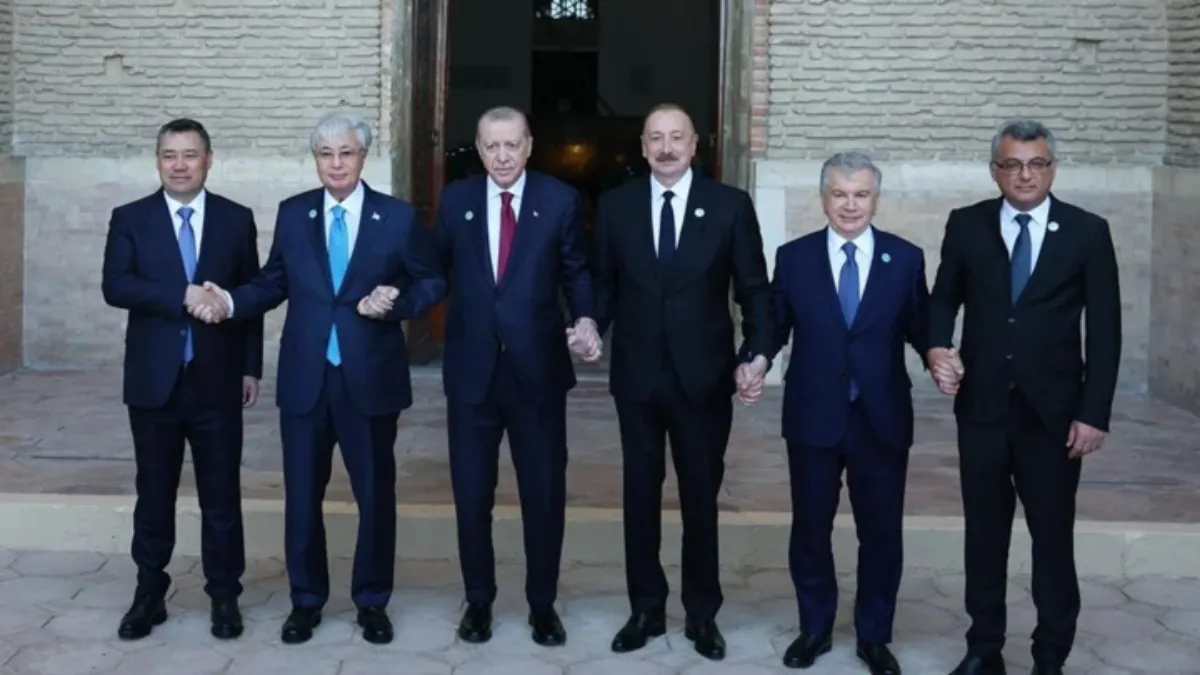
The contradiction is almost visual. The Turkic world can produce images of unity, brotherhood and shared identity, but its Cyprus practice tells a different story. The TRNC appears inside limited and symbolic formats, while the Greek Cypriot administration receives state honours, embassy channels, business forums and signed agreements.
That contradiction had already triggered visible backlash in Türkiye in 2025. Kazakhstan, Kyrgyzstan, Uzbekistan and Turkmenistan moved to open or upgrade direct diplomatic representation with the Greek Cypriot administration, while the European Union Central Asia track reaffirmed language tied to United Nations Security Council Resolutions 541 and 550. Turkish nationalist voices, opposition figures and Turkish Cypriot circles read the move as a direct blow to the TRNC.
Binali Yıldırım, then chair of the Organization of Turkic States Council of Elders, tried to contain the damage by arguing that these states had recognised the Greek Cypriot side in the 1990s and that their acceptance of the TRNC's observer status still showed support for Turkish Cypriots. That answer did not remove the contradiction. It repeated it in softer language: recognition remained with the Greek Cypriot administration, while the TRNC was left with symbolic presence.
Kazakhstan is not merely balancing. It is taking the benefits of Turkic solidarity from Ankara while giving the Greek Cypriot administration the substance of state diplomacy. Ankara's answer has been even weaker: present the TRNC's observer seat as progress and avoid confronting the fact that recognition, protocol, embassies and signed agreements remain with the Greek Cypriot side.
The reaction from Sabahattin İsmail, a former adviser to Turkish Cypriot leader Rauf Denktaş and a former senior official in the TRNC prime ministry and foreign ministry information department, shows how the visit is being read inside Turkish Cypriot political memory. İsmail described Kazakhstan's approach as handing out "mavi boncuk" to both sides, a Turkish idiom for symbolic gestures that do not alter the substance of the relationship.
His wording is sharp because the imbalance is visible. Turkish Cypriots receive symbolic inclusion in a Turkic setting. The Greek Cypriot administration receives the instruments of state diplomacy. Embassies, presidential visits, business forums, state honours and signed agreements carry a different diplomatic weight.
Kazakhstan's calculation is easy to read. Cyprus is a European Union member state, a Mediterranean platform and a useful partner for trade, investment, digital cooperation and access to European networks. Astana has built its foreign policy around balancing between larger powers. The Cyprus file is being processed through that habit, not through Ankara's historical reading of the island.
The Greek Cypriot administration offers Kazakhstan a small but useful European door. In Türkiye, however, that opening has not passed quietly. Kazakhstan and other Turkic states have faced sharp criticism for deepening ties with the Greek Cypriot side, while the Turkish government has also been criticised at home for managing the embarrassment instead of confronting the failure behind it.
This is the pattern Bosphorus News examined in its earlier analysis of Hakan Fidan's Eastern Mediterranean message and the Arab and Turkic reality facing Ankara's Cyprus policy. Central Asian Turkic states may accept Turkish Cypriot symbolic presence inside Turkic forums, but they have not turned Ankara's Cyprus position into their own diplomatic line.
The failure did not begin with the Organization of Turkic States. The Turkish Cypriot side has long appeared in the Organization of Islamic Cooperation under the name "Turkish Cypriot State," yet the Islamic world did not turn that observer formula into recognition. The Turkic track is now repeating the same pattern: presence without recognition, visibility without diplomatic weight, symbolic inclusion without a state-level cost for those who continue working with the Greek Cypriot administration.
Fidan's "anti-Islam alliance" vocabulary identified Ankara's alarm about the military and diplomatic architecture forming around Greece, Israel and the Greek Cypriot administration. It did not describe the behaviour of Arab, Muslim and Turkic states around the Cyprus file. Almost every major Arab or Muslim actor with weight in the Eastern Mediterranean and Gulf equation has maintained or expanded channels with the Greek Cypriot side through diplomacy, energy, investment, ports, regional forums and European Union linked platforms. In several cases, those channels have also included defence dialogue, security cooperation, military visits or joint exercises.
That is the weakness in Ankara's reading. If the Greek Cypriot side is treated as part of an anti-Islam alignment, continuing military contacts, exercises and cooperation channels with Arab and Muslim states cannot be explained through that vocabulary. These are not signs of discomfort. They are state choices.
The same criticism applies to the Turkic states themselves. The language of brotherhood becomes thin when it gives Turkish Cypriots symbolic room but reserves state protocol for the Greek Cypriot leadership. Kazakhstan's position is not an isolated accident. It reflects a wider Central Asian habit: speak warmly to Ankara, preserve access to Türkiye, avoid the cost of recognising the TRNC and continue normal diplomacy with the Republic of Cyprus.
Arab and Muslim states deserve the same scrutiny. Many of them understand Türkiye's argument. They know the political weight of the Cyprus file for Turkish Cypriots. Yet diplomatic, commercial and security channels with the Greek Cypriot administration continue, often without serious hesitation.
Ankara's problem now extends beyond the Astana visit itself. Türkiye has spent years trying to move the TRNC from isolation into visibility through identity-based platforms, Islamic solidarity language and Turkic institutional formats, but those channels have produced presence without changing the diplomatic cost calculations of other states. Arab and Muslim governments have not rebuilt their Cyprus policies around Ankara's religious framing, and Turkic governments have not rebuilt theirs around Ankara's ethnic or institutional vocabulary; they may listen, attend, host and speak warmly, but when protocol, recognition, embassies, trade channels and security cooperation are on the table, they act through their own interests rather than Türkiye's Cyprus doctrine.
That is why the Kazakhstan case cuts deeper than another bilateral visit. Astana is not doing anything that other actors have avoided. It is simply making the hierarchy visible in a Turkic setting: Ankara's language can open symbolic space for Turkish Cypriots, but it cannot compel a Turkic capital to give up normal relations with the Greek Cypriot administration, and it cannot turn visibility into recognition when no state is willing to pay that price.
The Astana programme writes the hierarchy in plain form. Christodoulides receives the state honour, opens the embassy channel, addresses the business forum and signs the agreements. Turkish Cypriot presence in the Turkic world remains limited and symbolic; in real diplomacy, weight is still measured by recognition, protocol, embassies and signed agreements.
That is where Fidan's argument, and Ankara's wider Cyprus language, loses force. If the Arab, Muslim and Turkic worlds were truly reorganising their Cyprus policy around Türkiye's reading, this hierarchy would not keep repeating itself. Realpolitik is doing what identity language cannot: it is showing which relationships states are willing to formalise, which costs they are willing to avoid, and which symbols they are happy to leave symbolic.
Astana has now put that reality into protocol. Sympathy for Turkish Cypriots, warm language for Ankara and symbolic visibility for the TRNC can all coexist with normal state diplomacy for the Greek Cypriot administration. That is the weakness Ankara has not answered. The flag may appear in the room, but the signatures are still going elsewhere.