
By Bosphorus News Geopolitics Desk
Iran warned Cyprus and Bulgaria on Thursday against allowing military facilities on their territory to support US operations linked to the conflict with Iran, with Foreign Minister Abbas Araqchi raising the issue in separate telephone calls with Cypriot Foreign Minister Constantinos Kombos and Bulgarian Foreign Minister Velislava Petrova-Chamova.
Araqchi urged Kombos to prevent foreign military bases in Cyprus from being used against Iran, referring to the British Sovereign Base Areas that include RAF Akrotiri and Dhekelia. In his conversation with Petrova-Chamova, he asked Sofia to reconsider the temporary deployment of US aerial refuelling aircraft and military personnel at Bezmer Air Base, describing the move as support for operations against Iran.
Bulgaria approves US tanker deployment
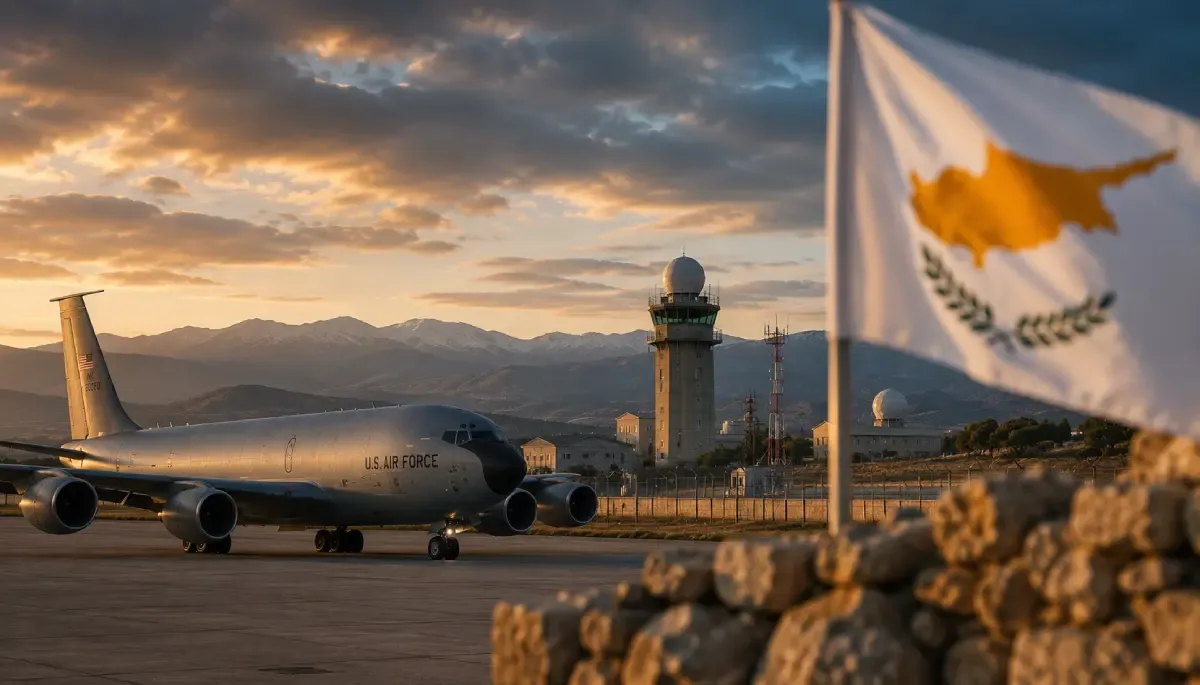
Bulgaria's parliament authorized the deployment of up to eight US Air Force KC-135 tanker aircraft and as many as 250 American military personnel at Bezmer between July 24 and October 1, under an arrangement intended to support US operations in the Middle East and covering flight crews, maintenance teams and associated equipment.
The aircraft are not strike platforms, but they play a central role in long-range air operations by allowing combat aircraft to refuel in flight, remain airborne longer and operate farther from their home bases. Tehran therefore regards the deployment not as a routine logistical measure but as part of the military system supporting US missions in the region.
Iran had warned Sofia before the parliamentary vote that the use of Bulgarian territory in operations against Iran could make the country complicit in what Tehran described as aggression and war crimes.
The measure passed by 136 votes to 13, with two abstentions. Bulgarian Defense Minister Dimitar Stoyanov said no offensive weapons would be stationed in the country and argued that the temporary presence of the tankers did not make Bulgaria a party to the conflict. He added that Sofia was acting under an existing defense cooperation agreement with Washington and had received assurances that risks to Bulgarian security would be minimized.
The deployment has also met resistance around Bezmer, where local officials and residents have warned that the base's support role could expose nearby communities to retaliation.
Cyprus warning concerns British sovereign bases
The position in Cyprus is different because RAF Akrotiri and Dhekelia are not controlled by the Republic of Cyprus.
The two areas remained under British sovereignty when Cyprus gained independence in 1960 and continue to operate under British military authority. Together, they cover almost three percent of the island, while Nicosia has no direct say over which British or allied aircraft use them.
Araqchi did not accuse the Republic of Cyprus of authorizing US attacks. His message instead placed pressure on Nicosia to prevent foreign bases located on the island from being used against Iran, even though operational decisions at Akrotiri and Dhekelia remain with London.
Describing those installations as Cypriot bases, or suggesting that the Republic of Cyprus opened them to the United States, would therefore misstate their legal and operational status.
The warning nevertheless carries immediate weight because RAF Akrotiri has already been struck during the conflict. An Iranian-made Shahed drone hit the base on March 2, causing limited damage and no casualties, while two additional drones were intercepted. Cypriot officials said the British base, rather than the Republic of Cyprus, had been the target.
The incident intensified an already sensitive debate over whether the British military presence exposes the island to retaliation for decisions taken elsewhere. Britain, France and Greece subsequently reinforced air defenses around Cyprus.
Britain excluded Akrotiri from US arrangement
Britain later allowed the United States to use RAF Fairford in England and Diego Garcia in the Indian Ocean for limited defensive strikes against Iranian missile sites, while stating that RAF Akrotiri would not be included.
The assurance followed consultations with the Cypriot government amid concern that the island could again face retaliation, and London also said offensive operations would not be launched from its bases in Cyprus.
Araqchi's latest intervention suggests Tehran is not convinced those restrictions would necessarily hold if the conflict expanded. The message also appears aimed at London as much as Nicosia, since the Republic of Cyprus cannot determine British military operations but can increase political scrutiny of the bases and make any broader role harder to shield from public and diplomatic pressure.
Iran targets the support network behind US operations
The calls to Cyprus and Bulgaria form part of Tehran's effort to discourage European governments from providing the aircraft, bases, personnel and logistical support that make US operations possible.
Despite their different legal arrangements, both Bezmer and the British bases on Cyprus sit within the infrastructure that extends US military reach into the Middle East. The tankers at Bezmer can increase the range and endurance of American aircraft, while Akrotiri and Dhekelia remain geographically important British facilities on the region's western edge, even when London defines their current role narrowly.
For Bulgaria, the immediate issue is whether the Bezmer deployment proceeds on schedule despite Tehran's warning and local opposition. For Cyprus, the pressure falls on London's assurances that Akrotiri will remain outside offensive operations, assurances Iran is plainly unwilling to take at face value.
Sources: Reuters, Bulgarian News Agency, Bosphorus News reporting and review