
By Bosphorus News Economy Desk
Türkiye's coastal resorts are absorbing a price shock that the country's overall tourism numbers do not fully capture. Antalya and Muğla have seen sharp discounting this season, and official data released this month back up what industry reporting has described for weeks.
Coastal Hotel Prices Fall While Istanbul's Rise
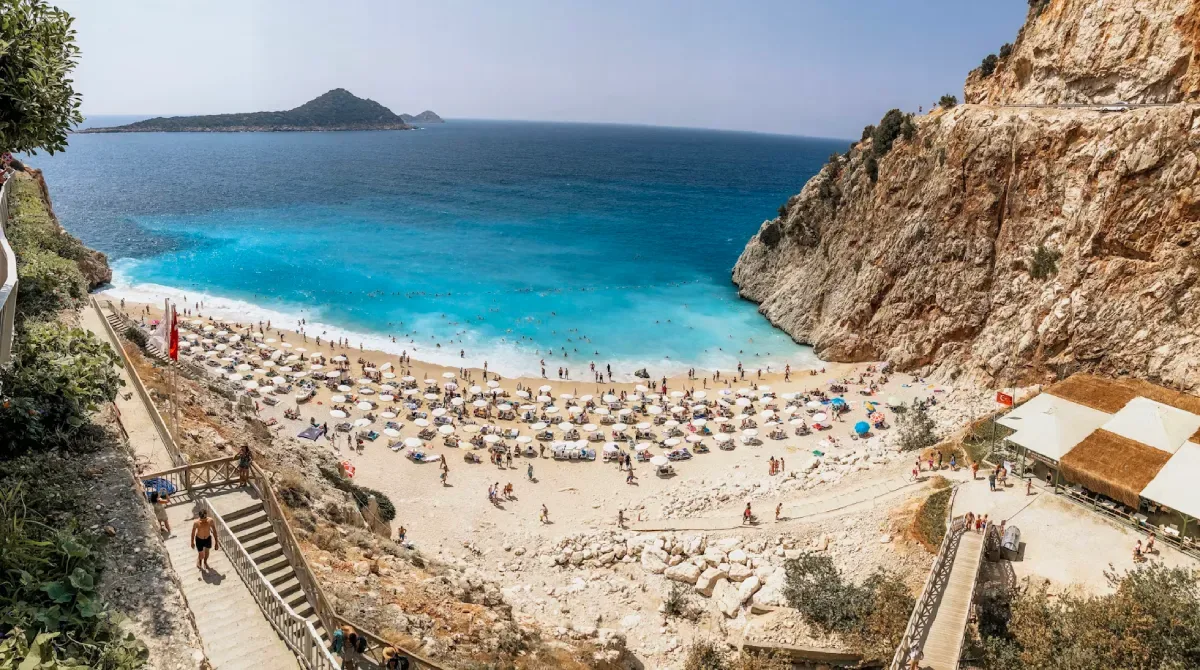
Hotel prices along Türkiye's Mediterranean and Aegean coasts have dropped sharply heading into autumn. Data compiled by Lighthouse and reported by the Financial Times show August-to-October accommodation prices in Antalya down 5 percent year on year, while Muğla, home to Bodrum, Marmaris and Dalaman, recorded an 8 percent decline. Istanbul prices rose 5 percent over the same period, so the pressure sits at the coast, not across the country.
Cyprus recorded a 4 percent price decline and Egypt a 10 percent drop after a period of strong growth the previous year. Greek island destinations, along with coastal Italy, Spain and Croatia, largely held their prices steady or saw them rise. Jet2 chief executive Steve Heapy said Türkiye and Cyprus lie more than 2,000 kilometers from Iran but read as closer to the conflict on a map, and that perception has shaped bookings.
Bookings Shift to the Last Minute
The war has pushed a large share of holidaymakers to delay booking decisions, complicating revenue forecasting for airlines, tour operators and hotels. UK-based operator On The Beach reported reduced demand for Türkiye this summer, with some travelers shifting to destinations such as Spain instead. A separate agency, Not Just Travel, said it had to bring on extra staff to handle a surge in bookings made less than two weeks before departure, though its Türkiye bookings for the season remained 13 percent below 2025 levels despite the recent pickup.
TÜİK Confirms Falling Revenue and Visitor Numbers
Türkiye's Statistical Institute (TÜİK) data for the second quarter of 2026 show tourism revenue fell 2.6 percent year on year to $15.87 billion. Visitor revenue accounted for $15.66 billion of that total and transfer passengers for $209.5 million, with expatriate Turkish citizens contributing 15.6 percent of visitor spending. The number of visitors departing Türkiye fell 5.1 percent to 15,581,014, of whom 2,527,687, or 16.2 percent, were Turkish citizens resident abroad rather than foreign tourists.
Average nightly spending per visitor rose 2.8 percent to $113, in line with inflationary pressure on costs rather than stronger real demand. Package tours accounted for 30.2 percent of visitor spending, followed by food and drink at 21 percent, international transport at 12.4 percent and accommodation at 11.3 percent. For the first half of 2026 as a whole, tourism revenue was nearly flat, down 0.1 percent to $25.75 billion, while total visitor numbers fell 2.7 percent to 24.84 million.
Turkish Travelers Are Spending More Abroad
TÜİK recorded a 7.4 percent rise in tourism expenditure by Turkish residents traveling abroad, reaching $2.96 billion in the second quarter. The number of citizens traveling outside Türkiye rose to 3,434,172, with average per capita spending of $863. Outbound travel by Turkish residents is growing faster than inbound visitor numbers, narrowing the net contribution tourism makes to Türkiye's external accounts.
Hospitality Employment Hits a Record Despite the Squeeze
The pressure on coastal pricing has not shown up in the sector's employment figures. TÜİK data show wage employment in accommodation and food services reached 1,503,537 in June 2026, surpassing 1.5 million for the first time since the series began in 2009. That figure is up 3.2 percent from June 2025 and marks 63 consecutive months of year-on-year growth in the sector, a run interrupted only once, in March 2021 during the pandemic. Within the total, 493,362 people worked in accommodation specifically and 1,010,175 in food and beverage services.
Independent and family-run hotels have borne much of the pricing pressure from larger properties discounting aggressively to protect occupancy. A finance manager at a boutique hotel in Bodrum, who asked not to be identified, described some all-inclusive properties as having undercut the market to remarkably low levels simply to stay full, squeezing margins across smaller operators in the process.
Istanbul's Airport Traffic Holds Steady
Istanbul Airport handled 8.15 million passengers in July, Europe's busiest airport for the month, ahead of London Heathrow's 7.86 million. National air travel demand has held up even as coastal resort pricing and visitor mix absorb the strain from the war and inflation.
Sources: Türkiye's Statistical Institute (TÜİK), Financial Times, Karar, Bosphorus News review and reporting.