
By Bosphorus News Geopolitics Desk
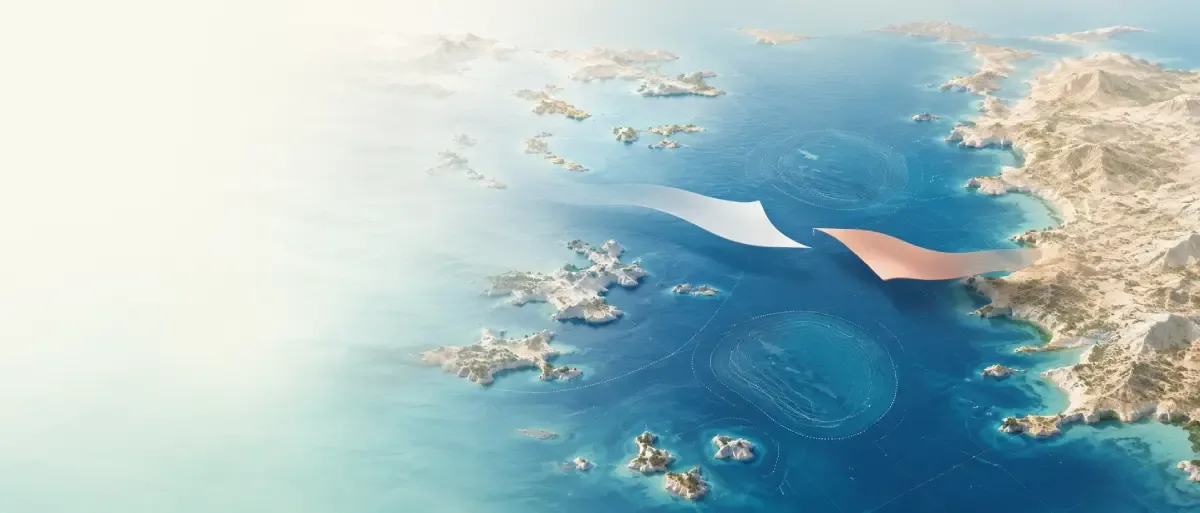
Greece lodged a protest démarche with Türkiye in Ankara over Aegean spatial planning and marine parks, while Turkish officials used the same diplomatic encounter to hand the Greek side multiple notes verbales setting out Ankara's objections, according to Greek diplomatic sources.
The Greek Embassy delivered the démarche to the Turkish Foreign Ministry on instructions from Foreign Minister George Gerapetritis. It covered Türkiye's objections to three Greek spatial planning frameworks and the Aug. 15 decisions establishing two Turkish marine national parks.
The sources disclosed the exchange on Sept. 3 but did not say when it took place. The Turkish notes have not been published.
Their account confirms from the Greek side a detail that earlier Turkish reporting left less precise: Turkish officials handed over multiple notes verbales at the Foreign Ministry in Ankara as Greece was presenting its own protest.
Turkish diplomatic sources cited earlier by Milliyet said Ankara had formally conveyed its objections to the Greek planning measures and warned that it would not accept activities aimed at changing what Türkiye considers the existing status quo in the Aegean.
Athens rejected the Turkish claims as arbitrary and without legal basis, maintaining that sovereignty in the Aegean was clearly and definitively established by international treaties.
It also rejected Türkiye's marine park designations wherever it says they extend beyond Turkish jurisdiction and into the Greek continental shelf. Greek diplomatic sources said Athens would continue raising unilateral actions it considers violations of international law with European and international partners.
The maritime dispute already has a United Nations paper trail. Türkiye filed a letter on Feb. 16 challenging Greece's 2025 Maritime Spatial Plan and restating its maritime jurisdiction claims. Greece replied on March 31, and Türkiye filed another letter on April 24.
Two parks, two decisions
The Greek démarche puts the planning dispute and Türkiye's two new marine national parks into the same protest.
Türkiye established the Fethiye-Kaş and North Aegean marine national parks through Presidential Decisions No. 11626 and 11627, adopted on Aug. 15 under the National Parks Law and published in the Official Gazette on Aug. 16.
The Fethiye-Kaş Marine National Park covers 21,706.03 square kilometers off Muğla and Antalya. The North Aegean Marine National Park covers 1,742.14 square kilometers off Çanakkale and Tekirdağ.
Greece objected on Aug. 16, arguing that Türkiye cannot unilaterally establish protected areas beyond its jurisdiction or within what Athens considers the Greek continental shelf. It said the designations could not create "faits accomplis" or affect rights arising under international law, a rejection Bosphorus News reported at the time.
Three planning disputes in one month
The planning half of the protest followed three rounds of public exchanges in August.
Türkiye objected on Aug. 7 to Greece's Special Spatial Planning Framework for Tourism, saying its application in the Aegean could not produce legal consequences for Türkiye regarding geographical features whose sovereignty Ankara says was not transferred to Greece by international treaties.
A second objection followed on Aug. 19 after Greece adopted its Special Spatial Planning Framework for Renewable Energy Sources. Türkiye repeated the position on Aug. 28 after Greece introduced the Special Spatial Planning Framework for Industry and Supply Chain.
Greece rejected all three objections. After the third, its Foreign Ministry said repeating the same Turkish claim whenever Greece announced a new planning framework did not give the claim legal basis or substance.
Bosphorus News tracked the three exchanges as they unfolded through August.
Prime Minister Kyriakos Mitsotakis had told his cabinet on Aug. 24 that Turkish objections would not alter Greek planning. He said areas under Greek sovereignty were not open to dispute and repeated Athens' position that the only issue it accepts for negotiation with Türkiye is delimitation of the continental shelf and exclusive economic zone in the Aegean and Eastern Mediterranean.
The three August measures are sectoral Special Spatial Planning Frameworks and are separate from Greece's Maritime Spatial Planning instrument. Their provisions nevertheless reach islands, coastal areas and maritime activity that Ankara says touch unresolved Aegean disputes.
Marine protected areas are a separate legal instrument again. A planning framework does not draw a maritime boundary, and designation of a protected area does not by itself settle sovereignty or maritime jurisdiction.
Athens has now placed the two types of measure inside one diplomatic protest. Ankara answered at the same table with its own notes.
NAVTEX warnings, surveys, military exercises and maritime jurisdiction claims remain part of the Aegean dispute. Planning frameworks, park maps and diplomatic notes now put some of the same disagreements into administrative records designed to outlast a navigation warning or military exercise.
Erdoğan and Mitsotakis return to the islands
A separate Aegean dispute returned to presidential rhetoric this week.
Asked on Sept. 2 what Türkiye would do if Greece continued military deployments on islands Ankara considers subject to demilitarization provisions, President Recep Tayyip Erdoğan said what fell to Türkiye was "to do what is necessary."
He called on Greece to stop militarizing islands Türkiye regards as having demilitarized status, while saying Ankara had no designs on another country's territory but would not allow what it considers its rights to be infringed.
Greece rejects Türkiye's interpretation of the treaties governing the military status of the eastern Aegean islands.
On Sept. 3, after meeting European Council President António Costa in Athens, Mitsotakis referred to what he called a recent escalation of Turkish provocations, particularly in the Aegean. He said good-neighborly relations were a condition for Türkiye's European path and that Greece would accept no instructions from another country on how to strengthen its defenses.
The militarization dispute is legally separate from the marine park and planning files. Its return at presidential level adds political pressure while the two governments are putting other Aegean disagreements through formal diplomatic channels.
Intelligence channel remains open
A separate security channel has remained open.
Turkish security sources said on Sept. 3 that National Intelligence Organization (MİT) head İbrahim Kalın met Greece's National Intelligence Service (EYP) chief Themistoklis Demiris in Athens the previous week.
The sources said they discussed bilateral disputes, NATO security, intelligence cooperation, counterterrorism, organized crime and irregular migration, and agreed to strengthen cooperation between the two services. Neither intelligence service issued a formal statement on the meeting.
Another Turkish document is still pending. Türkiye's draft Law on Maritime Jurisdiction Areas, delayed before parliament's summer recess, has yet to be submitted. Bosphorus News reported that parliamentary consideration was unlikely before October.
Sources: Greek diplomatic sources, Hellenic Republic Ministry of Foreign Affairs, Republic of Türkiye Ministry of Foreign Affairs, Turkish Official Gazette, Turkish security sources, Office of the Greek Prime Minister, Presidency of the Republic of Türkiye Directorate of Communications, United Nations records, Milliyet, Anadolu Agency, Bosphorus News review and reporting.