
By Bosphorus News Defense Desk
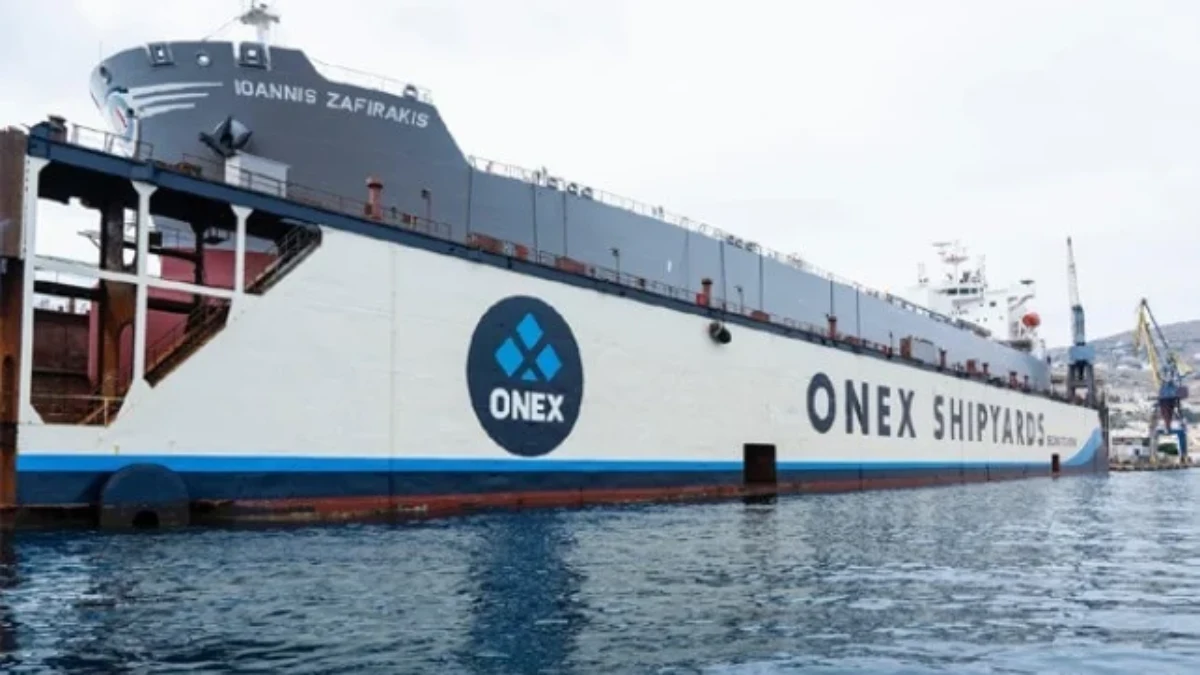
Greece has moved to turn Elefsina into a major shipbuilding, logistics and defense-support hub through a new cooperation deal between Greek shipyard group ONEX Shipyards & Technologies and South Korea's Hanwha Ocean, adding an industrial layer to the Eastern Mediterranean's naval competition.
The agreement, known as Project Trident, was signed on 29 May at the residence of the US ambassador in Athens by ONEX chief executive Panos Xenokostas and Hanwha Ocean Senior Vice President Sean Seongwoo Park. ONEX is the Greek shipbuilding and industrial group behind the revival of the Syros and Elefsina shipyards. Hanwha Ocean is one of South Korea's major shipbuilders, with a growing international naval and industrial footprint.
The ceremony brought together US Ambassador Kimberly Guilfoyle, South Korean Ambassador Ju-seong Lim and Greek Deputy Foreign Minister Haris Theocharis, giving a private-sector agreement a clear trilateral strategic frame.
Greek and maritime industry reports put the investment plan at 1.35 billion euros, with a target of creating up to 10,000 direct and indirect jobs. The project is designed to expand Elefsina's ship repair, shipbuilding, port, logistics and defense-support role, with the site positioned as a regional hub for the Eastern Mediterranean, Southeastern Europe and the Black Sea.
The plan is structured in three phases. The first, valued at around 150 million euros, focuses on expanding ship repair and maintenance capacity, including new dry dock infrastructure. The second phase, estimated at 200 million euros, targets port upgrades, logistics facilities and supply-chain infrastructure. The third and largest phase, close to 1 billion euros, is expected to bring automated production systems, robotics, artificial intelligence applications and facilities capable of supporting advanced naval programs.
That final phase gives the project its defense significance. Reports around the signing described facilities that could support high-end naval work, including submarine-related programs, though no specific submarine construction contract has been announced. The safer reading is that Elefsina is being positioned for advanced naval support, maintenance and industrial participation rather than a single defined platform program.
The US role did not begin with the May agreement. In 2023, the US International Development Finance Corporation committed a 125 million dollar loan to ONEX Elefsis Shipyards and Industries to rehabilitate and modernize the Elefsina shipyard near Athens. The DFC has described Elefsina as a site close to Piraeus and tied its support to US strategic interests, including efforts to counter Chinese influence around critical maritime infrastructure.
That context matters because Piraeus has long been the symbol of China's port influence in Greece. Elefsina gives Washington and Athens a nearby industrial counterweight, one tied not only to commercial ship repair but also to energy logistics, allied naval support and defense production.
The project also fits the wider shipbuilding and port-infrastructure contest that Bosphorus News examined in its earlier analysis of US shipbuilding lanes, Greece and Türkiye's geopolitical position, where maritime industry, naval support and great-power competition increasingly overlap.
Hanwha's role gives the project another layer. The South Korean group has been expanding its global shipbuilding and naval footprint, including links to US shipbuilding and energy infrastructure. Earlier in 2026, ONEX and Hanwha Power Systems also announced cooperation in the United States covering shipbuilding, energy production, regasification units, power generation and energy storage platforms.
Elefsina therefore sits at the meeting point of several agendas. Greece wants to revive and expand its industrial base. The United States wants more resilient maritime and energy infrastructure in a region where Chinese linked port influence has become a strategic concern. South Korea brings shipbuilding expertise at a time when Western countries are trying to rebuild maritime industrial capacity.
The Greek angle is also wider than Elefsina alone. Skaramagas is undergoing a separate modernization drive, while Salamis Shipyards has started producing naval blocks for the French Navy. Together, these moves point to an effort to turn Greece from a buyer of foreign defense systems into a country with a larger role in naval production, repair and long-term support.
The development is not formally directed at Türkiye yet its regional meaning still will mater and resonate in Ankara. Elefsina is one of the Greek shipyard zones closest to Türkiye, and a stronger Greek naval-industrial base will be watched in the context of the Aegean, the Eastern Mediterranean, NATO's southern flank, US Sixth Fleet logistics and the wider maritime balance.
Project Trident is therefore not only about the revival of one Greek shipyard. It places US backing, South Korean shipbuilding capacity and Greek defense-industrial ambition inside the same Eastern Mediterranean file. Türkiye's own naval industry remains deeper and more mature, but Elefsina shows that Greece is trying to narrow the gap through maintenance, logistics, production capacity and allied industrial partnerships rather than procurement alone.
***Sources: Protothema English, AMNA, To Vima, Container News, IndexBox, Maritime Executive, Reuters, US International Development Finance Corporation, Bosphorus News.