
By Bosphorus News Geopolitics Desk
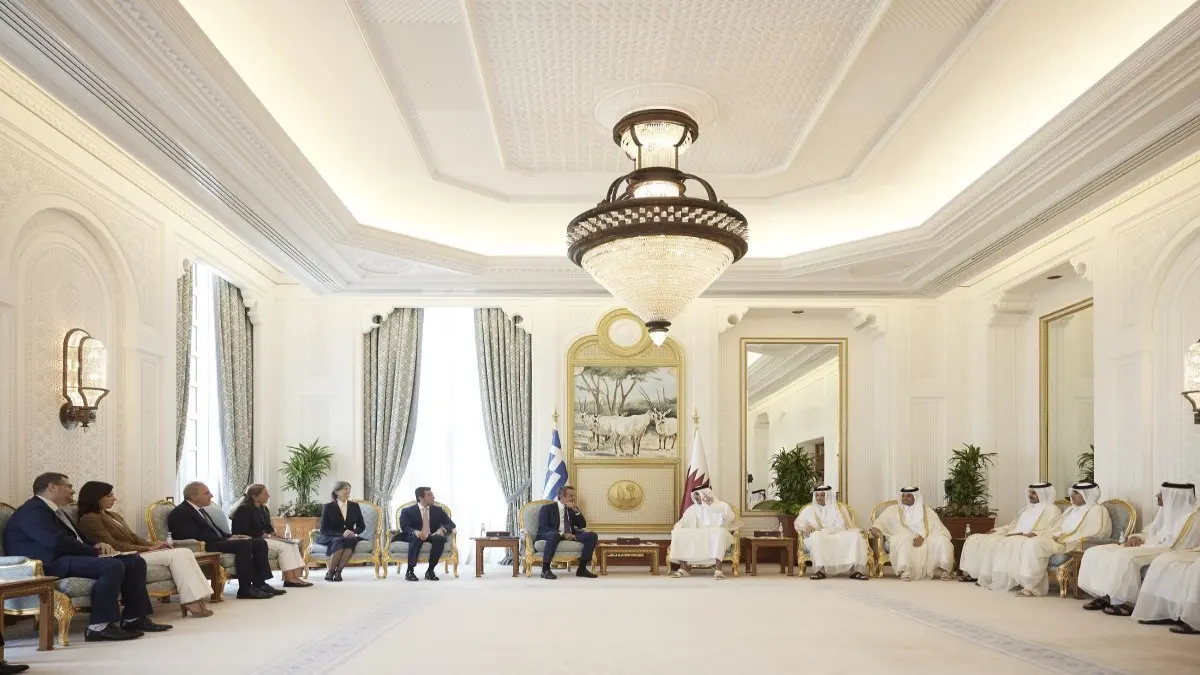
Greece and the Greek Cypriot administration are expanding diplomatic contact with Qatar as the Iran war pushes Gulf security, maritime navigation and mediation diplomacy into the Eastern Mediterranean file.
Qatar's Ministry of Foreign Affairs said Prime Minister and Foreign Minister Sheikh Mohammed bin Abdulrahman bin Jassim Al-Thani held a phone call on 4 June with Greek Foreign Minister George Gerapetritis to discuss bilateral relations and diplomatic efforts aimed at reducing regional tensions.
The Greek Ministry of Foreign Affairs said in a 5 June statement that the call also covered the wider Middle East crisis, diplomatic mediation efforts, freedom of navigation, maritime security and the safety of seafarers and vessels in the Gulf. Those additions give the exchange a wider regional meaning, placing Athens inside a discussion over shipping lanes, crisis diplomacy and Gulf stability while the Iran war is affecting energy routes and maritime risk calculations.
The Greek Cypriot administration has moved on a parallel track with Doha. On 30 May, Nikos Christodoulides attended a luncheon in Nicosia hosted by Qatar's ambassador, Yousef Sultan Laram, with Arab ambassadors and Cypriot officials present. Qatar's Foreign Ministry said Christodoulides praised Doha's role in supporting de-escalation and dialogue, while also calling for continued cooperation between Qatar and Cyprus, stronger communication among relevant authorities and more high-level visits.
The Nicosia-Doha channel had already gained substance in April, when Greek Cypriot Foreign Minister Constantinos Kombos met Sheikh Mohammed in Doha during an official visit. Qatar's Foreign Ministry said the 7 April meeting covered regional escalation, including Iranian attacks on Qatar and other countries in the region, with Doha warning about the consequences of targeting vital infrastructure, especially water, food and energy facilities.
Official statements do not support talk of a new bloc or alliance. They point instead to a more limited but politically useful convergence in which Greece speaks with Qatar on mediation, navigation and Gulf maritime security, while Nicosia tries to position itself as an EU-linked diplomatic contact point for Gulf and Arab actors during a widening regional crisis.
The more uncomfortable question for Ankara is not whether Qatar has abandoned its privileged relationship with Türkiye. It has not. The question is what Qatar, and in another geography Kazakhstan, are actually doing while Ankara continues to describe such partners through the language of friendship, fraternity and strategic affinity.
President Recep Tayyip Erdoğan described the Türkiye-Qatar relationship in 2018 by saying that the two countries had "repeatedly shown that they are friends in difficult times," recalling Türkiye's support for Doha during the Gulf blockade and Qatar's support for Ankara after the 15 July coup attempt. The phrase captured a real bilateral bond, but the latest official contacts also show the limits of reading Gulf politics through fraternity language alone. Qatar is maintaining its close Türkiye track while also speaking with Greece and the Greek Cypriot administration on files that now shape the Eastern Mediterranean, from Gulf navigation and maritime security to mediation diplomacy.
Kazakhstan shows a similar pattern from the Turkic world. Astana can maintain close ties with Türkiye and the Organisation of Turkic States while also engaging Nicosia when diplomatic access, trade, EU contact or institutional positioning requires it. The same state logic is visible in Qatar's current moves: friendly language toward Ankara does not prevent Doha from keeping working channels open with Athens and the Greek Cypriot administration.
That is where the latest contacts add another layer to Gulf and Arab engagement with Greece and Cyprus, a pattern Bosphorus News examined after Turkish Foreign Minister Hakan Fidan's remarks on the Eastern Mediterranean. Qatar does not carry the same weight in this file as Egypt, the United Arab Emirates or Saudi Arabia, but its mediation role and Gulf security position now give it a visible place in the diplomatic traffic around the Eastern Mediterranean.
For Greece, the Qatar call brings freedom of navigation and Gulf maritime security directly into the foreign policy conversation. For Nicosia, the Doha contacts support an effort to connect its EU role with Arab and Gulf diplomacy as the war blurs the line between Middle East crisis management and Eastern Mediterranean security.
The timing gives the exchanges their weight. The Iran war has pulled Gulf navigation, energy infrastructure, mediation channels and maritime safety into the same diplomatic file. Greece and the Greek Cypriot administration are not central actors in the Gulf crisis, yet both are keeping channels open with Doha while Qatar continues to manage its deeper relationship with Türkiye. That is the regional reality Ankara has to read beyond the comfort of diplomatic brotherhood language.
***Sources: Qatar Ministry of Foreign Affairs, Greece Ministry of Foreign Affairs, Turkish Presidency Directorate of Communications and Bosphorus News reporting.