
By Bosphorus News Energy Desk
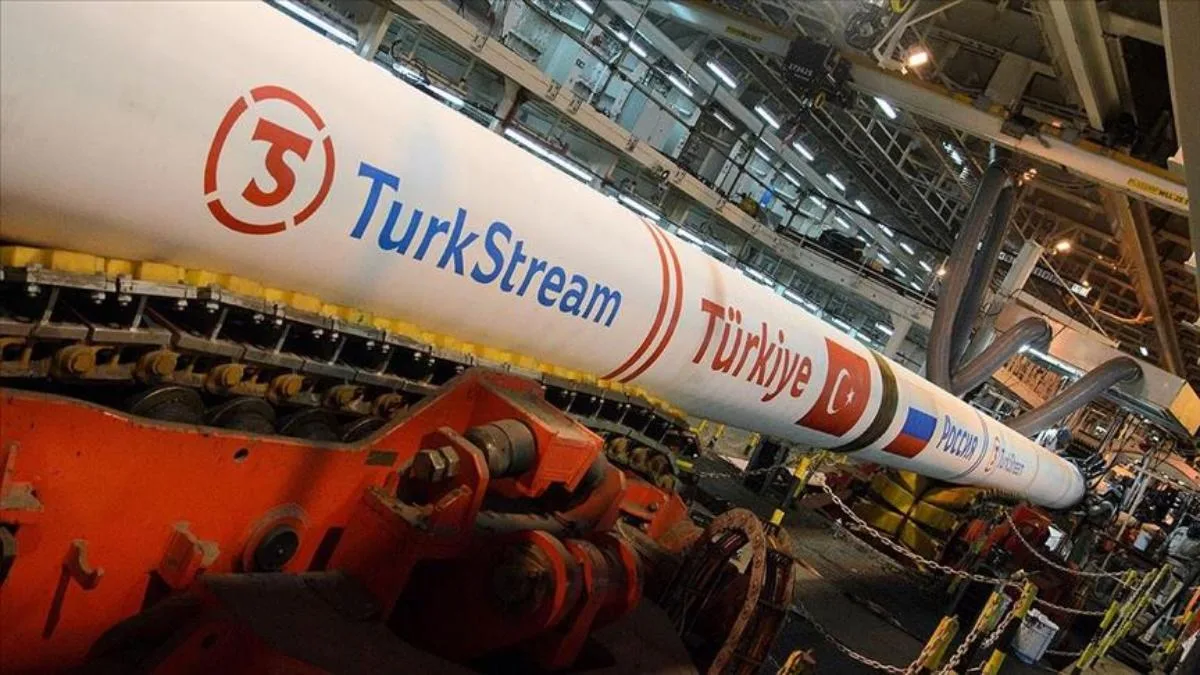
Gazprom's average daily natural gas exports to Europe through the TurkStream pipeline fell 5.2% year on year in July to 48.8 million cubic meters, while deliveries recovered by about 35% from June after scheduled maintenance curtailed flows through Türkiye.
Reuters calculated the figures from physical flow data published by the European Network of Transmission System Operators for Gas (ENTSOG). Gazprom has not released monthly European export statistics since early 2023.
Total deliveries reached about 1.51 billion cubic meters in July, down from roughly 1.59 billion cubic meters in the same month of 2025.
Flows rebound after June maintenance
Average daily exports had dropped to 36.2 million cubic meters in June, when maintenance reduced monthly deliveries to 1.09 billion cubic meters.
The July recovery lifted TurkStream exports to Europe during the first seven months of 2026 to about 10.2 billion cubic meters, around 3.5% above the same period last year.
Gazprom's pipeline gas exports to Europe fell 44% in 2025 to approximately 18 billion cubic meters, their lowest level since the mid-1970s, after Ukrainian transit ended.
Türkiye remains Gazprom's only European transit route
After Ukraine declined to renew its five-year transit agreement with Russia when it expired on January 1, 2025, Türkiye became the only operating transit route for Gazprom's pipeline exports to Europe.
Russian gas crosses the Black Sea through TurkStream, enters Bulgaria at the Strandzha 2/Malkoclar interconnection point and continues toward southeastern and central European markets.
The European Union Agency for the Cooperation of Energy Regulators (ACER) said in a July report that TurkStream was expected to continue accounting for a significant share of gas imports delivered to Hungary, Greece and Slovakia in 2026, while Bulgaria remained the principal transit country for onward flows toward the Western Balkans and central Europe.
TurkStream consists of two offshore strings, each with an annual capacity of 15.75 billion cubic meters. One supplies the Turkish market, while the second carries gas through Türkiye toward European customers.
The European Union has adopted a stepwise prohibition on Russian gas imports, with a full ban on pipeline supplies scheduled to take effect in autumn 2027. Existing contracts are subject to transition periods under the regulation.
July flows remained below their level a year earlier, while cumulative deliveries for the first seven months of 2026 stayed above the same period in 2025.
Sources: ENTSOG, ACER, Reuters calculations, Türkiye's Foreign Ministry, Council of the European Union, Bosphorus News review and reporting.