
Bosphorus News Energy Desk
On April 15, Greece signed a drilling contract that most of the world did not notice. It should have.
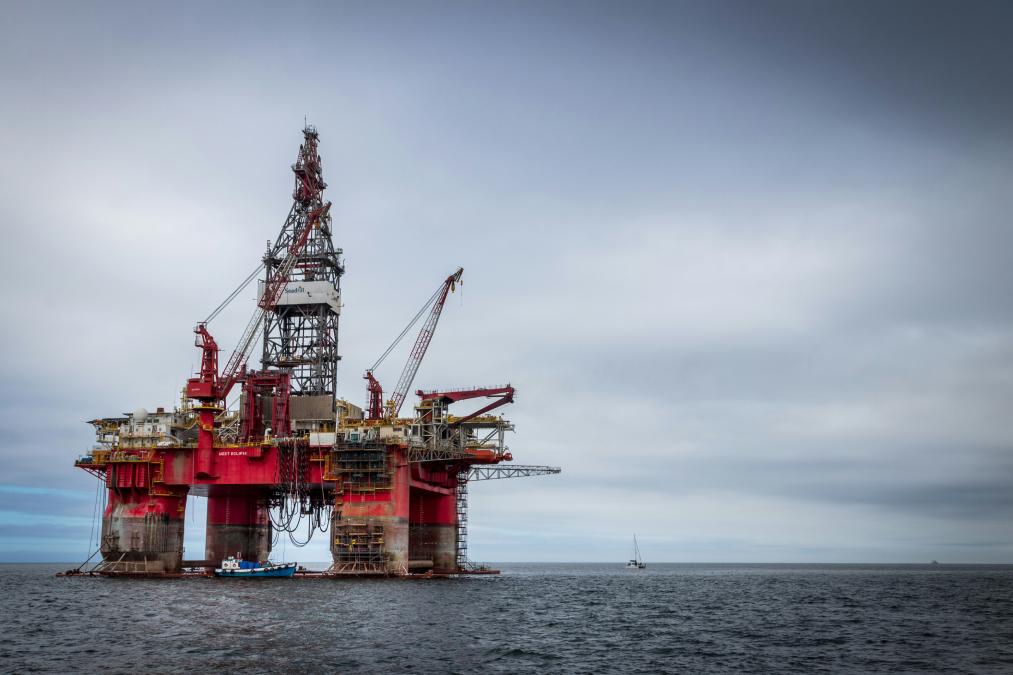
The agreement, signed at the Ministry of Environment and Energy in Athens, brings together ExxonMobil, Energean and HELLENiQ Energy as a consortium, with Stena Drilling providing the drillship. The target is Asopos-1, a structure in the northwestern Ionian Sea adjacent to the Italian exclusive economic zone. Drilling is scheduled to begin between February 14 and 17, 2027. It will be the first offshore exploratory well Greece has drilled in nearly half a century. Bosphorus News has been tracking the buildup to this moment since ExxonMobil farmed into the concession in November 2025.
The signing tells a different story than the one Athens is telling about it.
The same company holding 60 percent of Greece's Block 2 is simultaneously positioning for upstream deals in Libya, where oil production has reached its highest level in a decade at 1.43 million barrels per day. Chevron is doing the same. Both majors are moving across the Eastern Mediterranean and North Africa in parallel, under a framework Washington is actively shaping. US Ambassador Kimberly Guilfoyle attended the April 15 ceremony in Athens. Her presence was not incidental.
The numbers at Asopos-1 are significant. Estimated reserves range from 200 to 270 billion cubic metres of natural gas, against Greece's annual consumption of 6 to 7 billion cubic metres. A successful find would cover 35 to 40 years of domestic demand. Initial drilling costs are estimated at 60 to 70 million euros. Field development, if warranted, would require an additional 5 billion euros, with projected state revenues of around 10 billion euros over 20 years. At least 40 percent of profits would accrue to the Greek state.
The probability of success sits at 15 to 18 percent. Energean describes the Asopos structure as the largest unexplored offshore structure in the Mediterranean. The geological case has been building since 2022, when 2,244 square kilometres of 3D seismic data were acquired and processed. ExxonMobil's decision to take 60 percent and commit to assuming operatorship upon discovery reflects confidence in the data, not appetite for risk.
Greece's last offshore exploratory well was drilled in 1981, leading to the Katakolo field discovery. Decades of political hesitation and unresolved maritime boundary disputes kept the sector frozen after that. The Iran war changed the calculus. As gas flows across the Eastern Mediterranean tighten and Energean accelerates its project pipeline, Europe is pressing for supply diversification and American majors are securing positions. Greece now has ExxonMobil at 60 percent of its most promising block. That is a different kind of guarantee than anything Athens has negotiated in years.
HELLENiQ Energy CEO Andreas Shiamishis made one observation worth noting at the ceremony. The value ExxonMobil and Chevron bring to Greece does not depend on whether hydrocarbons are ultimately found. Positioning is its own form of leverage.
The drilling window opens in February 2027. TPAO and BP have already signed a strategic MoU covering Iraq and Libya, extending Ankara's upstream reach into the same theatre where ExxonMobil is now consolidating. Positions are being taken. The map is already being redrawn.